What do Malaysia, France, Australia, Turkiye, and the United Arab Emirates have in common? All these countries have joined a growing list of those that have elected to ban social media use for users under a certain age.
Some of these countries, like Malaysia, have set a strict minimum age of 16, while others have opted for lower thresholds of 15.
On June 1, the Child Protection Code under the Online Safety Act (ONSA) came into effect in Malaysia, requiring licensed social media platforms to implement age verification mechanisms to prevent users under 16 from accessing their services.
Providers have been given up to six months to progressively implement such systems, though some experts say age-gating alone is not enough to protect children online and equip them with the skills needed when they eventually gain access to social media.
Human Rights Commission of Malaysia (Suhakam) child commissioner Dr Farah Nini Dusuki adds that any approach towards the issue should be child-centred, meaning that children must also participate in the discussion and provide their views for consideration in the regulatory process.
While it might be easy to assume that children themselves would be against such measures, data from Suhakam found that the majority of kids they surveyed actually supported the ban, according to Farah Nini.
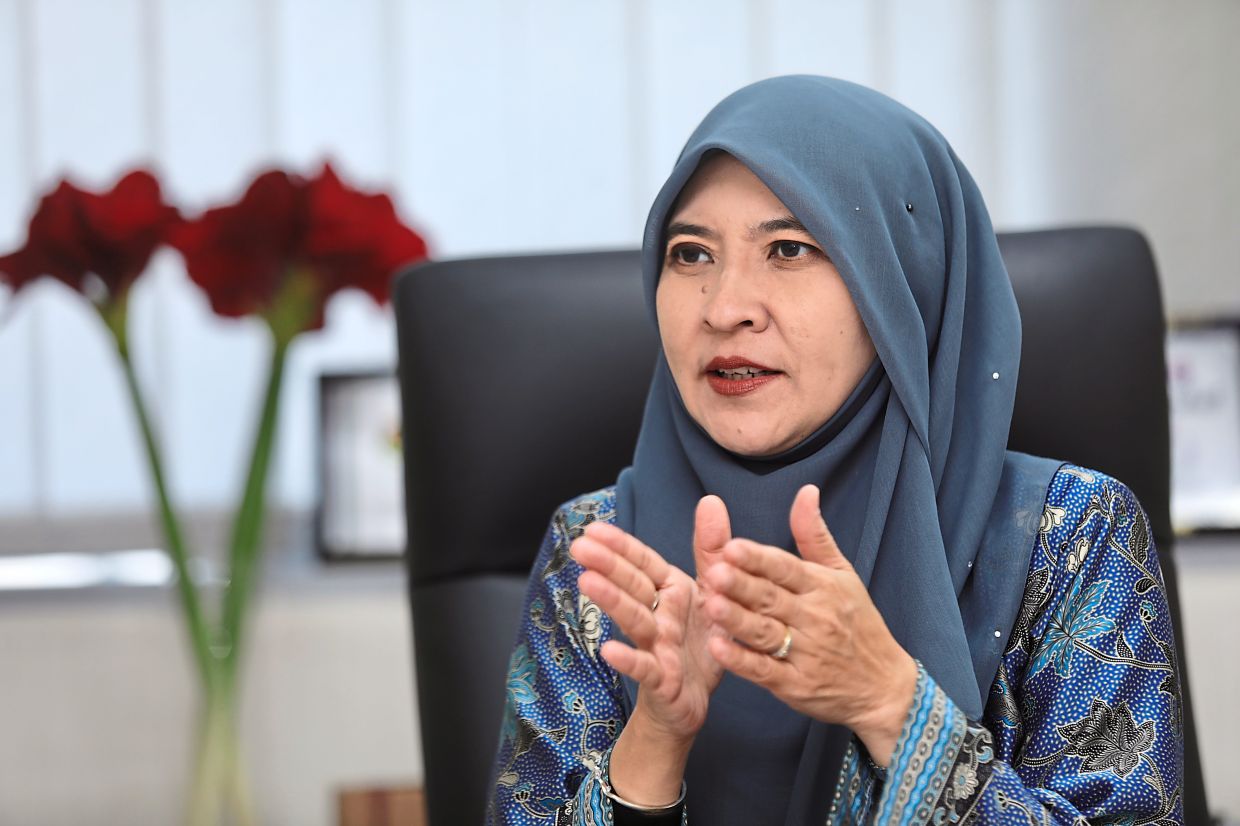
“This was a qualitative study, and 68%, out of 166, actually supported the under-16 social media ban. We were very much surprised, because we thought all this while, children would be overwhelmingly against it, because they’re on the phone and social media all the time, right?
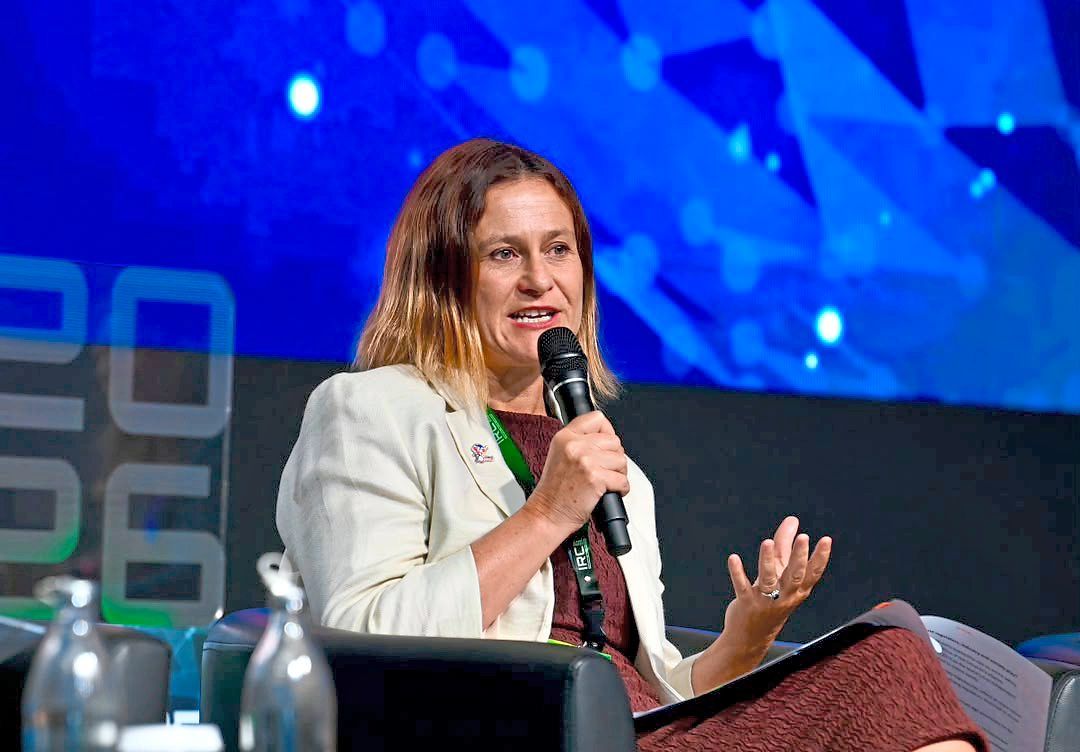
“The reasons they gave us in that survey were that they are very much fearful of the consequences,” she says, with grooming, sexual exploitation, and cyberbullying some of the harms mentioned during a dialogue session at the 2026 International Regulatory Conference (IRC), a two-day event centred on digital policymaking, recently.
Effective measures
Also speaking at the IRC 2026 panel – Online Safety By Design: Platform Accountability And Child Protection In An Age Of User Vulnerability – was United Nations Children’s Fund (Unicef) Malaysia chief of child protection Saskia Blume, who says the topic goes beyond the question of “to ban or not to ban”.
“Sometimes, it seems like an either/or question, but what we’re discussing here is safety by design. Where the movement is going, we see a regulatory convergence around safety by design.
“We see this in other countries around the world really taking up in terms of the approach to regulation. Of course, an ideal option would have platforms that are designed in a way that are safe to start with,” she says.
At the same time, Blume also highlights the need to equip children, young people, and even adults with the digital literacy required to safely navigate online spaces.
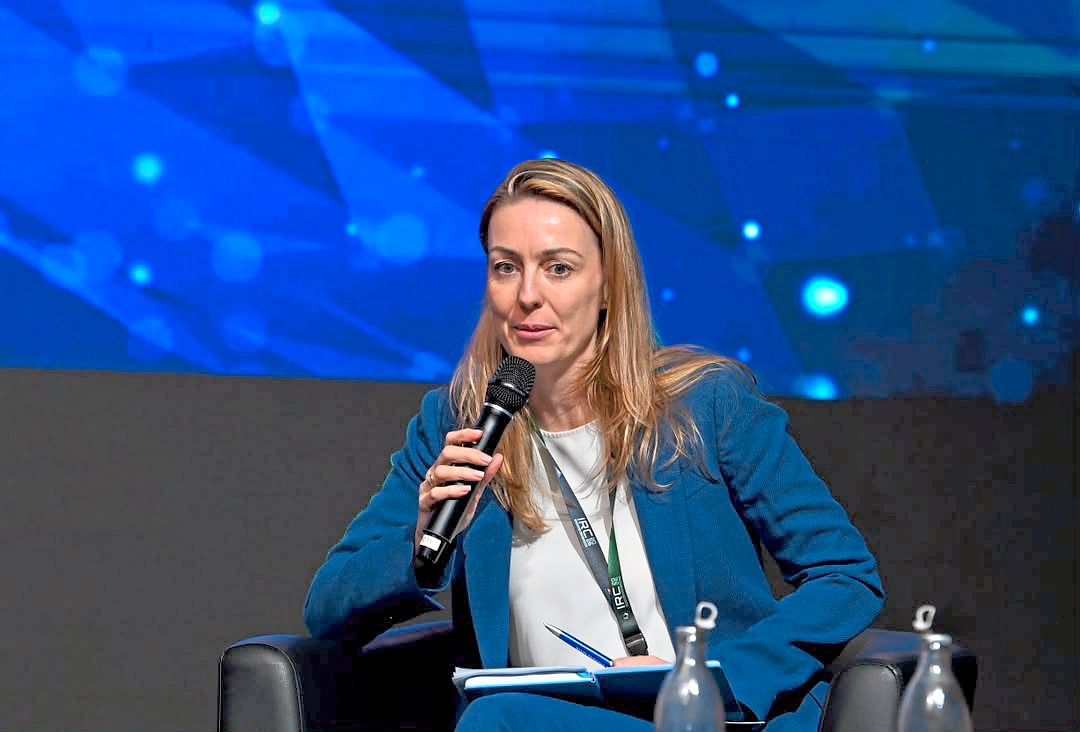
“We don’t only teach children how to cross the road safely. We also mandate seatbelts. We make sure that cars are designed in a way that become more safe.
“So with online safety, it’s the same. We should not just equip children and young people with knowledge, but really look at the system overall to make it more safe,” she says.
Srividhya Ganapathy, the co-chairperson of the Child Rights Innovation and Betterment (CRIB) Foundation, believes that such a restriction alone is not an effective means to ensure that children are safe online.
“Children pushed out of regulated spaces do not become off-line children. They become less visible children. You cannot protect a child you can no longer see.
“Putting a blanket ban does not guarantee that children will stay offline. It just means we think they must be offline, which means we can no longer protect them if and when they find their way online,” she says.
Once in full effect, such restrictions may result in a shift of child users to alternative platforms, such as Discord, a gaming-oriented voice and text chat app, and Roblox, an online platform where users create and play games.
Both platforms have come under fire in the last year, being involved in lawsuits over allegedly putting children at risk. A major point Srividhya brings up is that children do not only get on platforms that adults are monitoring.
“They (children) are groomed on gaming platforms, on Discord, in messaging apps, on livestreams, and in mobile games that happen to have a chat box and a friend list. From a child’s point of view, all of it is one social space.
“A game with chat, gifting and contact between children and unknown adults carries the same risk as a social media feed, and it should carry the same duty. The features that matter are known: messaging, recommendation systems, livestreaming, location sharing, and adult-to-child contact,” she says.
Srividhya stresses that safety assessments under the Online Safety Plan framework should also consider whether children are moving into less regulated spaces, including “gaming platforms, encrypted messaging services, or smaller online communities”.
Recognising responsibility
Blume says “the burden should not be on children to adapt to an unsafe digital environment, (rather) the burden is on all of us to make sure that the digital environment is safe and appropriate for children”.
Likewise, Srividhya emphasises that responsibility should not immediately transfer from adults and platforms to children at the moment they turn 16. Instead, it should happen as part of a process.
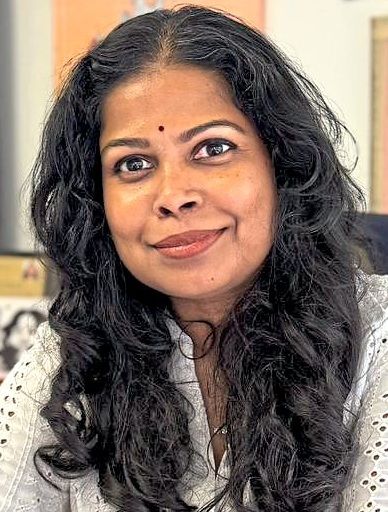
“Children do not acquire resilience on their sixteenth birthday, and if the platform is still unsafe by design on the day they walk in, we have delayed the harm and called it a solution.
“The thing the restriction fails to appreciate is that harm rarely arrives as a single piece of content. A conversation becomes grooming. An image becomes leverage for sextortion.
“Information gathered on one platform is used to target a child on another. A registration ban interrupts none of that once a child is online through a game, a group chat, a livestream or a borrowed account. So restrictions on access are nowhere near enough on their own,” she says.
She recommends implementing measures where new accounts go through a “graduation” process, with the strongest protections enabled at the start.
This could mean starting with the tightest privacy as a default, limiting contact from unknown adults, restricting location sharing, and stricter content recommendation settings that are loosened over time, rather than throwing children into the deep end right off the bat.
Srividhya further says that rather than 16 being the cutoff age for access, the baseline age should be 13, with the aforementioned mechanisms in place to protect them until they become adults.
Another participant at the IRC panel, Datuk Thiyagu Ganesan, deputy director general of the Legal Affairs Division of the Prime Minister’s Department, points out that the issue has grown far beyond simply the presence of harmful content.
Rather, the challenge now is the system that spreads that harmful content on a greater scale by predicting user behaviour, recommending content, and amplifying exposure.
“The harm that we know is no longer the harm that we usually know in a traditional sense. Why am I saying this? Because we have a system.
“If you go to YouTube and you watch a particular type of video, the system will give you all types of videos that relate to that particular pattern.
“That means a recommendation system, virality, or amplification and engagement feature can ex-pose very large numbers of users that are vulnerable,” he says, adding that ONSA is not just about removing harmful content, but placing responsibility on platform providers over the safety of users.
Reframing the issue
A point stressed by Australian High Commissioner to Malaysia Danielle Heinecke is that such restrictions on access to social media are not a complete ban, but rather a delay, as children will eventually age out of the restrictions.
“Just like kids can’t drive a car or have access to certain products, it’s about establishing a new norm for social media use, and giving young people time to develop real-world connections, digital literacy skills, and online resilience, before they can have their own social media account because this is the world that they’re growing up in.
“And it’s really important to note as well that they still have access to platforms that do provide them interaction, but it needs to be done in a way that’s not harmful in terms of the design features,” she says.
An area where the social media restrictions in Australia and Malaysia differ is in the mechanisms used to enforce them.
Social media companies use inference-based age estimation on users in Australia, as the country does not have a single national identity card, while the upcoming mechanisms in Malaysia will always require a government document when creating an account.
There are two sides to this, as Heinecke believes the Malaysian system will enable more certainty that people within the restricted age range are kept off platforms.
However, Srividhya raises concerns over how the identifying data may be used in advertising, profiling, or surveillance by social media companies. She stresses that the platforms should only receive confirmation that a user is above or under 16, with no further information or data.
Another concern she raises is over a potential exclusion from certain platforms by those who lack citizenship.
“Think about the child with no documents. The stateless child, the refugee child, the child whose birth was never registered.
“Both kids with proper identification and stateless kids under 16 will lose access to the social media platforms that implement the age restriction.
“Once both groups hit 16, those with proper identification move to the more monitored platforms, while those without identification are still stuck, leaving them more at risk and likely to be targeted,” Srividhya says.
She explains that it does not mean that children won’t be online as they will still find ways to go online without declaring their ages – however in cases where they manage to get onto the platforms being regulated, it means that any protection for children will not apply to them because they are passing themselves off as over 16.
Heinecke also highlights the need for long-term studies on the positive and negative impacts and unintended consequences of the restrictions on children, young people, parents, and carers, while making adjustments based on findings.
“When I speak to my children, and they will often have an argument with me about this policy, they will often talk about people going to the dark web, people going to other sources.
“I think understanding what is actually happening to children, and getting them to be honest and open about what’s happening, is a really important part of the work that we do to continually evolve the legislation as well as the social governance that is almost more important than the regulation itself,” she says.
Combating abuse
Citing a 2022 Disrupting Harm Study from Unicef, Srividhya says that around 100,000 Malaysian children experienced online sexual abuse in a single year.
She adds that risks are broad and connected, with concerns such as grooming, sexual exploit-ation, sextortion, cyberbullying, pornography and self-harm content exposure, scams, unhealthy comparison, and compulsive use.
“Artificial intelligence (AI) has made it worse. A child’s ordinary photograph can now be turned into sexualised abuse material.
“The Internet Watch Foundation assessed more than eight thousand AI-generated images and videos as realistic child sexual abuse material in 2025, and AI abuse videos jumped from thirteen to over three thousand in a single year. 97% of the illegal images showed girls,” she says.
While having government-mandated age restrictions can delay exposure to such content, she believes that it does not do anything to deal with the networks and methodologies used by predators in targeting children online.
“A child may first be contacted through a game, persuaded onto an encrypted messaging service, manipulated using AI-generated content, blackmailed through another service and have the abuse distributed elsewhere.
“Regulation, therefore, needs to address those connected path- ways rather than treating each platform in isolation,” she says, adding that a key shift under the current age restriction is that it puts legal responsibility on platforms rather than just children – previously, in situations where a child had been sextorted into sending explicit content, the platforms had no legal liability.
While the Online Safety Plan requires platforms to identify risks, Srividhya wants to translate that to real safety for kids. This means that there needs to be independent audits and Malaysia-specific transparency aside from assurance given by social media companies that they are complying.
She stresses that there needs to be ways for children, or those close to children, to report sexual offences, including online sextortion, without exposing the affected child’s identity. Examples of this include the United Kingdom’s Report Remove service, which allows those under 18 to get sexual images taken down without revealing their identity.
She further points to the US-based National Center for Missing and Exploited Children’s (NCMEC) Take It Down platform, which accepts anonymous reports of nude images and will work with various social media services to have them taken down. The platform also accepts reports from those outside of the US as well.
“Therefore, most important of all is this. We must have reliable pathways for children to report anonymously and safely 24/7, and these pathways must result in removal of harmful content, solutions and protection for the children which do not involve the disclosure of the identity of the child and which above all are built to protect the child,” she says.
Next week’s issue dives into the impact of social media on children’s mental health and social lives, and whether removing access could have unintended consequences.