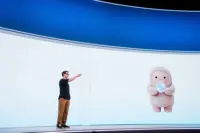
It started as a writing assistant. Jeremy Allaire, CEO of the stablecoin company Circle, trained an AI agent to think and write like him, feeding it his podcast interviews, his public writing and a corpus of internal communications.
He called it the “Jeremy Allaire skill.” The bot helped him compose drafts. And Allaire was impressed by how well the artificial intelligence (AI) captured the way he thinks and writes.
So impressed that he decided to let the bot talk to his more than 1,000 employees. Because while Allaire can’t meet with everyone, he realised that the AI version of him can.
“People can interact with the Jeremy Allaire skill on their own before they actually, you know, bring something to me,” he told DealBook, adding, “It’s available to everyone in the company who wants to have a dialogue with me.”
Across the business world, many leaders are experimenting with similar tools.
Consultants and executive coaches who don’t have the bandwidth to address every inquiry are referring some clients to their AI doubles. Harvard Business School professors have incorporated AI versions of themselves into courses and office hours. And executives are using their AI avatars to address employees in other countries in their own languages.
Whipping up an AI chatbot or avatar is easy. Allaire built his using Claude. A handful of startups provide interfaces that make it even easier and offer more control: Delphi takes your content and instructions and creates a voice and text chatbot that mimics you, while AI video generators such as HeyGen and Synthesia will do the same for a digital avatar that copies your appearance.
“It’s just a new kind of artefact of your mind,” said Dara Ladjevardian, the CEO of Delphi, which raised a US$16mil (RM65.12mil) round of funding led by Sequoia Capital last year. “The same way a book is, the same way a painting is, it’s a new way that people get to experience you.”
AI doubles
Lenny Rachitsky hosts a popular podcast about product management and writes a newsletter with more than 1.2 million subscribers. A lot of people want to pitch him or ask him for advice.
His AI double, Lennybot, now fields some of these inquiries. “I even tell them, ‘This is awkward to say, but you should actually ask Lennybot about this,’” he said. His chatbot has about 100 conversations a day.
When I called Lennybot, I asked for advice on launching a hypothetical peanut brittle company (there’s a bag of the candy on my desk). A voice that sounded much like Rachitsky asked me who my target customer was (I said children), and then disagreed with me (it argued I’m actually targeting their parents).
Rachitsky likes the bot version of himself enough that last year, he became an adviser to Delphi, the tool he used to create it.
Alisa Cohn, an executive coach who has worked with companies Google, Microsoft and Pfizer, said she had long referred prospective clients who couldn’t afford her fee to resources like her podcast and book. Now she also points them to her AI double.
“I’m able to also say, ‘Try this AI avatar who might be a helpful almost like a collaborator with you as you’re going through this journey,’” she said.
Virtual stand-ins
Sean Greenhalgh, who manages digital content at cloud storage company Wasabi, first used an AI avatar to solve a practical problem: He’s based in Boston. Wasabi’s head of sales, Jon Howes, is based in Switzerland. That made it difficult to coordinate filming a video of Howes for an internal meeting in Dallas.
So Greenhalgh built an AI video avatar of Howes, putting the rather staid, British executive on top of a horse, in a ridiculous cowboy costume.
It was a joke, but the use of AI avatars caught on at the company. When a marketing executive lost her voice at the same conference, she asked Greenhalgh to make her an AI avatar. About a year later, she used it to address the Tokyo-based sales team in Japanese. And Wasabi’s chief marketing officer recently “presented,” via a video of his AI avatar, at a board meeting he could not attend.
“It is kind of a fun way to say, hey, I can’t be there, but I sent my avatar,” Greenhalgh said.
Harvard Business School is using chat and video avatars of its professors in an online boot camp, called Foundry, that it launched in April. Students can pull the AI versions of HBS professors into a group text chat to help advise them on their startup ideas.
Not quite a substitute
Lou Shipley, a former technology CEO and a senior lecturer at HBS, teaches more than 500 students a year, and he has limited office hours. So he tried to offer his AI double for student meetings. “That didn’t go very well,” he said. “They actually want to meet me.”
Adam Dorrell, the CEO of CustomerGauge, which makes software for measuring customer sentiment, had a similar experience: He trained an AI double with about 2 million words of his content, and was impressed with the result. “I thought this is like magic,” he said. “This is really saving loads of time.”
Dorrell envisioned using the AI version of himself to answer presale queries and to respond when someone asked to pick his brain. But it didn’t take off. “It seems that human interaction is still a thing in 2026,” he said.
Similarly, avatars that replicate someone’s appearance can be amusing and novel, but still fall somewhere in the uncanny valley. “My wife doesn’t like it,” Shipley noted of the avatar version of himself that appears in the Foundry course.
Delphi’s Ladjevardian argues that thinking of these bots as substitutes for person-to-person interaction is misguided. “ChatGPT and Claude and Gemini and Perplexity are teaching people to learn and read through back-and-forth conversation,” he said. “I think people will have to adapt.” – ©2026 The New York Times Company
This article originally appeared in The New York Times.