




A new research institute in Hong Kong is set to ramp up efforts to develop “AI for all” as early as this month, mapping out a strategy to strengthen the government’s capabilities while ensuring all residents and sectors benefit from the technology, a senior official has said.
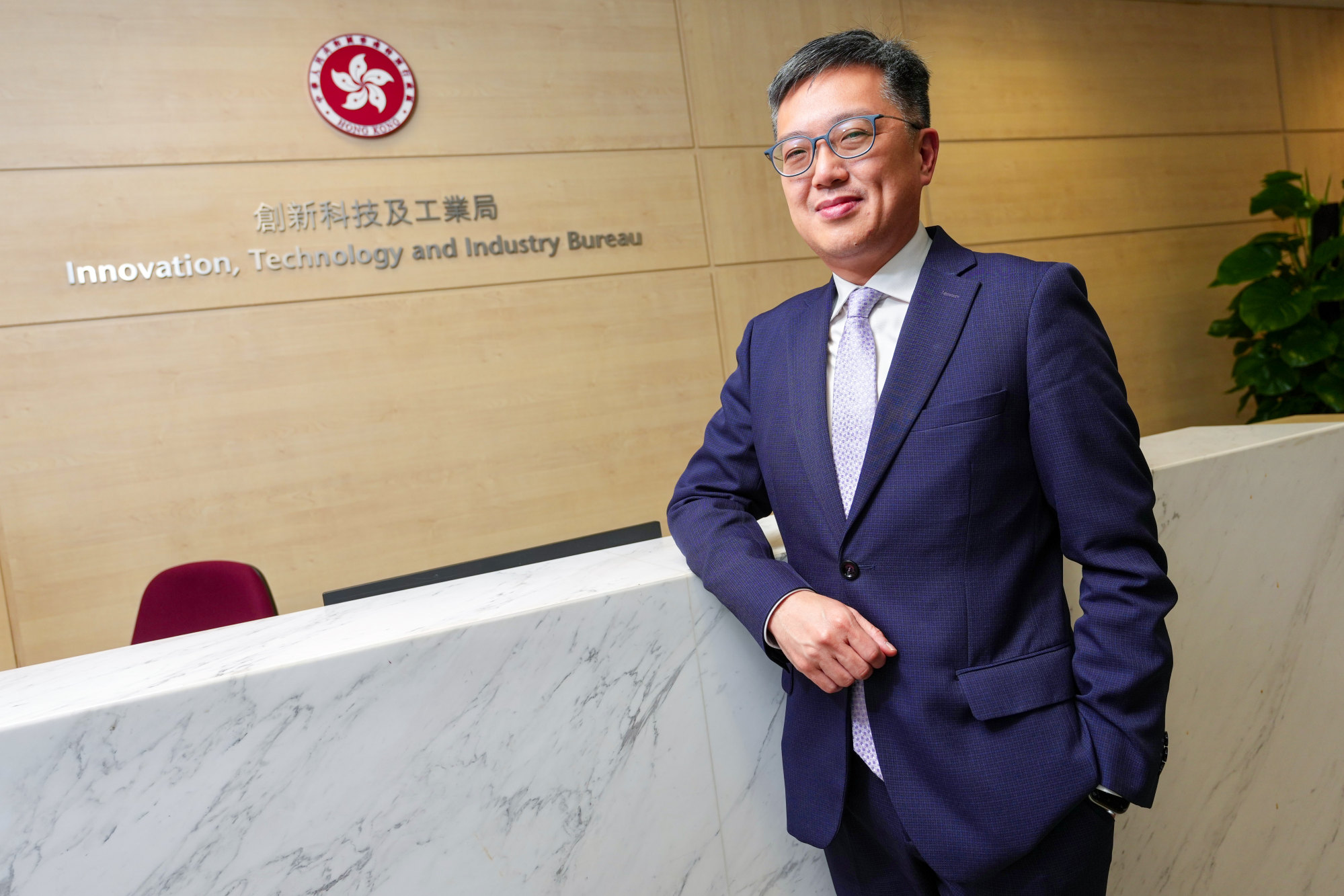
Permanent Secretary for Innovation, Technology and Industry Kevin Choi Kit-ming said one of the priorities of the Hong Kong Artificial Intelligence Research and Development Institute would be to integrate a locally developed large language model into a broader strategy.
“I hope the [institute’s] first meeting can start in April or May,” Choi told the South China Morning Post. “It will mainly focus on facilitating the full research and development [R&D] chain – moving from upstream academic research to midstream and downstream transformation into practical industrial applications.”
Financial Secretary Paul Chan Mo-po first announced the institute’s establishment, backed by a HK$1bil (US$127.6mil/RM508.23mil) investment, in his budget in February.
Authorities earlier appointed a 14-member board of directors to the institute, with Professor Harry Shum Heung-yeung as chairman and Hendrick Sin as his deputy.
Shum, an adjunct professor at Hong Kong University of Science and Technology (HKUST), is a renowned computer scientist who has made transformative contributions to artificial intelligence (AI) and industrial development, having spent nearly 24 years at Microsoft.
Sin is a tech entrepreneur and co-founder of CMGE Technology Group, one of mainland China’s leading mobile game publishers. He is a key figure in Hong Kong’s start-up sector and an advocate for digital innovation and youth entrepreneurship.
“These heavyweights have all been brought on board. They will certainly be helping out with a primary focus on upstream development as we did through InnoHK before,” Choi said. “For instance, we previously provided funding for the Hong Kong Generative AI Research and Development Centre [HKGAI] project.”
HKGAI developed HKChat, the city’s first home-grown large language model, which transitioned from its trial phase last November to a full public release a month later.
Spearheaded by HKUST and operating under the government’s InnoHK initiative – which aims to turn the city into an innovation powerhouse by collaborating with leading institutions locally and globally – the project has since grown to serve more than 600,000 registered users as of March, according to Choi.
He added that 40,000 civil servants across various departments currently using HKChat had been providing critical feedback to address the system’s shortcomings and improve its performance.
The model was already being used for tasks such as summarising documents and drafting minutes of meetings, but Choi said developing a Cantonese-focused model for a smaller market was more challenging than creating an English or mainland Chinese system.
“A major challenge we face in government application is that we handle a significant amount of restricted access material. For instance, if I knew a meeting would eventually be made public, I wouldn’t mind using the AI to draft the minutes. But if I am unsure of its classification, should I use it?” he asked.
He said the Digital Policy Office would study how the government could create a service that allowed for the use of “restricted” or “classified” information.
“We hope to develop a version capable of this, though it is difficult. By definition, classified information is restrictive, whereas AI models thrive on openness – the more restrictive the environment, the less the model has to learn from, which leads to poorer performance,” Choi said.
“Balancing these two needs is a critical issue we must think through thoroughly for government use.”
HKChat and other local large language models had to continue evolving, Choi said, stressing that the city should not merely operate in the mid-to-downstream sectors by using AI developed elsewhere, but also invest in its own development of the technology.
“By leveraging the expertise of renowned professors from five of the world’s top 100 universities, I hope the AI research institute will explore these advancements and find ways to further enhance HKChat’s performance,” Choi said.
The government has been pushing to speed up the city’s digital transformation and its “AI for all” initiative, which includes a massive overhaul of school curricula and vocational retraining programmes.
In his budget address, Chan unveiled a comprehensive strategy dubbed “AI+” to popularise the technology and enhance digital literacy across all levels of society, with HK$50mil (RM25.4mil) allocated to bolster public awareness and skills.
Choi said his bureau was spearheading the initiative through a cross-sector collaboration with the Science Park, Cyberport and Hong Kong Productivity Council.
“The three actually have slightly different focuses. One is more specific, such as the Productivity Council, where I hope they can do a better job of promoting [AI] to small and medium-sized enterprises. As for the Science Park and Cyberport, we hope they can reach both the more professional I&T [innovation and technology] sector as well as the general public and students,” he said.
Such cooperation between the government, schools and private-sector organisations was an important part of the government’s strategy to promote citywide AI education, Choi explained.
The Digital Policy Office would also intensify its ongoing work by launching “AI grand lectures”, featuring local experts and media outreach to introduce the technology’s fundamentals, its practical applications and a balanced view of its benefits and risks, he added. – South China Morning Post



