
Happy new year, everyone! How did y'all wrap up your 2025? I ended my year playing Metroid Prime 4 Beyond, which was a serene experience in getting lost exploring an exotic alien world filled with mysteries, albeit sporadically interrupted by humans babbling on my radio telling me exactly where to go to solve the next puzzle.
Anyway, the last article I wrote in 2025 talked about complexity and complicatedness in video game design, and I thought my first article of 2026 should follow that up by examining some of the ways game designers manage that complexity, so players don't get overwhelmed or confused.
To recap, I'm talking about complexity and complicatedness specifically in the context of video game design. I defined "complexity" as the amount of moving parts (rules/systems/variables) required to make the game work, and "complicatedness" as the amount of moving parts players have to keep in their head to actually play the game.
A simple game isn't inherently good or bad, and the same applies to complex games. Simple vs complex is just a tradeoff between accessibility and depth in gameplay. Sometimes we like simple hack-and-slash games so we can have fun without thinking too much, and sometimes we like complex CRPGs where we spend several hours on the wiki just optimising character builds.
OK, with that recap out of the way, let's make like a space bounty hunter with an arm cannon and start blastin' away at the topic!
Information clarity
The first idea I wanted to start with is "information clarity": what a thing does should be obvious.
Strangely, I'm actually semi-qualified to dig deep into this topic since my day job involves programming websites. In web design, for example, a button should look like a button. Clicking a button should do whatever the button says it does.
Similarly, in video games, players need to understand what anything in a fictional game world is meant to do. It's the job of the game designers to elegantly explain that touching this mushroom will make Mario grow big, while touching that mushroom will hurt him, without having to write an essay explaining it. (Hint: the mushrooms with angry faces are bad.)
A powerful tool here is "familiarity", or "common conventions". We human beings come pre-programmed with a bunch of ideas and assumptions that designers can leverage. For example, we're very aware that spikes and lava are dangerous, so level designers can use these as hazards without having to explicitly explain "if you fall into glowing red liquid you will go bye-bye".
Gamers in particular have their own sets of assumptions and conventions; classic elemental systems are a good example of using familiar video game concepts to communicate specific game rules. e.g. If you tell me Water-type moves dealing 2x damage to Fire-type Pokemon, then that's super easy to understand.
Conversely, inventing your own elemental systems and terminology will make your game feel more unique, but will require you to explicitly clarify what the heck anything is. e.g. if you tell me Aquosus Magicks inflicts yotta-Yeouch to Igneus Monstrums, then I'll ask, are you OK? Do I need to call a doctor?
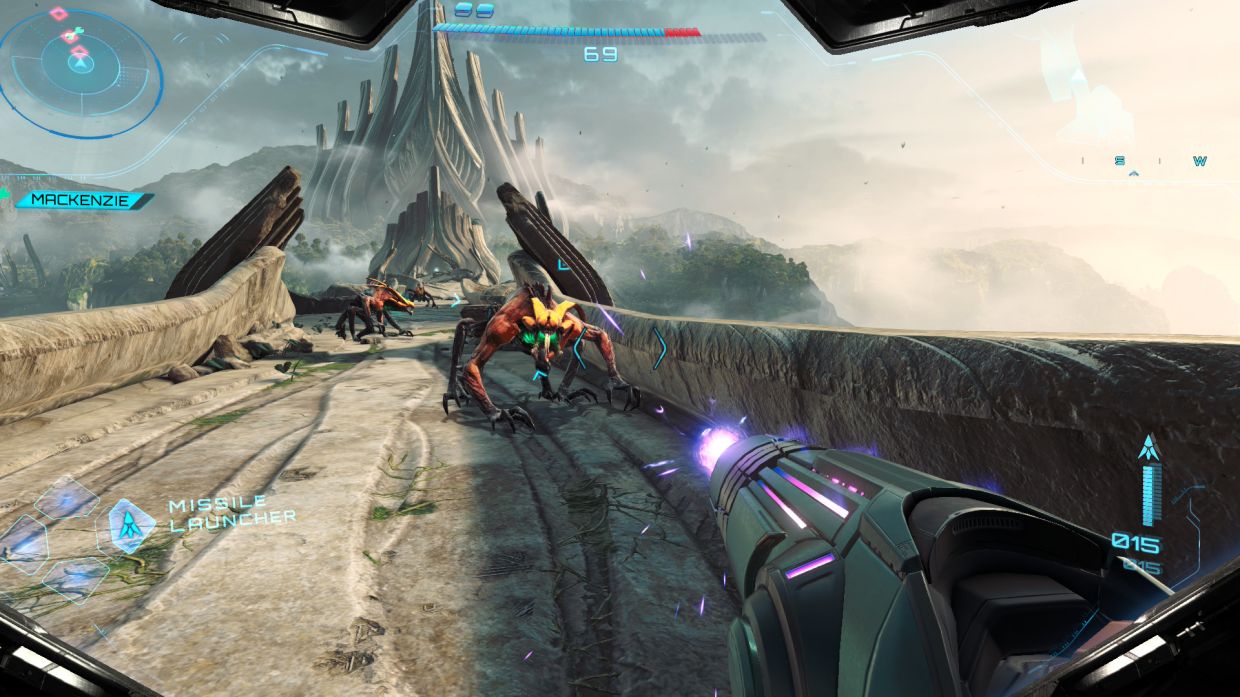
There's a balance to be found between making game systems familiar and making it unique, of course. In Metroid Prime 4, three of weapon upgrades that space bounty hunter Samus Aran obtains on the alien planet of Viewros are Fire Shot, Ice Shot, and Thunder Shot. That makes the intended use of these weapons very obvious, but perhaps a tiny bit too on-the-nose and fantasy-sounding for this exotic sci-fi adventure.
Information density
"Information density" is the idea that video game designers need to manage how much information is presented to players at any given time.
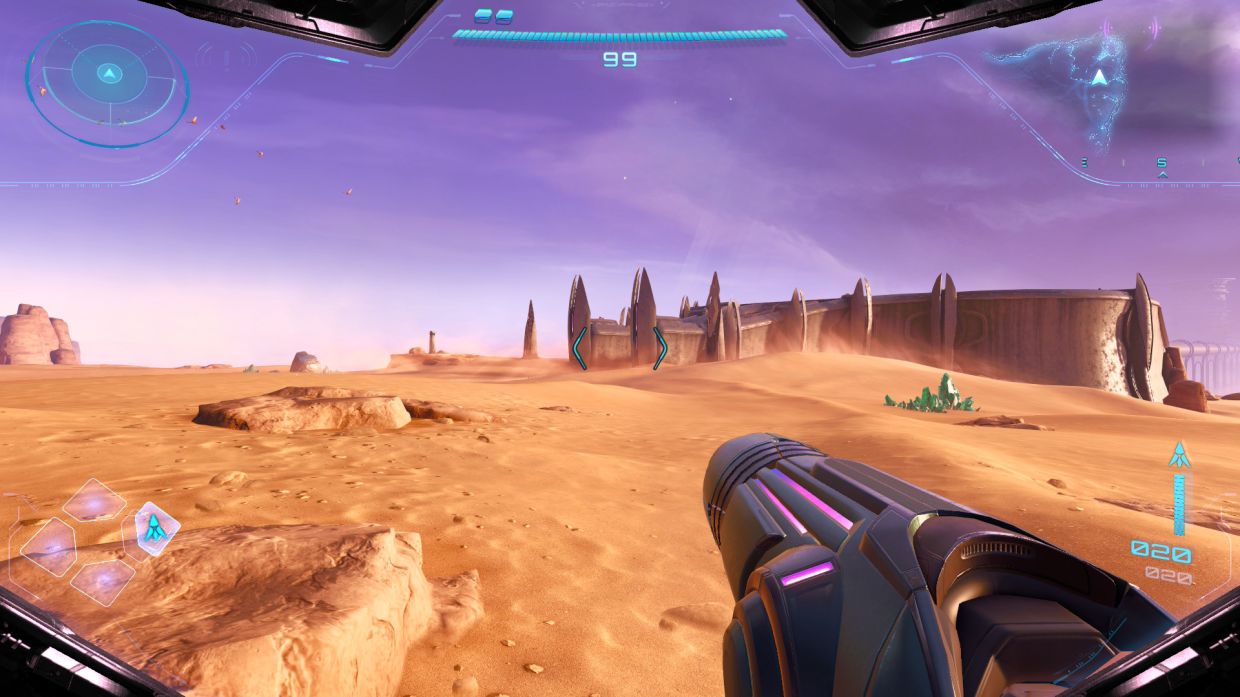
The reason I prefaced this article with "I'm talking about complexity in the context of video game design" is because video games are, under the hood, inherently mechanically complex things; even simple locomotion requires the game engine to simulate physics in some way. It's the job of the video game designer to only expose enough of that complexity and information for players to make decisions while they play without overwhelming them.
Like, say a hypothetical RPG gives players the option of picking up a greatsword. Does the game explicitly tell players that the sword deals 2d6 Slashing damage (plus Strength bonus) with a 5% chance of a critical (2x damage) with a weight of 6lbs?
Or does the game just say "Greatsword: big damage, but heavy"? How much information does a player need so they can decide if a greatsword is a good sword for their playstyle, or if a greatsword is just an okay-lah sword?
Options density
Related to information density is "options density": given the information presented to them, how many choices do players need to make at any given time?
In that hypothetical RPG, does the game ask if the players want a greatsword, longsword, short sword, cutlass, colossal sword, light greatsword, katana, rapier, laser gun, or et cetera right at character creation? Or does the game much more sensibly start by giving players a smaller number of weapons to choose from, and then gradually increase the number of options as they level up?
Managing the density of options/choices is a challenge, but it's extra challenging in open world exploration games, Metroidvanias, and certain kinds of puzzle games (point-and-click adventures, really). If a player can go anywhere, do anything, and pursue any lead, then it's possible they won't know where to go and what to do to actually progress the main story.
One of the weird things that makes Metroid Prime 4 feel more shallow than it actually is, is the fact that the game designers added a very obvious hint system. Whenever I spend more than five minutes idly exploring the open world, one of Samus's human allies will give her a WhatsApp call and say, "Hey, are you lost? Do you not know where to go? Have you tried using your new Fire Shot (tm) to open the locked door with the fire symbol on it?"
Hint & guidance systems – like maps full of icons and NPCs going "hey, listen!" – are genuinely very useful tools that designers can use to manage player decisions, but they need to find the right balance for their intended audience. Give too little guidance and some gamers might feel lost and frustrated; but give too much hand-holding and other gamers might complain that they're playing Baby's First Metroid.
Time factor
On the other hand, let's say you're an insane game developer from one of those weird Japanese studios that I love so much. Let's say you think elegance and simplicity is for dishonourable cowards; and you want your game systems to be complex to the point of opaqueness; and your standard damage numbers look something like 209661309.482. (Yes, without commas, just to make the information even less readable.)
Well great news! You can probably make players tolerate the utter convolution of your system mechanics... IF the game isn't in real-time.
The "time factor" of a game (for want of a better term) is an easily overlooked element that determines how much complexity game designers can add. In short, if players have more time to think before they act, then the more complexity they can process.
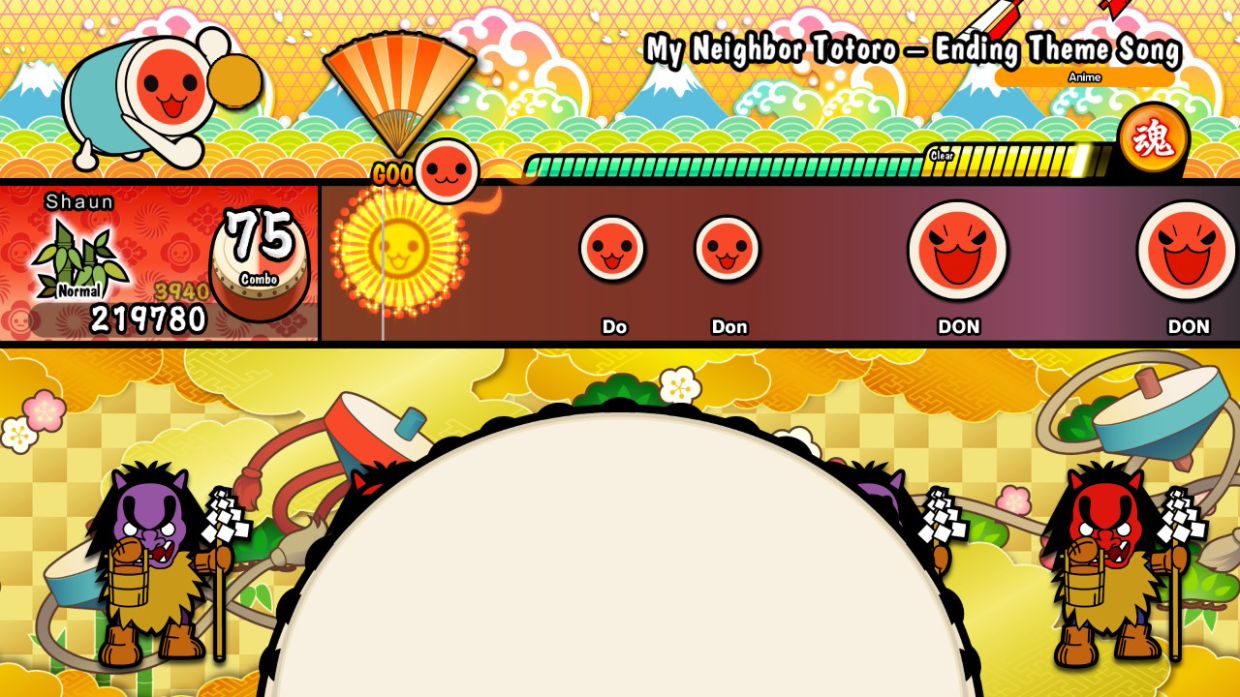
If the game is a twitch-based bullet hell hack-and-slash, then players will be working on instinct and reflex. Even something as basic as the player's health has to be presented in the least complex way – e.g. a visual life bar/meter is better than explicit multi-digit numbers like "5,381 HP".
On the other end of the spectrum, a turn-based 4X game like Civilization VI can ask players to manage the economies of multiple cities and the actions of multiple army units (each with their own intricate stats), WHILE also making long-term strategic plans for their empire – all because players can take their time to think about every individual system before taking action.
(As a tangent, I wonder if this is the reason that real-time strategy games like Command & Conquer have fallen out of fashion? Those are games where you control multiple different units, each with their own abilities, while planning long-term build strategy, all in real-time – maybe the complexity barrier is too high for most current gamers. Eh, that's for another investigative article.)
Metroid Prime 4 has a pace of gameplay that I'd describe as a "light jog". The action is in real-time so information must be communicated clearly, but even the boss fights aren't really reflex-intensive. As a result, players have time to think as the act, which contributes to how the combat is designed to feel like a nice blend of 50% action and 50% puzzle-solving.
Heck, I'd dare say this balance of action-y and think-y is exactly what the designers intended, since Metroid Prime 4 is a game where – if you're having trouble with a boss encounter – you can always take time to scan the creature, which will pause the game and give you a helpful analysis of your opponent.
Of course, this being Metroid Prime 4, they go a bit overboard with the hints: "Icy McIceface is made of ice, which is weak to fire. Boy, I'm sure his day will be ruined if the giant glowing weakpoint (the one on his butt) gets blasted by a Fire Shot!"
Comprehension
I'll say it again: video games are, under the hood, inherently complex. It's genuinely amazing that there are game designers who can manage and present all those rules and systems and variables in such a way that we can believe a bunch of pixels or polygons are really jumping or shooting when we press the buttons on our controllers.
There's still a lot more to dig into here – from how navigational complexity can be managed in 2D and 3D spaces; to the function of tutorials and sandbox playgrounds; to the crossovers between video game design and web design and general industrial design – but I'm running out of word count and there's still the rest of 2026 to talk about these things.
So on that note, let's go find some interesting new games for the new year! I don't want to make the end of this article too complex or confusing, so I'll just wish y'all a Happy 2026, and a Happy Year of the Igneus Horse!