




US video game developer Riot Games, creator of League Of Legends, retains bragging rights to the most popular PC game in China nearly a decade and a half after its launch.
First introduced in 2009 and brought to the mainland in 2011, the multiplayer online battle game has been around longer than many of those who play it – a remarkable feat in an industry known for its rapid shifts.
The secret to the game’s longevity may lie in the sustained appeal of the League Of Legends esports scene, as shown by the world championship tournament held in the country over the past few weeks.
“Once an esports game becomes a global hit, its lifespan is typically measured in decades,” said Zhang Shule, an analyst with CBJ Think Tank.
China hosted the League Of Legends World Championship, the esports industry’s biggest tournament for a single title, for the third time this year, after 2017 and 2020.
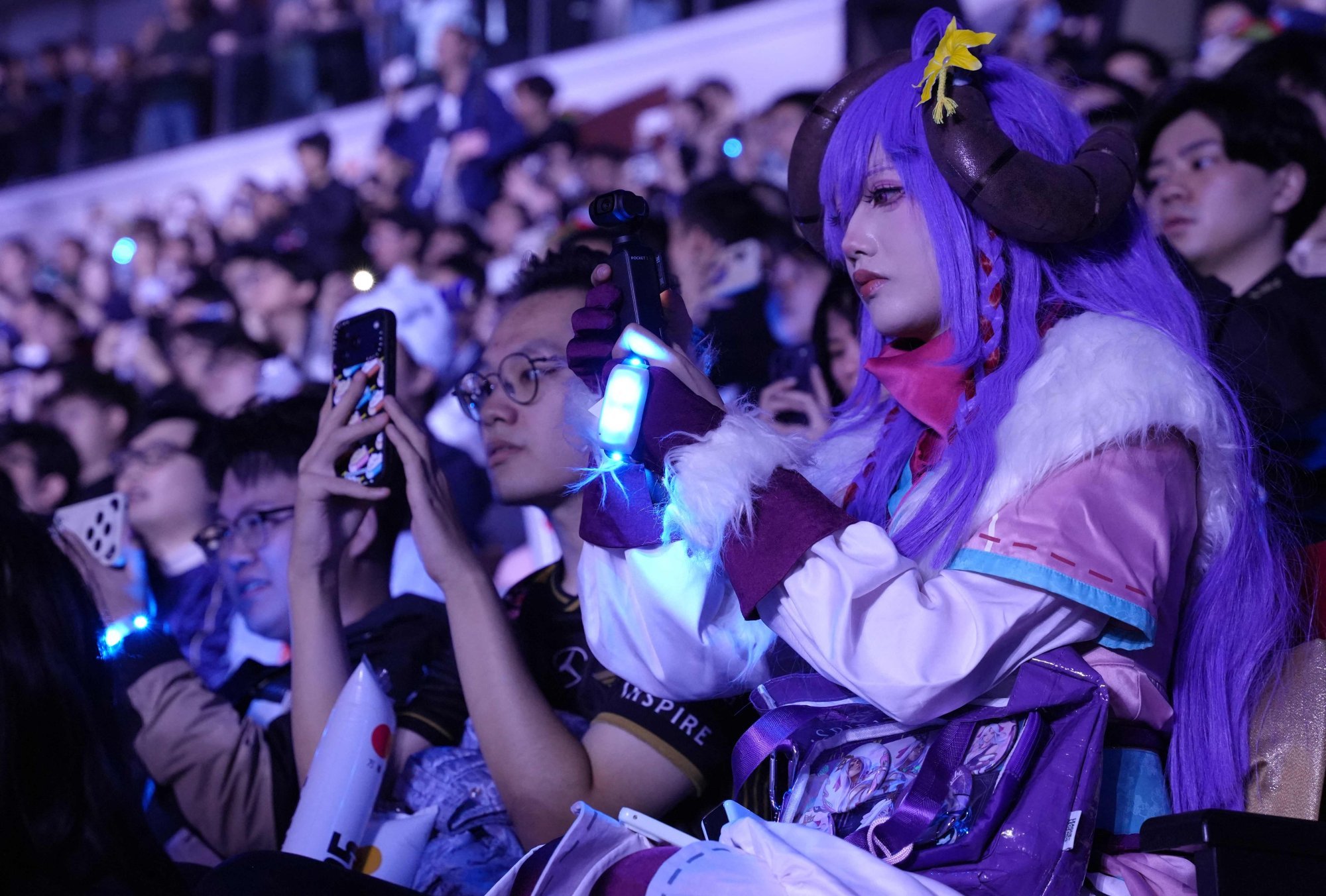
On the final match day on Nov 9, tens of thousands of fans flocked to the venue in Chengdu, in China’s southwestern Sichuan province. There they watched T1, a South Korean team, close out the five-match championship series against KT Rolster, also from South Korea, to claim its third straight title and sixth overall – a record in the event’s history.
Even defeat for the host country could not dim the passion many Chinese fans felt for the event or the game.
Chengdu resident Sandy Xiao, a player for 10 years, spent more than 4,000 yuan (RM2,335 or US$563) – half of her monthly salary – for a ticket to the final match.
“My feelings were complicated, as Chinese teams once again failed to enter the final match,” she said. However, it was still meaningful to see the competition held locally, and “the cheers and applause from the crowd made one of my best moments in 2025”, she said.
Li Momo, a player from the eastern city of Hangzhou and a fan of T1’s star player Lee Sang-hyeok, known as Faker, travelled about 1,800km to Chengdu despite not having a ticket. “It’s great just to be here, feel the atmosphere and witness another Faker championship,” she said.
For Faker himself, the latest final in China brought him “a reminiscence of the 2017 finals”, when his team lost to another Korean team in Beijing, but also made him aware of how he had changed.
“I realised that right now, I can focus on the game and concentrate without caring too much about winning or losing,” the 29-year-old told the Post in a media session. “That was the moment I realised I’ve grown so much as a player.”
Player passion also explains why the game remains the undisputed king of PC gaming in mainland China, which boasts the world’s highest number of monthly active players at more than 70 million, according to third-party data.
China’s esports industry has been steadily growing over the past few years. Although authorities maintain a strict regulatory attitude towards the gaming industry, with a three-hour weekly time limit for minors, they also view the esports sector as a tool for promoting soft power.
The sector returned to growth in 2024, with revenue rising 4.6% from a year earlier to 27.6 billion yuan, according to a report released by the China Audio-Video and Digital Publishing Association in December. This was attributed to government support and private-sector efforts by mainland video gaming giants Tencent Holdings and NetEase.
Riot Games is a subsidiary of Tencent, which bought a 93% stake in 2011 and acquired the remaining 7% in 2015.
In the first half of 2025, esports revenue further increased by 6.1%, with viewers numbering nearly 500 million, equivalent to over 70% of the country’s total gaming population.
“The fans and local government have been welcoming,” Chris Greeley, global head of League of Legends Esports at Riot Games, said at a media session before the final match. “You can’t take those kinds of ambitious shots if you don’t have good partners in terms of the local esports commissions and governments.”
Still, CBJ’s Zhang noted that the success of League of Legends was partly based on its uniqueness as a PC game amid “the era of mobile gaming”. Such popularity will last “unless a revolutionary game emerges on the same platform”, he added. – South China Morning Post


