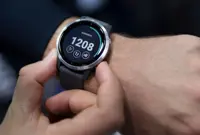
For many health-conscious users, a smartwatch is more than just a fitness tracker – it's a daily companion for monitoring everything from heart rate to sleep patterns and stress levels. But a new study suggests that when it comes to gauging your psychological state, your wearable might be getting it wrong.
Published in the Journal of Psychopathology and Clinical Science, the study examined nearly 800 university students wearing the Garmin Vivosmart 4. Participants regularly reported their own emotional states, which were then compared with the stress data recorded by their devices. The result was a striking lack of alignment.
"For the majority of individuals in our sample, we found that self-report and physiological measures of stress show very weak to no associations," the authors wrote. "These results raise several questions about differences between data sources and potential measurement issues."
Garmin promotes the Vivosmart 4's stress-tracking feature, which uses heart rate (HR) and heart rate variability (HRV) data to produce a score from 0 to 100. But the company acknowledges that interpreting stress isn't straightforward.
On its website, Garmin notes that both public speaking and running up stairs can raise heart rate, but for very different reasons. It recommends wearing the device consistently, particularly during sleep, to improve accuracy.
The study adds to a growing body of research questioning the reliability of wearable stress metrics. While the Garmin device underperformed on stress measurement, researchers found it performed well in other areas. Sleep tracking proved highly accurate, although its link to self-reported tiredness was weaker.
For now, the findings suggest that while a smartwatch can be a handy tool for tracking fitness or sleep, but its "stress" alerts may need to be taken with a healthy dose of scepticism. – Khaleej Times, Dubai, United Arab Emirates/Tribune News Service