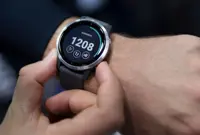
It may be tempting for someone with heart disease to rely on a smartwatch to tell them when something's going wrong with their ticker.
After all, wearables have many features that can be used to record the condition of the cardiovascular system, such as pulse sensors and the ability to carry out a simple ECG.
However, these devices have their limitations, especially when it comes to detecting serious disease, according to the German Heart Foundation. A specialist is always needed to analyse the data and, if necessary, initiate further examinations.
Here's a brief overview of what smartwatches can and can’t do.
Pulse measurement: Wearables use infrared light to analyse the wearer’s pulse. This provides information about the heart rate and can thus help to detect and document cardiac arrhythmias.
According to cardiologist Thomas Meinertz from the Scientific Advisory Board of the German Heart Foundation, smartwatches are more than 90% reliable when it comes to pulse measurement, which is equivalent to the accuracy of measurements achieved by a chest strap.
However, to ensure that the measurement is accurate, the sensor and wrist should be clean, and the watch should sit close to the skin.
Electrocardiogram (ECG): Smartwatches measure the electrical impulse of the heartbeat by creating a single-channel ECG. This is usually done by pressing a sensor and waiting 30 seconds.
It is true that a single-channel ECG is somewhat more informative than pulse measurement when it comes to cardiac arrhythmias, but Meinertz warns that it should not be relied on alone.
That's because circulatory disorders of the heart muscle, for example, cannot be detected using just a single lead - doctors would typically use at least 10 electrodes.
"Neither the Apple Watch nor other smartwatches are therefore suitable for detecting a heart attack or malignant cardiac arrhythmias," Meinertz says.
If you do experience severe chest pain, don’t wait around for your smartwatch to diagnose a heart attack. Instead you should seek immediate help and rely on the judgement of medical professionals. – dpa
Already a subscriber? Log in
Get 20% OFF The Star Digital Access
Cancel anytime. Ad-free. Unlimited access with perks.