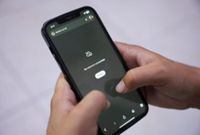
Stuck to smartphones: How phones ruin relationships


The inability to put devices away even in the company of others – known as phone snubbing – is causing a rift in relationships. — 123rf.com

Do you find yourself staring at your smartphone in the presence of another person? Do you find it difficult to put your phone aside even when you know you should? If you answered yes, you could be guilty of phone snubbing or phubbing.

Though phubbing may seem harmless at first, it can strain a relationship, especially one that’s already in trouble, says Faith Foo, a counsellor based in Petaling Jaya.

Couples with relationship woes, says Foo, are increasingly bringing up phone snubbing as one of their issues.

“If their partners are on the phone while they’re talking to them, they see this as their partner prioritising the device over them.

“It is a rude and dismissive gesture and that is why they can get so angry,” Foo says, adding that the person being snubbed may feel excluded, unheard, disrespected and disregarded.

Phone snubbing can also threaten a person’s need to feel connected and the issue is not restricted to couples.

And it doesn’t matter if the meeting is virtual or face-to-face, or whether you are with your friends, family members, colleagues, clients or bosses, it is still rude to be stuck on the phone, says Wendy Lee, founder of Chapter One Asia, an image consultancy firm.

“If you are having a conversation and still looking at your phone to entertain others, it implies that the people you are with are not worth your time or attention,” she says.

Lee describes the phubbing phenomenon as “disheartening” as people are paying more attention to their phones without realising how this affects personal and professional relationships.

Lee describes the phubbing phenomenon as ‘disheartening’ as people are unaware that it affects personal and professional relationships. — WENDY LEE

Even corporate training courses are not exempt, as Lee has had to come up with ways to keep participants engaged and away from their devices.

“In corporate training, out of respect and professionalism, participants will usually put away their phones, unless they get bored or if they have urgent things to attend to.

“Knowing this habit, we always ensure that our sessions are jam-packed with activities, tests, quizzes or group work so that they will not slip into their handphone-checking habit,” Lee says.

If participants are caught using their phones, they may even be asked to assist the facilitators by becoming, say, timekeepers to keep them occupied.

“As part of our corporate image training lessons, we emphasise the need to maintain eye contact when conversing with another person.

“Eye contact shows attentiveness and interest in what is being said,” she says.

However, Lee acknowledges that people can’t always put away their phones due to work requirements.

“For example, assistants and secretaries may need to be in constant contact with their bosses.

“For people who work with others in different time zones, handling logistics or inquiries, their response times may make or break a sale,” she shares.

Constantly connected

People alone are not to be blamed for their addiction to their phones, says Alvin Tan, director and clinical psychologist at People Psychological Solutions in Kuala Lumpur, as smartphone technology is designed to make the device attractive to users.

“While phones in the past were used solely for voice calls, modern devices have become integrated into our lives and work.

“In Industry 4.0, I see it as being a necessary component to living, as virtual and physical interconnectivity will allow us to live better lives, solving many of the problems we are facing,” he says.

Industry 4.0, which aims to increase manufacturing efficiency through automation and smart technology, is expected to improve people’s lives by providing better services and goods.

However, as with any technology, there are drawbacks, he says, especially when the smartphone is used as a social crutch or when a person develops a behavioural addiction.

According to Tan, some people turn to their phones to seek emotional relief from tense social situations. — ALVIN TAN

“Technology is meant to improve our lives, which should happen in the here and now, as opposed to ‘replacing it’.

“When in a social setting, being focused on the phone instead of the person in front of us defeats the purpose of smartphones, which are meant to connect us with others,” Tan adds.

There are three reasons why people choose to withdraw from social situations with their smartphones.

Tan believes the first cause is due to people seeking emotional relief from anxious situations.

“Social situations may demand a certain level of skill, and this may overwhelm some of us.

“The phone then becomes a refuge for relieving the anxiety of being in those social settings,” he says.

On the other hand, some people could be seeking additional stimulation from their smartphones when a social situation becomes underwhelming or boring.

“By turning on the smartphone, a ‘quick fix’ can be achieved, and the user is then appropriately stimulated and engaged,” he says.

The third reason, Tan continues, is linked to “behavioural desensitisation”, a process by which people gradually become accustomed to a certain type of behaviour over a period of time.

“When the use of smartphones in mid-conversation becomes a norm, it is no longer viewed as something that isn’t desirable or improper,” he explains.

Break the phone snubbing habit by learning to put aside your device and concentrate on specific tasks, Louis recommends. — HELP University

Researchers have found that the “continuous dopamine high” people get from using cellphones makes them addictive, according to HELP University’s Faculty of Behavioural Sciences dean, Dr Gerard Louis.

“For those with self-esteem issues, getting favourable reactions on social media gives them a sense of belonging. Some also like the feeling they get from winning in video games.

“What they all want is this wonderful feeling of achieving something. It becomes problematic when we don’t know how to stop and the phone constantly invades our social space,” he says.

According to a report published in August last year by The Guardian, smartphones are turning more people into dopamine addicts.

Addiction expert Dr Anna Lembke described the smartphone as a “modern day hypodermic needle” that people turn to for validation, companionship, distraction or likes.

Ditching the devices

How does one approach a habitual phubber? According to Foo, it begins with the use of positive language to achieve a desired outcome, an approach that is typically used in sensitive situations.

Couples experiencing relationship difficulties are increasingly bringing up phone snubbing as one of their issues, says Foo. — SAMUEL ONG/The Star
“Avoid critical statements like, ‘Why don’t you marry your phone since you can’t stop looking at it?’.

“Instead, invite your partner to work with you: ‘Can we not have phones at dinner time together? I would truly appreciate you giving me your attention,’” she says.

Louis concurs, stating that it’s critical to communicate issues by focusing on the behaviour, rather than using labels such as “disrespectful” or saying “You don’t love me”.

“The reason why you’d want to avoid labels or drawing conclusions is because the other person may not be aware of his or her behaviour.

“For some people, this could affect their self esteem and worsen their condition if they already have mental health issues like depression,” he explains.

He adds that one way to communicate effectively is to express a consequence if the person does not change his or her behaviour.

“They can say, ‘That behaviour is a problem for me and I would like that to change. If this behaviour persists, then I will find something else to do,’” he says, adding that it should be expressed as a matter of fact.

Phone snubbing may also be a symptom of a deeper issue, says Tan, such as a lack of social skills, an unhealthy relationship dynamic, or unfulfilled needs, including not being in a meaningful or rewarding relationship.

“These concerns can be brought up safely with a trained therapist and addressed to achieve a desirable quality of life,” Tan adds.

When someone feels the need to break the habit, Louis suggests they begin by learning to put aside their device and concentrate on specific tasks.

The objective is to minimise contact with the object that triggers the phone snubbing tendency.

“Simply put: out of sight, out of mind. When you’ve accomplished something, you can give yourself a reward after that,” he says.

Lee recommends disabling as many push notifications as possible for apps such as Twitter, WhatsApp and WeChat.

“If you don’t hear it, you won’t reach for it,” Lee says, recommending that the phone be placed further away so it’s harder to reach.

She also urges people to put away their phones at bedtime instead of scrolling through social media networks.

It felt uneasy for her at the beginning, she confesses, as she was worried about missing out on interesting and important news.

“After practising this routine for a while, I realised that the world was the same as before I went to bed, and no one called or messaged me,” Lee shares.

Louis also advises parents to regulate their children’s smartphone use so they don’t become accustomed to phone snubbing.

Parents like filmmaker Linus Chung have resorted to an app like Google Family Link to track how long their children are using their smartphones.

He restricts them to two hours of digital time per day, which has encouraged them to budget their time on their phones.

He is not opposed to technology, he says, as it will be a disadvantage for the children to not know how to use a smartphone in this day and age.

“There are also useful apps that they can use, such as the language learning app Duolingo and the game Minecraft, which requires creativity.

“Just giving them the phone is not good enough as you need to ensure that they have a more rounded experience,” Chung says, adding that he often plans hiking activities to encourage the kids to spend time outdoors.

Meanwhile, entrepreneur Adam Wong makes it a point to put away his phone when he’s having dinner with his family.

“We don’t use our phones during family gatherings. I think it’s a sign of respect,” he says, explaining that for him, meal times have always been about paying attention to people around him.

Tan points out that people have to understand that socialising in the real world is still a very much-needed skill, though it may not always be engaging or fun.

“It can be boring, underwhelming or even anxiety-provoking. That is the nature of the social world. It is a reality that we must appreciate for us to live harmoniously and meaningfully with others,” he says.

Meanwhile, Lee maintains that putting away devices is not about abstaining from the digital world or being entirely out of the loop.

“The goal isn’t to get rid of your phones, but rather to accept that you have the power to let them go.

“Your phone can be your favourite pastime, but your priority must always be humans, not gadgets,” she concludes.

Get 20% OFF The Star Digital Access

Monthly Plan

RM 13.90/month

RM 11.12/month

Billed as RM 11.12 for the 1st month, RM 13.90 thereafter.

Best Value

Annual Plan

RM 12.33/month

RM 9.87/month

Billed as RM 118.40 for the 1st year, RM 148 thereafter.

Follow us on our official WhatsApp channel for breaking news alerts and key updates!

Others Also Read