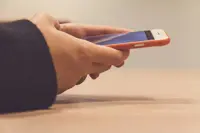
A doctor is urging for more medical emojis – including realistic organs – to be added to the standard selection in order to simplify communication with patients.
Dr Shuhan He, with the Massachusetts General Hospital’s Department of Emergency Medicine, said the medical field would benefit from a more comprehensive and cohesive set of emojis.
“Especially when rapid communication is key, such as in emergency medicine settings, the ability to rely on a point-and-tap form of communication may at least be useful and could facilitate important clinical decisions,” he said, in an article published in the Journal Of The American Medical Association.
He added that it could be useful in situations where patients spoke a different language, had disabilities that inhibit their ability to communicate, or simply did not understand medical terms.
He pointed out that pictorial representations such as visual analogue scales (VAS) were already used in medicine. For instance, the Wong-Baker Faces Pain Rating Scale used by children shows a series of faces ranging from a happy face at 0 (no pain) to a crying face at 10 (worst pain imaginable).
“Yet these VAS are trademarked and come with licensing fees. Emojis that are open source and nonproprietary present an alternative that is not cost prohibitive, increasingly more familiar to patients, and digitally accessible,” he said.
Last year, He worked with a team to propose the addition of such emojis to the Unicode Standard (a computing standard used by most word processing systems) and got approval for the anatomical heart and anatomical lung.
However, 15 other emojis didn’t make the cut, including intestines, leg cast, stomach, spine, liver, kidney, pill pack, blood bag, IV bag, CT scan, weight scale, pill box, ECG, crutches, and a white blood cell.
He said there were roughly only 30 emojis relevant to medicine, out of the 3,521 emojis in the Unicode Standard (a computing standard used by most word processing systems).
He defended that emojis were not just a millennial fad, but also increasingly used in both informal and professional settings as they were universally available on smart devices and computers.
He said the Covid-19 pandemic had accelerated the use of telemedicine, which in turn pushed medical professionals to use emojis to convey symptoms and help patients better understand their condition and instructions.
Adobe’s Emoji Trend Report 2019 found attitudes towards the technology was turning around, with 72% of healthcare workers that were initially hesitant now integrating emojis in their work.
“The medical community should begin to work toward consensus on what iconography would best serve patients and the profession with the goal of improving the accessibility and quality of healthcare and health information in the digital age,” he summed up.
Already a subscriber? Log in
Get 20% OFF The Star Digital Access
Cancel anytime. Ad-free. Unlimited access with perks.