



A sofa can look perfect in a furniture shop, but there may be a surprise waiting when you take it home.
Often the sofa is too large for the living room and no matter how you turn it around it's simply too big for the space it's meant to fit in.
“A lot of customers overestimate the size of their living room,” says Thomas Grothkopp from Germany's BVDM trade association of furniture and kitchen makers. “They're just not used to imagining how big a space is.”
This becomes an even larger issue when buying furniture online. A potential buyer can at least work with the object's dimensions. However, the inability to physically see the couch can put many people off buying furniture online.
But some furniture makers are turning to augmented reality to help make the process of deciding to buy online easier. After downloading an app for your smartphone, you take a picture of your living room. The app can then place a virtual image of an item of furniture into the photograph, which will give the customer an idea whether what they are buying will match their home.
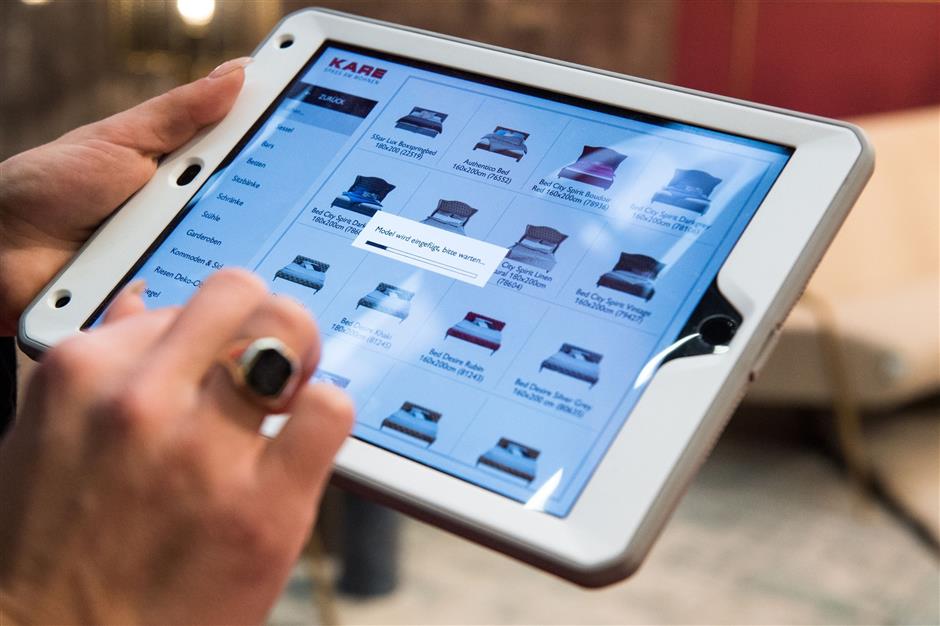
It's also possible to take a screenshot of your living room including virtual furniture to share with friends and family for their opinions. And there are some apps that provide forums to exchange photos and ideas.
Traditionally the furniture business has been slow to promote sales online. But Martin Gross-Albenhausen from Germany's BEVH e-commerce trade association says there are numerous initiatives “such as from Apple, that prove this technology has a big future ahead of it”.
Swedish multinational IKEA has its own app that allows customers to see an item of furniture reproduced in the home. But even much smaller companies are turning to more advanced tech to boost sales.
However, experts are not so convinced that this approach will drive sales up. “Augmented reality is helpful but it cannot replace a visit to a physical store,” says Ursula Geismann from the umbrella group of German furniture trade associations, VDM. “Customers can try out a lot more in a shop, such as opening and closing a cupboard's doors or sitting on a chair to get an idea of how it feels.”
Geismann thinks there is potential in a combination of physical stores and virtual reality. Interactive 3D programs are already well established when it comes to kitchen planning. “But most of the time we're talking about designing a completely empty room that a new kitchen will fit into.”
But augmented reality can do much more that that. “AR will eventually create totally new shopping experiences and it will be very useful when it comes to after-sales service,” thinks Gross-Albenhausen. “That will enable online and mail order companies to reduce the distance to their customers and provide highly individualised experiences.”
Thomas Grothkopp thinks physical shops will use augmented reality as an additional form of customer advice. This will help reduce the number of bad buys and increase customer satisfaction. After all, returning a couch isn't as easy as returning a pair of shoes. — dpa
Already a subscriber? Log in
Get 20% OFF The Star Digital Access
Cancel anytime. Ad-free. Unlimited access with perks.
