




WOMEN in Malaysia dream big and aspire to success.
They want financial freedom, good health, and security – aspirations that are widely shared across genders, yet experienced differently.
What determines whether these dreams flourish is not a lack of ambition, but the systems that shape opportunity, a test of how inclusive and future-ready those foundations truly are.
Boston Consulting Group’s (BCG) MY Impian: Uncovering the Malaysian Dream report surveyed 1,501 adults across age, income and region, asking Malaysians to choose the five dreams they most aspired to in the next ten years.
Our research revealed strong alignment across genders: physical and mental well-being emerged as a top aspiration, second only to financial freedom overall. Yet gender differences appear in how these priorities are ranked. Women are more likely than men to place well-being at the top of their list, with two-thirds (67.2%) highlighting this goal – more than two percentage points higher than their male counterparts.
“Have financial freedom” (66.6%) – the leading dream for men – came in second place for women, followed closely by “have enough money saved” at 58.9%.
The focus on health and wealth may be broadly shared across genders, but the different ranking for these key aspirations is not shaped by divergent ambitions, but the lived realities.
Our research shows that women take comparatively fewer breaks from work, with just 40% having done so compared to 45% of male respondents.
This is despite the greater share of caregiving responsibilities that women must shoulder.
Of respondents who took a break from work, 40% of women and 33% of men did so due to family obligations.
Perhaps more telling, almost half (43%) of men took a break due to a desire to explore other interests, compared to just 17% of women. This underscores the different pressures and freedom shaping men’s and women’s respective career paths.
Caregiving responsibilities and limited flexibility are also a prominent challenge for women seeking promotion, alongside expectations of long hours and constant availability.
For their male counterparts, lack of senior sponsorship and unclear or subjective promotion criteria were cited as major barriers.
What we believe this insight shows is the important opportunity to design systems that support participation for women across all life stages.
Because inclusion, ultimately, is not about giving advantage to some at the expense of others, but about removing friction that can hold certain groups back – uplifting all Malaysians in the process.
Empowering women unlocks fair returns
When women are enabled to participate fully in socioeconomic opportunities, the gains extend far beyond the individuals.
Families become more resilient, organisations retain experienced talent and economies grow more sustainably.
Investing in women’s well-being and socioeconomic participation is a “give to gain” proposition, one that enables broader, long-term value creation.
These returns can be substantial. Increasing women’s participation in the workforce can significantly boost economic growth.
BCG research – titled Mainstreaming Women’s Economic Empowerment for Greater Impact – found that achieving gender workforce parity by matching female employment and entrepreneurship with men’s could raise global GDP by more than 20% in many economies.
This value is equally apparent on the family level.
Dual-income households typically enjoy access to more stable income, earning around 83% more (according to BCG’s insights on Gender and Social Inclusion) than single-income households.
This supports household resilience and improves the ability for a household to buffer economic shocks.
These benefits extend beyond households. Businesses also gain from improved inclusivity.
Companies that build inclusive cultures, as highlighted in BCG’s article An Inclusive Workplace is Good for Business, where women and diverse voices feel valued and supported often see lower attrition and stronger engagement, helping teams stay connected and productive.
Building a system that works for all
The mismatched workforce burdens provide a picture of a system that works better for some than others.
When placed side-by-side with the tangible benefits of equal opportunity for genders, it’s clear that a system that is fairer for everyone also builds greater opportunity for all.
Simple interventions such as flexibility or support that reflects the greater burden of care responsibilities women face is a powerful example.
Structured support to assist mothers who return to work is a critical platform to improve inclusive opportunities.
In our MY Impian study, almost two-thirds (61%) of women said it was somewhat or very difficult to return to work after a break – compared to just under half (49%) of men.
Returning mothers cited flexible or part-time schedules (62%) as the most helpful initiative to aid a return to work, followed by affordable childcare (48%), on-site childcare or lactation rooms (41%), and availability of remote or hybrid work (39%).
Companies should also take note of the key measures to retain valuable female employees after maternity leave.
Female respondents of MY Impian identified flexible hours (73%) as the leading measure, followed by on-site or subsidised childcare (41%), remote or hybrid work (34%) and length of paid leave (33%).
None of these measures should surprise forward-looking companies in Malaysia.
What MY Impian shows, however, is that such support is not just a matter of corporate policy.
It is a set of mechanisms with the power to directly impact women’s ability to achieve their dreams.
What more could a business ask for? Inclusive systems provide a pathway to equal opportunities for employees, creating wider economic value for businesses and the nation.
This International Women’s Day, the theme of “Give to Gain” reflects a simple truth: when women are provided with the structural support they need to participate fully, the benefits extend to everyone.
The organisations that recognise this will be best positioned to thrive.
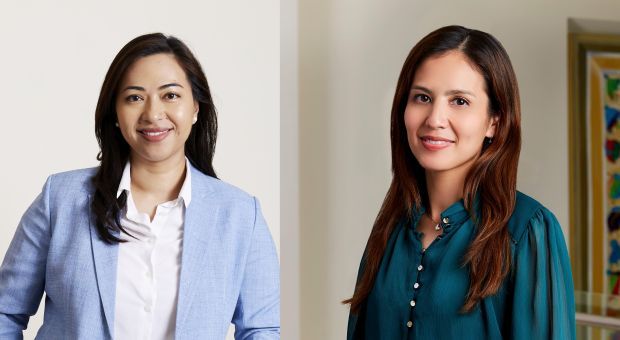
Nurlin Mohd Salleh is the managing director, partner and head of BCG Malaysia, while Anis Mohd Nor is a partner in Boston Consulting Group (BCG).
Download the MY Impian: Uncovering the Malaysian Dream report for more details.


