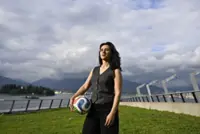
MEXICO CITY, July 3 (Reuters) - As the World Cup brings cameras, money, and global celebration to Mexico, former Afghanistan women's national team captain Khalida Popal is asking a critical question: how much of that spotlight will reach the vulnerable girls and refugees outside the stadium gates?
Popal, a founder of the Afghanistan women's national team, fled the country after the Taliban returned to power in 2021 and effectively erased women from sport and much of public life.
Now in Mexico City, she is working with local organisations to run football clinics for refugee children and marginalised communities, using the World Cup to press host nations to deliver a lasting social legacy beyond the tournament.
"The World Cup is happening in a very short time," Popal told Reuters in an interview. "But what about after the World Cup? And how the community needs to get the focus and support."
Popal said Mexico had made significant progress in women's football, pointing to the growing strength of Liga MX Femenil and the appointment of the first Mexican female referee, Katia Garcia, to officiate in a men's World Cup match.
"I watched the woman stand there. That's the Mexico we want to see," Popal said, adding that visible female leaders on the pitch inspire girls to believe they belong in football.
'FOOTBALL IS POLITICS'
Popal firmly dismissed the notion that sport and social issues should be kept separate. "Everything about football is politics. It's business and it's politics," she said, noting that women's football, in particular, is intrinsically tied to activism.
As the sport historically lacked financial backing, players were driven purely by a love for the game, Popal added, empowering them to lead major global campaigns tackling the gender pay gap, gender-based violence and LGBTQ+ inclusion.
However, she said those advances must be matched by progress off the field. Mexico continues to grapple with high levels of gender-based violence and femicide, with 70,500 people requesting asylum last year, according to the U.N. refugee agency (UNHCR). Most are women and children living in shelters, and Popal warned that leaving vulnerable communities without opportunities or long-term support fuels cycles of violence and exclusion.
Her warning is shaped by Afghanistan's experience. Since the Taliban returned to power in 2021, she said, women have been systematically excluded from public life, with restrictions extending to education, employment and sport. Afghanistan has become "an open prison" for women, she said, noting that Taliban rules now even punish women for speaking loudly in public.
For Popal, the Afghan women's team in exile represents more than a return to international competition. It is a reminder of the importance of safeguarding women's rights.
PROTECTING THE PLAYERS' VOICES
As the women's game attracts more global attention and corporate investment, however, Popal warned this activist foundation is at risk of being overshadowed.
"Football has become so commercialised that it has taken away the voice from the athletes," Popal said. "The more money comes in, the more brands come in, the more stamped, the more logos you have on your chest, the more you lose your power of having a voice."
Through her organisation, Girl Power, Popal hopes to safeguard that authenticity. By bringing the game to refugee shelters and grassroots communities, she aims to build sisterhood and resilience, proving that football belongs to everyone, not just the privileged elite.
(Reporting by Natalia Siniawski and Janina Nuño Rios, editing by Ed Osmond)