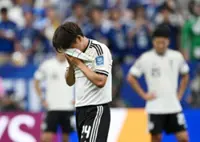
DALLAS, June 30 (Reuters) - Despite coach Hajime Moriyasu's pre-tournament declarations that his team should challenge for the title, Japan will travel home from the World Cup having been knocked out in a fashion that has become all too familiar.
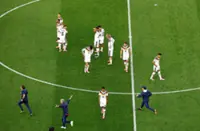
The 2-1 loss to Brazil in Houston on Monday carried echoes of Japan's elimination at each of the previous two tournaments as the country's wait for a victory in the pressurised environment of the knockout rounds goes on.
On five occasions Japan have progressed to the knockouts and each time they have slipped out of the competition, unable to build on encouraging displays in the group phase.
Turkey and Paraguay knocked the relatively inexperienced Samurai Blue out in 2002 and 2010 respectively, but it is the three most recent exits that have shown traits that now run the risk of becoming a complex for Japanese football.
Against Belgium in 2018 and Croatia in 2022, as against the Brazilians at Houston Stadium, Japan took the lead only to squander that advantage as the match wore on.
Gabriel Martinelli's decisive goal in the 95th minute for Carlo Ancelotti's side carried haunting similarities to Nacer Chadli's winner deep into stoppage time for Belgium eight years ago as the Japanese campaign ran out of steam.
'HEAD HELD HIGH'
"Japan leaves this World Cup with its head held high," wrote former Japan boss Philippe Troussier on social media. "Against Brazil, the difference wasn't talent or organization, it was squad depth.
"In the second half, Japan no longer had the resources to sustain the same attacking pressure. A proud exit that highlights how far this team has come, while also showing the final step still needed to compete with the very best."
Injuries certainly undermined Japan's hopes, with the loss of Kaoru Mitoma, Takumi Minamino and Wataru Endo prior to kickoff depriving Moriyasu of options and quality within his lineup.
Takefusa Kubo, arguably the most creative outlet in Japan's World Cup squad, was then ruled out with a knee injury sustained in the opening 2-2 draw with the Netherlands.
Endo's absence, in particular, was keenly felt.
While a combination of Kaishu Sano, Daichi Kamada and Ao Tanaka made up for the Liverpool man's physical absence in midfield, the 33-year-old's experience and game management were a challenge to replace.
Moriyasu's decision to call up forward Shuto Machino in Endo's place rather than going for the like-for-like option of Sporting's Hidemasa Morita could also be seen as an error of judgement.
Friendly wins over Germany, England and, in particular, Brazil since the last World Cup gave the Japanese the belief that the 2026 finals could be different, but in the end the outcome was the same.
Now the Japan Football Association must decide, after eight years of Moriyasu at the helm, whether it makes sense to stay on the same path or to take a new direction.
(Reporting by Michael Church, Editing by Toby Davis)