MANY Malaysians associate the term nuclear with weapons, destruction and danger, given the history associated with nuclear technology.
But nuclear technology is also a powerful tool for improving lives, advancing scientific knowledge and addressing some of the challenges facing society today. Its applications extend far beyond energy, with important uses in healthcare, agriculture, industry, environmental management and scientific research.
As Malaysia looks towards a future driven by science, technology and innovation, it is important that our understanding of nuclear technology reflects the reality of how it is used today. Only with accurate information and a balanced understanding of both its benefits and risks can we make informed decisions about its role in Malaysia’s future.
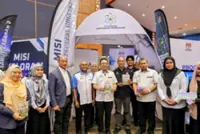
As part of this effort, the Science, Technology and Innovation Ministry (Mosti) continues to strengthen public understanding of nuclear technology through the Nuclear Advocacy Programme, which carries the message, “Nuclear for the People”.
Its aim is to ensure that Malaysians have access to accurate facts and reliable knowledge so that nuclear technology can be understood and evaluated based on scientific evidence, including its applications, potential benefits and associated risks.
While many immediately associate nuclear technology with weapons or destruction, nuclear science has actually contributed significantly to fields that directly affect our daily lives.
In healthcare, nuclear techniques enable precise diagnostic and radiation therapies. In agriculture, nuclear applications drive crop mutation breeding, food preservation and pest control. Industry benefits from nuclear techniques in areas such as testing, measurement and quality control while environmental applications can support monitoring and scientific research.
Nuclear science also has an important role to play in energy and the transition towards a more sustainable future.
Around the world, countries have demonstrated that nuclear technology can be used safely and responsibly to improve lives and support national development.
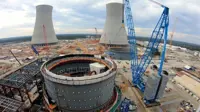
France and South Korea, for example, have built significant nuclear energy capabilities to support reliable electricity generation while countries such as Japan have applied nuclear science in healthcare, research and industry.
Beyond energy, nuclear technology has also delivered important benefits in agriculture and food security. Indonesia and Vietnam have used nuclear techniques to develop improved crop varieties and strengthen agricultural productivity. Meanwhile, countries such as the Dominican Republic have applied the Sterile Insect Technique to control agricultural pests and support food exports.
These examples show that nuclear technology is a broad scientific tool with applications across many sectors. It is not limited to the production of energy, nor is it synonymous with weapons.
In fact, Malaysia is already leveraging nuclear and radiation technologies in many areas. This gives us a strong foundation to build upon as we consider how science and technology can contribute to Malaysia’s future.
We already have evidence from around the world and within Malaysia that nuclear technology can contribute to development. It is therefore timely to take the next step and explore how we can continue to develop and apply these technologies responsibly, safely and transparently while ensuring that Malaysians have the knowledge and confidence to make informed decisions about their future.
As part of science literacy efforts, Mosti intends to expand nuclear advocacy to the primary school level through collaboration with the Education Ministry. Early exposure can help children develop a basic and accurate understanding of nuclear science while encouraging curiosity about how science and technology influence the world around them.
This initiative is also closely connected to our national efforts to strengthen interest in science, technology, engineering and Mathematics (STEM).
A child who learns that nuclear science is not simply about reactors or weapons, but can also be used to help diagnose illness, improve agriculture, preserve food and understand the environment, may begin to see science in a very different way. We want every young Malaysian to grow up with the confidence to ask questions, examine evidence and distinguish scientific facts from misconceptions.
To bring this vision to life, the Nuclear Advocacy Programme has developed an interactive learning kit. It includes the Nuclear World Adventure book, molecular model kits, a three-dimensional reactor core model, interactive fact cards, the Nuclear Buddy Search and posters highlighting applications of nuclear technology. These materials provide learners with opportunities to explore nuclear concepts visually and interactively rather than simply reading about them.
At industry level, during Mosti’s monthly assembly last month, I officiated the launch of Nuclear Advocacy with Bioeconomy Corporation as a strategic partner, with the Malaysian Nuclear Agency, the Atomic Energy Department and the National Science Centre serving as implementing partners.
Such collaboration allows us to bring together expertise in nuclear science, regulation, education and public engagement. More importantly, it demonstrates that science advocacy works best when institutions share knowledge and work towards a common national objective.
The future of nuclear technology in Malaysia, like any major scientific and technological issue, should be shaped by knowledge rather than fear, and by evidence rather than misconception.
Mosti's role is to provide the public with reliable information and create space for informed discussion. This is a whole-of-nation effort. Our scientists and technical experts have a responsibility to communicate their knowledge clearly. Our educators have an important role in cultivating curiosity among young people. And society itself must remain willing to learn, question and engage.
We want Malaysians and their children to see nuclear science not as something distant or frightening but as a field of knowledge that can contribute to healthier communities, stronger industries, sustainable agriculture, environmental protection and national development. The more Malaysians understand, the better equipped we will be to make informed decisions about our future.
Ultimately, “Nuclear for the People” is not simply a campaign about nuclear technology. It is a commitment to building a society that is informed, scientifically literate and confident enough to engage with complex issues based on facts and evidence.
Nuclear technology must serve society, but for society to determine how it should be used, Malaysians must first have the knowledge to understand its possibilities, limitations and risks.
That is why our message is “Nuclear for the People”. It is a call to replace fear with understanding, misconception with knowledge, and uncertainty with informed dialogue.
As Malaysia advances towards a more science- and technology-driven future, an informed and engaged public will be one of our greatest strengths.
DATUK CHANG LIH KANG
Minister
Science, Technology and Innovation Ministry
Putrajaya
Already a subscriber? Log in
Get 20% OFF The Star Digital Access
Cancel anytime. Ad-free. Unlimited access with perks.