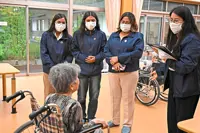
MALAYSIA is preparing for an older population. The shift is already becoming visible. In 2026, about 4.2 million Malaysians, or 12.3% of the population, are aged 60 and above. Recent national plans and Budget 2027 measures also point in the same direction, with more attention being given to elderly care, long-term support and the people needed to work in the care sector.
These steps are necessary. Malaysia will need more trained workers, stronger services and better support for older people.
But while we prepare the country for more older people, are we also preparing people for their own ageing? This is where I believe ageing education can make a difference.
Ageing education is not about teaching people how to become old. It is about helping people to understand, prepare for and adapt to longer lives. That preparation should begin long before retirement.
Financial habits are built over many years. Health is shaped by what we do throughout adulthood. Skills can grow, or they can become outdated. Technology and careers change. Family responsibilities change. Relationships and social networks also change over time.
By the time some problems become visible later in life, these issues may have been developing over many years.
Malaysia's retirement system already gives us a useful lesson about timing. The Employees Provident Fund's Retirement Income Adequacy Framework not only sets a final savings target at age 60. It also provides age-based savings milestones from age 18 onwards.
The message is simple: retirement security is built across working life, not created at the point of retirement.
The same principle can be applied more widely. If a financial gap is identified only when someone is close to retirement, there may be less time to address it. If a worker finds it difficult to adapt to new technology later in their career, this may reflect limited opportunities to keep learning over the years. Likewise, if poor health begins to affect work and daily life at 60, earlier attention to health and prevention could have made a difference.
That is why ageing should be seen not only as a health, welfare or retirement issue but also as a learning issue. In a recent blog post for the Unesco Institute for Lifelong Learning, I described ageing education as continuous learning that helps people prepare for ageing throughout life.
Different stages of working life bring different needs. Someone starting a career may be building skills, forming financial habits and learning how to adapt. During mid-career, housing commitments, children, ageing parents, caregiving, career changes and reskilling can all compete for time and money. Later in a career, issues such as retirement, flexible work, health, knowledge transfer and continued contribution may become more important.
The point is not to divide people into rigid age groups. It is to recognise that preparation changes over time. Career-stage approaches are already used in many organisations through mid-career reviews, professional development, financial planning and flexible retirement arrangements.
Ageing preparation can follow the same idea: start earlier, review needs over time and adjust support as circumstances change.
Not everyone approaching retirement wants the same thing. Some may want to stop working completely. Others may prefer part-time or flexible roles. Some may want to mentor younger colleagues, transfer knowledge, start something new or contribute to their communities. Preparing for longer lives should allow for different pathways.
Financial preparation remains essential but longer lives involve more than money. Malaysia's Ageing and Retirement Survey (MARS, 2021-2022) looks at work, economic security, health, family circumstances, functional ability, psychosocial well-being and social protection.
Internationally, broader measures such as the Active Ageing Index also combine employment, participation, health, security and the conditions that support active ageing.
These examples show why preparation should not be reduced to one indicator. A person may have enough savings but poor health, outdated skills or weak social connections. Another may be healthy and professionally capable but financially insecure.
For workplaces, this does not mean taking responsibility for every part of an employee's future. It means recognising where organisations can help. Career development can support earning capacity. Financial education can improve understanding of savings choices. Reskilling can help people remain employable as jobs change. Flexible work and transition planning can support those who want or need to stay economically active for longer.
Much of the structure already exists. Employers provide training. Universities and colleges support learning. EPF provides savings guidance and age-based benchmarks. Health services promote well-being. Communities support families. Government provides social protection.
The opportunity may be to connect these efforts earlier and more deliberately across working life.
Sarawak offers a useful example of why this matters. Sarawak is expected to become an ageing state soon, but the experience of ageing will not be the same for everyone. A public servant in Kuching, a small business owner in Sibu, a farmer in a rural area and a young employee beginning a career may face very different levels of income, access to services, learning opportunities and family responsibilities.
The integrated care centre planned for Sarawak under Budget 2027 is therefore an important development. Its focus on training, research and elderly care could also help build stronger links between government, universities, training providers, employers, communities and healthcare services around the wider issue of ageing.
The ageing debate often begins with a simple question: How will we support older people? That question matters, but it should not be the only one. We should also ask how people arrive at older age and what can be done much earlier to help them arrive there better prepared.
Malaysia is right to strengthen elderly care and prepare new jobs for an older population. But alongside preparing the country for more older people, we should also prepare people for becoming older.
Ageing education should become part of lifelong learning, workforce development and preparation across career stages. Ageing happens throughout life. Our preparation for it should, too.
DR DAYANG KARTINI ABANG IBRAHIM
Senior lecturer
Universiti Malaysia Sarawak (Unimas)/ visiting researcher, Unesco Institute for Lifelong Learning (UIL), Hamburg, Germany
Already a subscriber? Log in
Get 20% OFF The Star Digital Access
Cancel anytime. Ad-free. Unlimited access with perks.