WE are living through a global disruption: a world grappling with supply chains and inflation. And we have previously lived through another global disruption: when the sudden reordering of daily life occurred.
But to lump the Covid-19 pandemic and the Middle East conflict together is to miss a critical distinction: They are not the same storm; they are two entirely different weather systems that happen to be flooding the same basement.
The pandemic was a demand shock – a violent, external freeze on human interaction. The Iran conflict is a supply shock – a structural rupture in the flow of the world’s most essential resources. Understanding the difference is key to understanding why our recovery feels so much more treacherous this time around.
In the early days of Covid-19, back in 2020, the world didn’t just slow down; it pressed pause. The demand for energy cratered. With offices, airports, and factories shuttered, the price of oil briefly went negative – a surreal moment in economic history when producers were paying buyers to take the stuff away.
The transportation of people and goods was reduced to the bare essentials: medicine, food, and little else. Tourism, the lifeblood of entire economies, vanished overnight.
The disruption was terrifying in its suddenness, but it was fundamentally a crisis of velocity. Money stopped moving, people stopped circulating, and the economy went into a medically induced coma.
Out of that coma came adaptation. The great innovation of the pandemic was the normalisation of working from home. It was a necessity born of lockdowns, designed to reduce the spread of the virus. It worked.
And for a brief moment, we celebrated the environmental silver lining: fewer commuters, cleaner air, a decoupling of economic output from transport emissions.
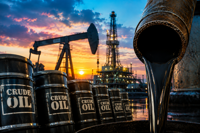
Now, fast forward to the current crisis spurred by war. The disruption is inverted. This isn’t a crisis of falling demand; it is a crisis of spiking costs. Oil prices aren’t crashing; they are soaring, sending shockwaves through every corner of the global economy.
Unlike the pandemic, where we tried to freeze the economy to save lives, this disruption is defined by the fact that the economy must keep moving, but the fuel that moves it has become a luxury.
This changes the calculus of everything – especially the habits we adopted during the pandemic. Take working from home. During Covid-19, it was a public health measure. Today, it is a strategy to reduce energy consumption. In an era of US$100-plus oil, the logic of keeping millions of cars off the road is no longer just about work-life balance; it is about national economic resilience. Businesses are now realising that remote work is a hedge against volatile transport costs. It is a fascinating irony: what started as a temporary fix for a virus is now a permanent tool for energy security.
But the similarities end there. While the pandemic crushed the tourism industry globally, the war is fragmenting it. Travel to conflict regions has rightly stopped, but unlike the blanket travel bans of Covid-19, tourism elsewhere is facing a different hurdle: affordability.
The era of cheap flights, built on the back of cheap jet fuel, is under threat. The recovery we hoped for in the hospitality sector is now being throttled not by fear of infection, but by the sheer cost of getting anywhere.
During the pandemic, food supply chains were strained by labour shortages and logistical logjams in ports. It was a problem of movement. Now, the problem is cost.
The war has spiked the price of fertiliser (which uses oil in its manufacture). When transport costs rise, imported food becomes a luxury.
The pandemic disruption was temporary in its structural impact. Governments could step in with stimulus cheques, prop up demand, and assume that once the virus receded, the old mechanisms would whir back to life.
The conflict disruption is rewriting the rules of engagement. It is forcing a permanent restructuring of energy markets, a rethinking of globalisation, and a painful acceptance that energy independence is not just an environmental slogan but a geopolitical necessity.
The pandemic taught us we can survive by standing still. But the conflict is teaching us that standing still is no longer an option. We are moving from a world of demand-side management – where we simply needed to wait for the consumer to return – to a world of supply-side reality, where the cost of basics dictates the terms.
The solution to a demand shock is stimulus. The solution to a supply shock is diversification and efficiency.
Working from home is a good start, but it is a bandage on a wound. We need to invest in energy sources that are immune to the geopolitics of the Middle East. We need to rebuild supply chains that prioritise stability over just-in-time efficiency.
PROF DATUK DR AHMAD IBRAHIM
Adjunct professor
Ungku Aziz Centre for Development Studies
Universiti Malaya
Affiliate
Tan Sri Omar Centre for Science, Technology, and Innovation Policy Studies
UCSI University
Already a subscriber? Log in
Get 20% OFF The Star Digital Access
Cancel anytime. Ad-free. Unlimited access with perks.