Budi95 a gateway to improving public transport


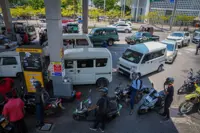
Traffic gridlock at Jalan Bukit Bintang.pix taken at 11am. —AZHAR MAHFOF/The Star

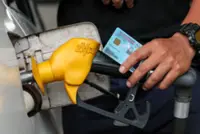
THE introduction of the Budi Madani RON95 (Budi95) initiative marks a significant step in the government’s broader subsidy rationalisation exercise. The rollout has been smooth in many areas with only minor hiccups and procedural adjustments.

This initiative offers more than fiscal reform; it is a chance to look at what could happen if we used the savings from subsidies to shift our national mobility culture.

The truth is we are still stuck with a car-centric ecosystem. Urban areas continue to choke with congestion and the problems exacerbate every year. Many households spend more on owning and running private vehicles than they realise.

Bukit Bintang, where I am most active at the grassroots level, is notorious for being a traffic nightmare during peak hours and weekends.

Fortunately, we are seeing steady progress in the public transport ecosystem. Prasarana’s rail reliability continues to improve with the eagerly awaited LRT3 line slated to start operations by year’s end. Free shuttle and van services, initially introduced during maintenance periods, have now become a regular feature on key routes to ease last-mile congestion.

The Electric Train Service (ETS) is also scheduled to reach Johor Baru by December, the final piece in electrified rail connectivity covering the entire stretch of the west coast of the peninsula from Padang Besar in Perlis.

Approval for the MRT Circle Line has already been obtained, completing the loop that will redefine urban mobility across the Klang Valley.

More importantly, initiatives like the My50 Pass makes public transport affordable to the masses.

The Transport Ministry under Anthony Loke deserves credit for driving these coordinated improvements with a focus on long-term reliability.

These improvements are meaningful, especially when we view them through the lens of an area like Bukit Bintang, which is already being served with one of the most integrated public transport networks in the country. There, the convergence of MRT, LRT, monorail, buses and feeder services gives commuters smarter choices and convenience.

This density of connectivity has helped many to rely less on private cars, supporting local businesses, reducing parking pressure and enabling more walkable neighbourhoods. If we can replicate this multi-modal integration in more vicinities, we could shift the balance of mobility.

Budi95 gives us a powerful policy entry point. Rather than discuss public transport in isolation, we can propose that as subsidies are rationalised, the funds should be reinvested into expansion, better first- and last-mile links, accessibility upgrades and more frequent services.

Under current plans, new buses and demand-responsive vans are expected to bolster urban links.

Ultimately, Budi95 may offer temporary subsidy relief. The greater challenge is changing how Malaysians move. If public transport is to become not just an option but the preferred mode, it must be more reliable, accessible, affordable and convenient than driving.

The Transport Ministry is showing that such a shift is possible. If citizens, planners and policymakers seize this moment, we may soon see less gridlock, cleaner air and fairer mobility for all.

BEN FONG KOK SENG

Chairperson

Bukit Bintang Parliamentary Zone Residents’ Representative Council

Get 20% OFF The Star Digital Access

Monthly Plan

RM 13.90/month

RM 11.12/month

Billed as RM 11.12 for the 1st month, RM 13.90 thereafter.

Best Value

Annual Plan

RM 12.33/month

RM 9.87/month

Billed as RM 118.40 for the 1st year, RM 148 thereafter.

Follow us on our official WhatsApp channel for breaking news alerts and key updates!

Next In Letters

Commuter woes after closure of�Pekeliling Bus Station
Our schools need more than just teachers and counsellors�
Understanding the problem of homelessness
Homestay villages are ready for the rail chapter��
Healthy ageing begins long before old age
Turning data into road safety action
When our frontline health warriors are crying for help, Malaysia must listen
�10 years cut to 3: TAR UMT students pay the price for government's tax exemption U-turn
Include earthquake mitigation in building design�
When schools become crime scenes

Others Also Read