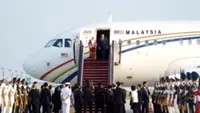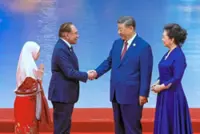
PRIME Minister Datuk Seri Anwar Ibrahim’s participation in the Shanghai Cooperation Organisation (SCO) Plus Summit in Tianjin, China signified a watershed moment in Malaysia’s regional and global positioning.
To begin with, the PM’s inaugural appearance at the Summit was rather unusual. After all, Malaysia is not a member, dialogue partner or even an observer of the SCO. And yet, Malaysia’s presence was a clear signal of how a medium-sized trading nation is seen as a bridge-builder in a fractured world.
In a gathering dominated by Eurasian giants, Anwar’s intervention carried gravitas because it was rooted in principle, clarity and a call to restore trust in a global order that is fast breaking apart at the seams.
Anwar’s remarks struck a deep chord. “We are living through a great unravelling,” he declared, pointing to eroding bonds of trust and fragile, antiquated institutions that now strain under pressure. Underlying Anwar’s remarks was a consistent thread: the defence of multilateralism and rebuilding trust among nations with emphasis on active cooperation in trade, investment and disaster relief, and accelerating energy transition.
In perhaps the boldest part of his remarks, Anwar turned to Gaza. He called the tragedy the starkest example of the impotence of global institutions to stop genocide, mass atrocities and blatant violations of international law.
For decades, the promise of “never again” has rung hollow. The ongoing suffering in Gaza, with thousands of children, women and men killed, exposes the moral bankruptcy of global governance structures.
Anwar’s call for active intervention was not merely rhetorical but also a demand for accountability, and a plea that global governance reform cannot be deferred. For Malaysia, a country that has consistently spoken up for Palestine, this was also a reaffirmation that peace cannot be divorced from justice.
Earlier, at a packed lecture hall at Tianjin University, Anwar doubled down on the doctrine of “sovereign interdependence” that he first articulated in Kuala Lumpur at a joint BOAO-Isis Malaysia event.
Invoking history, from Admiral Zheng He’s voyages that brought gifts without conquest to the Confucian ethos of hé ér bù tóng (harmony without uniformity), Anwar reminded Asia that the post-war economic orders scripted in Bretton Woods and Washington were no longer suited to the needs and wants of an increasingly vocal Global South. Asia today must write its own chapter.
At the Malaysia-China High Level Business Dialogue in Beijing, Anwar’s focus shifted to the economic realm. Here, his message was pragmatic: Malaysia and China must deepen trusted partnerships amid global fragmentation. He pointed to the dangers of protectionism, sharpened by US tariffs, which threaten the very principles of openness that underpinned Asia’s rise. The remedy, he argued, lies in building coalitions that uphold stability and fairness.
It is easy to overlook the quiet significance of Malaysia’s role at the SCO Plus Summit. This was not an Asean Summit. Nor was Malaysia present in any formal capacity. This was clearly a mark of recognition of Anwar, the consummate statesman whose interventions in international fora and engagements consistently focus on universal principles of justice, sovereignty and fairness. In an age when middle powers often struggle to be heard, Malaysia’s call gained traction as a voice of moderation, of a country trusted to speak truth to power without rancour.
Anwar’s China visit and SCO intervention must be seen as part of a broader strategy to place Malaysia at the centre of Asia’s unfolding story. It is a strategy rooted in history but attuned to the future, blending principled stands with pragmatic cooperation.
PROF DATUK DR MOHD FAIZ ABDULLAH
Chairman
Institute of Strategic and International Studies (ISIS) Malaysia
(Read the full article at thestar.com.my)
Already a subscriber? Log in
Get 20% OFF The Star Digital Access
Cancel anytime. Ad-free. Unlimited access with perks.