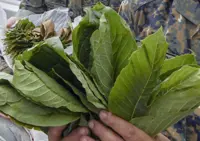
THE director-general of the National Anti-Drug Agency (AADK) has recently announced that the agency has been empowered to direct ketum users to undergo rehabilitation in government-run facilities even if they do not show signs of physical dependence or addiction.
This decision has been backed by the Health Ministry, according to a report in a local English daily.
While the move to rehabilitate ketum users is commendable, I am concerned about the effects this would have on the public’s perception of the plant, which has a long history of use as a household remedy for various ailments. In South-East Asia, it is also commonly used as a stimulant for enhancing stamina.
In Malaysia, the use of ketum (and its most abundant alkaloid, mitragynine) has been regulated since 2003 under the Poisons Act, 1952. It has been presumptively claimed that mitragynine has psychoactive properties, or an abuse potential, equivalent to morphine.
To date, there has been no evidence that mitragynine or ketum leaf extract (decoction) has been abused like heroin.
Mitragynine has been shown to interact with numerous receptors, not just opioid receptors. It also does not have a strong binding affinity as an opioid.
On the other hand, field studies have suggested that ketum can potentially aid harm reduction efforts since it has been associated with a significant reduction in opioid use, especially when it comes to moderating opioid dependence and withdrawal.
Such claims merit serious scientific investigation; if validated, ketum can function as a cheap and easily available substance to fight against opioid addiction. Indeed, fanning fear about ketum will undermine public support for serious studies on its utility.
Numerous field studies in Malaysia have shown that ketum was used as an appealing alternative by polysubstance users because it serves as a reprieve from the vicious cycle of addiction.
There have been occasions when ketum was used as a substitute to methadone, which is often prescribed to treat opioid dependence. Published studies do not suggest any widespread addiction to ketum per se, nor was it associated with serious adverse health issues, including overdose, in Malaysia even when it was co-consumed with illicit drugs.
Furthermore, the risks of dependence and withdrawal have not been clinically evaluated in local patients or regular users. Although ketum has some psychoactive properties, it has been predominantly used for its therapeutic value. Notably, based on the testament of polysubstance users, ketum is neither seen as a primary choice of drug nor is it as appealing as heroin. These lived experiences have been reported in several Malaysian studies.
There are currently no established standards to diagnose or treat ketum dependence, making it tempting to blindly follow the protocols set out for treating opioid dependence.
Realistically, ketum dependence does not wholly meet the substance use disorder (SUD) criteria outlined in the Diagnostic and Statistical Manual of Mental Disorders. Ketum dependence should be handled carefully with a combination of “gentle” treatments traditionally used by native users and counselling to enable users to remain functional and escape name-calling.
At present, ketum’s abuse potential hinges on anecdotal accounts (self reports). Hence, it is important for policymakers to engage with local experts to better understand ketum’s safety and abuse profile so that proper legislation and preventive interventions can be customised to preserve its traditional utility as well as deter its misuse.
ASSOC PROF DARSHAN SINGH MAHINDER (PhD)
Centre for Drug Research
Universiti Sains Malaysia
Already a subscriber? Log in
Get 20% OFF The Star Digital Access
Cancel anytime. Ad-free. Unlimited access with perks.