How do we prevent the floods?


Fluid changes: What was once a children’s playground is now becoming a retention pond. Hopefully, it will keep the flood waters away.

MY friend Jay is finally driving his car – the engineer has been repairing it by himself for the last one year – but his cousins have not been so lucky.

They have two vehicles in the workshop. They have paid RM45,000 for the repairs – RM30,000 for one and RM15,000 for the other – and are still paying instalments on the two cars they have not used for one year.

They are all from Sri Muda in Shah Alam, the township that was completely submerged when the great floods hit on Dec 18, 2021, almost exactly a year ago.

For residents there, the agony from the floods has not gone away.

The houses are still in need of repair, Jay’s furniture are hand-me-downs from neighbours and even their lifestyles have changed, with the living room having been moved upstairs.

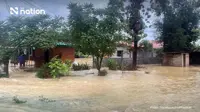
This time last year, the houses became unliveable. The ground flood was completely submerged, the ceiling fans a mangled mess. Roads literally ceased to exist with the water covering even the road signs.

Sri Muda was one huge lake.

Those who came to help were afraid that lorries, cars or street signs could damage the bottom of their boats. It was a nightmare, one from which they haven’t quite woken up.

Every time it rains, they fear. And as the anniversary of that disaster arrives, they have more reason to quiver. We are being told that there could be more rains, more floods from today.

Already, nature is rumbling. More than a dozen people, including children, have been killed in a landslide in Batang Kali, which happened after a mere drizzle. It’s a terrible tragedy, one that I am sure could have been averted if we had cared more.

What have we been doing for the last one year? Where are the flood mitigation plans, what are the action programmes to prevent a recurrence?

Even the aid that was promised has not been as forthcoming as it should be.

The authorities had promised RM5,000 for repairs in Sri Muda, but those who opted for government contractors received only RM3,000 and some shoddy repair work.

“The repair work was hardly worth RM500 but the contractors received RM2,000,” says Jay.

Too much of the supposed aid has been lost to leakages. I know.

I was a flood victim myself and had to trudge in knee-deep waters twice – in December last year and March this year – and to this day, the promised financial aid has not arrived.

A year on, it is not the money that matters. The people just want the government to prevent the tragedy from happening again.

Of course, it doesn’t help that the government itself has been changing every year or so before any concrete – I hate that word – steps can be taken.

Now, just three weeks after Datuk Seri Anwar Ibrahim became numero uno, one huge disaster has happened and we may be facing a bigger one from today. Massive floods are being predicted.

Anwar has instructed his deputy Datuk Seri Dr Ahmad Zahid Hamidi to take charge, and the orders are out. But are they enough?

It is all very well to set up relief centres, put boats on standby and get personnel to be ready to evacuate flood victims.

The more important question is: how do we prevent the floods?

When do we stop the rampant overdevelopment that is destroying hills and catchment areas? How do we ensure that our waterways are not clogged up, preventing water from flowing away from residential areas?

A real plan is needed. We are not talking just about people who refuse to move away from flood-prone riverbanks.

We are also talking about urban areas that have never experienced flooding before but are now inundated.

It could be due to bad town planning. It could be due to idiots who refuse to learn that dumping rubbish into our waterways is a sure-fire route to disaster. Or, as some claim, it could be climate change.

We need to educate the people to love our waterways. Whatever happened to the “Love Our Rivers” project?

And we must stop approving new projects everywhere. Enough of giant malls and empty houses. Developers are crying “overhang” even as house owners are crying at being under water.

We also cannot afford to lose our wetlands, which act as sponges to soak up the water. So much of our wetlands has been destroyed for agriculture and development.

The country’s mangroves have reportedly declined by over 45% while an estimated 29% of Malaysia’s 4,000km coastline has been classified as facing serious erosion.

Deforestation needs to be halted too.

We have reportedly lost 2.7 million hectares – almost 100 times the size of Penang Island – of humid primary forest between 2002 and 2020.

Yes, the “kayu balak” trade is big business, but the price the country pays is far higher than the profits the tycoons make.

We need large tracts of vegetation to hold the water that pours from the skies. We need real jungles – not concrete jungles.

Concrete, in fact, may be the biggest enemy. It is impervious.

In the United States, there are cities that have got rid of concrete in their many square miles of parking areas. They now use perforated blocks to allow water to seep into the ground. It may not be much, but every bit helps.

In west London, they are using permeable pavements. These absorb rainwater and slowly release it into the sewer network. It’s like a massive retention pond.

Instead of running off the tarmac into drains and overwhelming the sewer network, the rainwater is soaked up into crates installed underground and are gradually released.

They are also building flower gardens by the roads, which also absorb the rainwater.

We had plenty of that in Malaysia, but as the cars started to proliferate, we cut down trees and removed whatever permeable earth there was in the name of road widening.

The government is acting ... slowly.

In Sri Muda, drains are being widened. A generator and a pump are on standby, ready to draw water away in case of floods.

Near my house, the playground has been completely destroyed, with machines digging a huge 2m-deep retention pond.

The guys working there say it will prevent floods. Work is still ongoing and may be completed by May next year – by which time sunny days should be back, along with the playground.

Hopefully, there will be no floods there in December next year.

Get 20% OFF The Star Digital Access

Monthly Plan

RM 13.90/month

RM 11.12/month

Billed as RM 11.12 for the 1st month, RM 13.90 thereafter.

Best Value

Annual Plan

RM 12.33/month

RM 9.87/month

Billed as RM 118.40 for the 1st year, RM 148 thereafter.

Follow us on our official WhatsApp channel for breaking news alerts and key updates!
floods , Sri Muda , Dorairaj Nadason

Next In Columnists

Make Penang AI plan a bridge for majority
Giants fall, England survive – World Cup quarter-finals take shape
Who shapes global AI rules: Asean-China cooperation role
Why the Johor election is good for Malaysian democracy
Confessions of a durian season sinner
Looming threat to social security
More predictable than the World Cup
America at 250
Coexistence with wildlife key for public safety
Jitters all round in Johor

Others Also Read