



IN THE early hours of Sept 2, 1964, a young Malaysian soldier faced a moment that would define his philosophy of leadership.
The Landing at Labis during the Indonesia-Malaysia Confrontation saw Indonesian paratroopers infiltrate Johor, testing the resilience of Malaysia’s then-nascent armed forces.
Among the soldiers on the ground was Colonel Nik Zainin A. Rahman, then just in his early 20s (now retired). Despite having trained for combat, reality would prove to be a different experience.
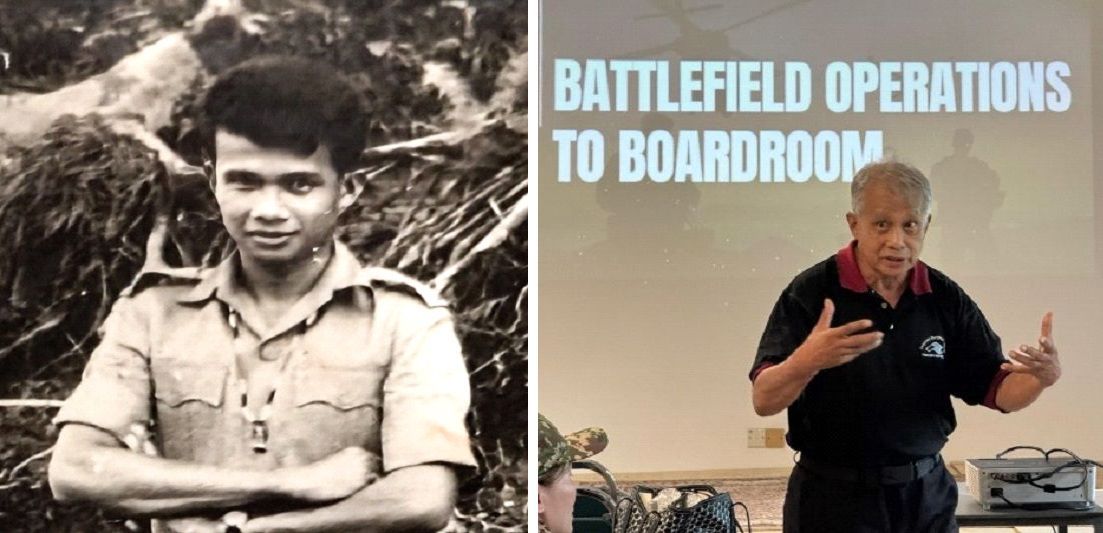
In that moment, the weight of command set in. Col (R) Nik Zainan had to decide — engage, reposition, or retreat. There was no time for hesitation, no room for fear. Every second mattered.
A sequence of events led to an Indonesian trooper being killed that evening. A tragedy by any account as life is precious, but such is the reality of the battlefield.
This encounter shaped in Nik Zainin what it meant not only to serve one’s nation, but to appreciate the juxtaposition of what life, sacrifice, and success would come to mean.
Corporate and Military Parallelism
After 28 years of service in the Malaysian Armed Forces, Col (R) Nik Zainin found himself in a different kind of battlefield — this time, addressing corporate executives more accustomed to boardroom battles than real combat.
"I was barely out of my teens when I had to make decisions that determined whether my men lived or died," he told them.
"Hesitation can cost lives. In business, it can cost millions — and livelihoods. Either way, leaders don’t have the luxury of inaction."
I had the privilege of hosting him alongside some of Malaysia’s most distinguished military veterans as part of LEADERISE (lead and rise), a leadership programme aimed at discovering corporate sector and military leadership synergies, or “parallelisms”, as Col (R) Nik Zainin terms it.
Here are some of the gems shared:
First, leaders must be decisive under pressure. When facing the 1964 incursion, Col (R) Nik Zainin emphasised that a wrong decision could cost lives, with inaction possibly worse.
“Difficult situations require decisiveness. This is what makes a leader”, he said.
“Thus, in business, many leaders get caught in analysis paralysis, delaying action out of fear of failure. But just like in war, failing to act can be the biggest mistake of all”.
Second, leaders impact morale. General (R) Tan Sri Zulkifeli Mohd Zin, the former Chief of Defence Forces – the military’s highest position - reminded participants that soldiers do not fight harder just because they have the best weapons — they fight because they believe in their mission and respect the chain of command.
He stressed that an army with low morale will lose, no matter how advanced their technology. Hence, a respected commander that cares about morale can turn the tide in a battle.
In business, the same holds true: an engaged and motivated workforce inspired by their leadership will always outperform teams that are better resourced but lack purpose and direction.
Third, leadership is a responsibility, not just a position. Major General (R) Datuk Halim Khalid, a decorated war hero from the Black Hawk Down battle in Somalia, share his experience leading a daring rescue mission.
Under heavy attack from armed militia wielding RPGs and automatic weapons, his team was able to safely evacuate three Somali judges.
This earned him the Pingat Gagah Berani (PGB), Malaysia’s highest gallantry award.
He emphasised that leadership is not about rank or title, but about responsibility. Whether in battle or in business, leaders must be decisive, disciplined, and committed to their people. True leadership is about making tough calls, inspiring teams, and standing firm in the face of adversity.
Fourth, discipline is the key to victory. Col (R) Wong Ah Jit, who transitioned from the military to coaching high-performance athletes including Malaysian squash legend Datuk Nicol David, shared that discipline turns raw talent into excellence. Just as elite soldiers train with precision and structure, corporate teams must execute strategies with discipline. This is what sets apart sustainable endeavours with lasting legacies.
Fifth, execution wins the war. Col (R) Nik Zainin introduced OODA Loop (Observe, Orient, Decide, Act), a battlefield strategy used by military leaders to make rapid decisions and adapt to changing situations. Many businesses suffer from over-planning and under-executing, getting trapped in endless strategy meetings.
“If they learn and apply OODA, they will be more effective”.
Sixth, engagement is key. Lt. Jen (Rtd) Datuk Nawi Alias, proudly wearing a cap emblazoned with "Royal Malaysia Air Force Veteran," spoke about his unexpected journey into the Air Force — having originally aspired to be a doctor.

Seven, leaders must be composed. From the medical front, Lt Col (Rtd) Prof Dr Victor Feizal, a military doctor with experience in some of the toughest field hospitals, shared how composure in chaos is a critical skill in both medicine and leadership.
None of them minced their words. Each speaker delivered hard truths — lessons that corporate leaders don’t often hear in business schools or strategy meetings.
Their message was clear: leadership is about action, resilience, and purpose.
Malaysia’s Veterans: Silent, but Always Present
Corporate leaders often talk about vision, execution, and resilience, but how often do we truly appreciate those who have lived these values on the battlefield?
While many Malaysians recognise our armed forces on Hari Pahlawan (Veterans Day) on July 31, few realise the extent of their contributions.
Globally, thousands of Malaysian soldiers have served in peacekeeping missions from Lebanon to Bosnia, Somalia to Timor-Leste and more, safeguarding regional and international stability.
At home, the Malaysian Armed Forces are constantly engaged in border protection, counterterrorism, and disaster relief efforts, enabling us to go about our daily lives peacefully.
Yet, their sacrifices rarely make headlines. Many veterans struggle with post-military transitions, facing financial hardship, PTSD, and limited job opportunities.
Captain (Rtd) Datuk Sharuddin Haji Omar, president of the Armed Forces Veterans Association, reminded the corporate leaders that contribution does not end with active service.
He continues to fight for those who once fought for the nation, ensuring that Malaysia’s veterans are never forgotten.
What began as a leadership exercise became something far deeper — a lesson in duty, sacrifice, and appreciation.
Col Nik Zainin’s closing words summed it up best: "I may have retired from the military, but leadership never retires. It evolves."
Already a subscriber? Log in
Get 20% OFF The Star Digital Access
Cancel anytime. Ad-free. Unlimited access with perks.

Danial Rahman
Danial Rahman shares insights on LinkedIn and welcomes feedback at danialrahman0330@gmail.com.
