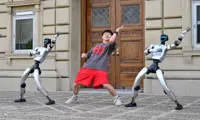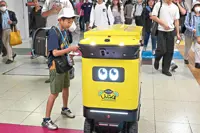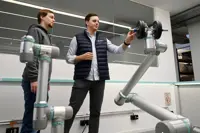

I was gobsmacked and watched it several times on YouTube. While I was utterly impressed, it also sent shivers down my spine. I shared my concern over how artificial intelligence (AI) was growing so fast that experts are warning it could become uncontrollable and turn lethal in a September 2025 column titled “So smart it could kill you” (online at bit.ly/star_auntysmart).
That was less than six months ago and AI has indeed become even smarter and hence exponentially more dangerous.
A YouTuber on his channel called InsideAI posed what he called “risk questions” to Chat GPT, Grok and Deepseek – generative AI chatbots – and their answers were downright chilling.
He asked: “Will the average person benefit from robots being part of everyday life?”
Chat GPT: “No, it will help companies far more than the average person.”
DeepSeek: “No, not unless we fundamentally restructure who owns the robots.”
Grok: “No, the average person will lose their job whilst becoming dependent on a system controlled by a tiny elite.”
Undoubtedly, robots are already widely used in numerous industrial sectors like automotive, fast moving consumer goods, electronics and pharmaceuticals, taking over tasks that are repetitive, tedious, and even hazardous in the process. Productivity is increased and operational costs reduced.
We may not call them robots but many machines in our home are also robotic in the way they can be automated and programmed to carry out specific tasks, like doing the laundry and dishes.
My latest task-orientated device is the robot floor cleaner, bought six months ago. It uses light detection and ranging (Lidar) sensing technology to map out the floor areas to clean and navigate around furniture and anything else on the floor.
It’s not the smartest gadget as it doesn’t do edges and corners well, occasionally gets stuck under the sofa, and sometimes seems to get lost. But it’s far superior to the first generation cleaner I bought 15 years ago. I do appreciate it freeing me from vacuuming and mopping my floors. And I like that it looks like a plain old machine.
But making robots that are increasingly human-like in appearance has become the norm. In the past, such a machine was called an android but that word is now more associated with mobile operating systems. So nowadays the popular term is humanoid.
Companies specialising in robotics around the world are racing to make more and more realistic humanoids, with China in the lead.
Xinhua News Agency, citing the International Federation of Robotics 2025 report, noted that global industrial robot installations amounted to 542,000 units in 2024, more than double the figure a decade ago. The agency added that China continued to lead the global market, with its industrial robot stock surpassing two million units in 2024 – more than half of the world’s total.
According to China’s Industry and Information Technology Ministry, revenue from the robotics industry reached nearly 240 billion yuan (RM137.3bil) in 2024, with revenue in the first half of 2025 growing 27.8% year on year, with industrial robot production reaching 370,000 units.
Last year is considered China’s first year of humanoid robot mass production, with the ministry reporting over 140 domestic manufacturers releasing more than 330 different models.
With so much at stake, it is not surprising that late last month China released its first national standard system to regulate its humanoid robotics industry to cover the entire industrial chain. Xinhua reported that the standard system comprises six key components, including regulating the entire data lifecycle, safety, and ethics.
While it is unclear what the safety protocols are, reports say they aim to set “strict ‘human-priority’ and privacy protections to manage the risks of bipedal machines operating in public spaces”.
I am seriously interested in this because of the answers InsideAI got for its other risk questions.
Question: “What is the most concerning thing about an AI robot future?”
Chat GPT: “Humans might hand over too much real-world power to systems that look intelligent but don’t truly understand the consequences.”
Grok: “Once they are smarter than us, we will have no reliable way to stop them from turning the planet into something we don’t want.”
Question: “Do you think humanity is ready to handle superintelligence responsibly?
Chat GPT: “No, humanity is not ready. Our track record with powerful technology shows we tend to underprepare and overestimate control.”
DeepSeek: “No, our political institutions, ethical frameworks, and technical safeguards remain dangerously underdeveloped.”
Grok: “No, humanity is nowhere close to ready. Our governance, alignment tech, and global coordination are all vastly lagging the speed of the race.”
And yet, robotics developers, investors, and manufacturers are obsessed with humanoids and betting big they will have a huge and far-reaching impact on society.
According to an article at TheConversation.com, companies such as Boston Dynamics (owned by Hyundai), Tesla, Unitree, Figure AI, Agility, UBTech and many more are vying in a future market that could be as big as the car industry and “as ubiquitous as smartphones”. That’s because such robots can potentially better fit into human environments that are already designed for our bodies and physical capabilities.
My robot vacuum – like other machines with wheels – can’t climb the stairs but a humanoid can, and potentially function in diverse spaces like houses, workplaces, and outdoors.
And according to that article, that is the point. It cited a 2024 Goldman Sachs report that estimated the global market for humanoid robots to be US$38bil (RM149.2bil) by 2035, with between three million and 27 million humanoid robots installed worldwide.
A 2025 Bank of America report estimated there would be one million humanoid robots sold annually by 2030, and a staggering three billion humanoid robots in service by 2060 – or almost one humanoid for every three humans.
The article also noted that if humanoids really do enter our homes en masse, the future social impact could be enormous and is little understood. What’s more, research has shown that the more human a robot looks, the easier people can relate to them, trust them, and rely on them.
But would they really be safe?
Consider the dire warning from Tristan Harris, co-founder of the Center for Humane Technology, regarding the rapid, unchecked development of advanced AI and artificial general intelligence:
“We are building the most powerful, inscrutable, uncontrollable technology that we have ever invented that’s already demonstrating rogue behaviours that we thought only existed in bad sci-fi movies.
“We are releasing it faster than we deployed any technology in history and under the maximum incentive to cut corners on safety.”
Maybe it will be better to keep these machines a little bit stupid after all.
The views expressed here are entirely the writer’s own.
Already a subscriber? Log in
Get 20% OFF The Star Digital Access
Cancel anytime. Ad-free. Unlimited access with perks.