The competition is fierce and expensive but done right, sports can be a tremendous unifying force which is what our nation needs.
ON Friday, the 32nd South-East Asian (SEA) Games in Phnom Penh, Cambodia, officially takes off.
Representing Malaysia are 677 athletes – 403 men and 274 women – accompanied by 237 officials. Their target, as announced by Youth and Sports Minister Hannah Yeoh, is to win 40 gold, 37 silver and 64 bronze medals.

While a lot of media outlets, including The Star, have been drumming up publicity for the games over the past many weeks, it’s hard to tell whether Malaysians are all fired up to cheer our athletes amidst trying to cope with more pressing issues like the extreme hot weather, the haze, the high cost of living, and the threat of another wave of Covid-19 infections.
Interest may be lower because in terms of prestige and achievement, a regional multisports meet like the SEA Games ranks far lower than the Asian Games, the Commonwealth Games and, of course, the mighty Olympics.
Both Yeoh and Olympic Council of Malaysia Selection Committee chairman Tan Sri Mohamad Norza Zakaria have tempered expectations by saying exposure and development of the young athletes would be the main focus, not finishing high in the medals tally.
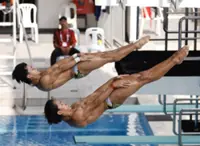
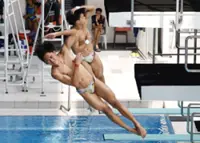
The reasons given are that about 65% of our athletes will be making their debuts in the SEA Games, and many sports like bowling and synchronised diving in which Malaysia excels have been dropped by the host country. While this may sound reasonable, the fact remains that 58% of our contingent to the previous SEA Games in Hanoi last year were also debutant athletes. It was a dismal outing in which we finished sixth out of 11 participating nations. Even Singapore with its tiny population was ranked higher at No.4.
We may blame it on the Covid-19 pandemic which messed up training schedules and caused the postponement and cancellation of many tournaments worldwide but there is no denying we are in a bit of the doldrums where sports are concerned.
Some of the brightest sports stars we used to rely on have retired or are trying to get back into form, and their successors are still trying to firmly find their footing.
Lee Chong Wei and Nicol David may have hung up their respective badminton and squash racquets but we can at least see strong contenders in their wake – shuttlers Lee Zii Jia and Ng Tze Yong (not to mention the doubles and mixed double players) and squash players S. Sivasangari and Ng Eain Yow.
We still have our track cyclist supremo Azizulhasni Awang, who is making a terrific comeback after recovering from open heart surgery, and diver extraordinaire Pandelela Rinong who, after suffering from injuries the last three years, is aiming for her fifth Olympic Games in Paris next year.
Yet, despite their passion, fierce dedication and enormous talent, age is catching up with them: Azizulhasni is 35 and Pandelela is 30.
That’s why we need new sporting heroes and why a platform like the SEA Games plays a crucial role. Grooming champions is painstaking work involving massive amounts of training and many levels of intense competition over a long gestation for the ultimate prize: Olympic gold.
Such is the near-mythical prestige of an Olympic gold medal that the winners send their fellow citizens into collective convulsions of nationalistic pride and joy, and governments bask in the reflected glory.
That is why many governments pour millions into sports programmes to nurture and train promising talent, ours included. So now we have the Road to Gold Project that Yeoh announced last month that will cover both the Paris 2024 Olympics and Los Angeles 2028. That is on top of the revived Podium Programme to train elite athletes that started in 2016.
Malaysia has won eight silver and five bronze medals at the Olympics so far. But chasing that elusive gold is no cheap endeavour and the revised Budget 2023 has allocated RM399mil to the Youth and Sports Ministry with the bulk of it – RM324mil – for training programmes and sports facilities for athletes and para-athletes.
Critics may say the money could be better spent in other areas like education, the environment, and social welfare, but in our race-conscious country, sports can be a tremendous unifying force because no affirmative action or preferential treatment will make a person citius, altius, fortius, Latin for “swifter, higher, stronger”, which is the motto of the Olympic Games.
In sports, the results are there for all to see. There can be no lowering of the passing mark or recruiting more from one race to make up the numbers. There are no shortcuts in achieving excellence in sports.
That’s why Azizulhasni, Chong Wei, Nicol, Pandelela and our other sports champions are embraced and admired by all Malaysians who hold them up as the finest examples of the Malaysian can-do spirit.
A positive outcome from the growing pride in our homegrown sports heroes is the confidence businesses have in their influence and appointing them as brand ambassadors.
Hence, we see Pandelela (together with professional footballer Mohamad Zaquan Adha) representing Luno, a digital asset exchange; Azizulhasni representing the Gardenia Breakthru brand; and Nicol has served as the ambassador for Mercedes Benz, AIA and Penang Tourism.
With badminton as Malaysia’s favourite sport, it’s not surprising top shuttlers have been snapped up by companies. So we have Chong Wei endorsing Senz kitchen appliances, a face mask brand (and many more products); Olympics badminton silver medallist Goh V. Shem is on standees for Vanilla Crepe; fellow doubles bronze medallists Aaron Chia-Soh Wooi Yik are Honor’s “chief experience officers”; and Zii Jia and women doubles players Pearly Tan and M. Thinaah are plastered on billboards for isotonic drink 100Plus.
This is a good sign because studies have shown that countries with a longstanding sporting culture that values and nurtures athletes long before they qualify for the Olympics get way better results.
In Western societies, sportsmen and women from the college level up are given preferential treatment, idolised and can become multimillionaires. In Asia, however, studying for prestigious degrees to secure good jobs is the priority for parents as they see sports careers to be short-lived and not particularly profitable.
If more and more successful Malaysian athletes garner fame, respect and fortune like Chong Wei, this could help to bring a social mindset change that could create a better sporting culture in our country.
But for now, let’s tune into the SEA Games and cheer on our young athletes. I have my eye on US-based sprinter Shereen Samson Vallabouy who is the fastest Malaysian woman over 400m at 51.8s, which also beat the current SEA Games record of 51.83s.
If Shereen, daughter of former middle distance queen and Olympian Josephine Mary and national middle distance champion Samson Vallabouy, keeps on improving, she could be our golden girl in Paris. Here’s to breaking that egg!
The views expressed here are entirely the writer’s own.
Already a subscriber? Log in
Get 20% OFF The Star Digital Access
Cancel anytime. Ad-free. Unlimited access with perks.