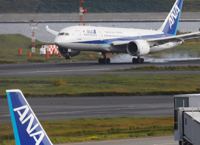
In an era where speed has become as important as scale in global trade, aviation is emerging as one of the most strategic enablers of economic competitiveness. While China’s Belt and Road Initiative is often associated with ports, railways and highways, another pillar is steadily taking shape above the clouds, i.e., the Air Silk Road. For Malaysia, this initiative is more than an expansion of aviation links; it is an opportunity to position the country as Asean’s premier air logistics gateway connecting China with the wider South-East Asian market.
Unlike traditional aviation cooperation that focuses primarily on passenger travel, the Air Silk Road integrates cargo transportation, smart logistics, e-commerce, customs facilitation and digital supply chains. It enables high-value and time-sensitive products, including semiconductors, electronics, pharmaceuticals and fresh agricultural produce, to move more efficiently across borders.

The growing partnership between Malaysia and China demonstrates that the Air Silk Road is no longer merely a strategic vision but is already taking concrete shape. One of the most significant milestones was the signing of a Memorandum of Understanding in June 2024 between Malaysia Airports Holdings Berhad and Zhongyu Aviation Group to collaborate on the expansion of international cargo routes between Malaysia and Zhengzhou as well as the construction of “twin cargo hub” in both Kuala Lumpur and Zhengzhou. The initiative includes improving customs clearance and other supporting services, creating efficient logistics channels and exploring the air cargo market between both countries.
The project is strategically important because Zhengzhou Xinzheng International Airport is one of China’s fastest-growing aviation logistics centres, while Kuala Lumpur International Airport (KLIA) serves as one of South-East Asia’s largest air cargo gateways. Together, the two airports function as complementary hubs rather than competing ones, allowing cargo to move seamlessly between China and South-East Asia. This twin hub model strengthens Malaysia’s ambition of becoming a regional transshipment centre serving not only Malaysian exports but also goods originating from across Asean.
The close cooperation between Malaysia and China has optimised the movement of goods by improving cargo handling and streamlining logistics. As a result of Zhengzhou Xinzheng International Airport’s “green channel” and “zero-wait” customs clearance policies, Malaysian fresh produce, including tropical fruits like durians, can enter the Chinese market efficiently. Such dedicated cargo services have enhanced the export of perishables while creating new opportunities for Malaysian farmers and food exporters to access China’s growing consumer market. Meanwhile, Chinese cross-border e-commerce goods are also being rapidly distributed across South-East Asia.
Additionally, Alibaba Group’s logistics arm, Cainiao Network, established the Cainiao Aeropolis Electronic World Trade Platform (eWTP) Hub at KLIA, enabling direct charter flights connecting Kuala Lumpur with Chinese cities like Shenzhen. These services allow Malaysian businesses, especially small and medium-sized enterprises, to deliver goods, such as local produce and electronic products, to Chinese consumers within days instead of weeks. The hub also strengthens Malaysia’s role as a regional fulfilment centre serving the Asia-Pacific market.
Furthermore, Teleport, the logistics arm of Capital A Berhad, signed a Memorandum of Understanding with China Central Longhao Airlines Co. Ltd. (Air Central China) in September 2025, to strengthen cargo connectivity between China and Southeast Asia under the Air Silk Road initiative. By integrating Air Central China’s logistics network with Teleport’s extensive Southeast Asian coverage, the partnership enables faster cross-border cargo movements through a single booking system while reinforcing KLIA’s position as a regional logistics gateway.
These initiatives complement Malaysia’s broader economic strengths. The country is one of the world’s leading exporters of semiconductors and electrical and electronic products, industries that depend heavily on reliable air freight. Faster cargo connections reduce delivery times, strengthen supply chain resilience and increase Malaysia’s attractiveness to multinational manufacturers seeking dependable regional production bases.
The Air Silk Road could also serve as a significant catalyst for Malaysia’s halal economy. China is one of Malaysia’s largest export markets for halal products, with exports valued at RM9bil in 2025. Faster air cargo services, enhanced cold-chain logistics and digital customs clearance enable Malaysian halal food, pharmaceuticals and cosmetics to reach Chinese consumers more efficiently while preserving product quality and halal integrity. The KLIA–Zhengzhou twin cargo hub further positions Malaysia as an Asean distribution gateway, allowing halal products from across the region to be consolidated and exported through Malaysia. Coupled with cross-border e-commerce platforms and Malaysia’s globally recognised halal certification system, the Air Silk Road can strengthen the country’s ambition of becoming a leading regional halal logistics and export hub.
Beyond trade, the partnership supports wider cooperation in digital logistics. Smart customs clearance, artificial intelligence-powered cargo management, blockchain-enabled supply chain traceability and paperless trade documentation are becoming integral components of modern aviation logistics. These developments align closely with Malaysia’s New Industrial Master Plan 2030 and digital economy aspirations, creating new opportunities for technology transfer, skills development and innovation.
Looking ahead, the China-Malaysia Air Silk Road should be viewed not simply as an aviation initiative but as an integrated economic corridor. Success will depend on continued investment in logistics infrastructure, sustainable aviation, digital connectivity and skilled human capital. Equally important is ensuring that Malaysia leverages its strategic location to serve as Asean’s distribution gateway while maintaining diversified international partnerships.
As supply chains become increasingly regionalised, countries that excel in air connectivity will enjoy significant competitive advantages. Through practical cooperation like the KLIA–Zhengzhou twin cargo hub initiative, the Cainiao eWTP hub and growing airline partnerships, the China-Malaysia Air Silk Road demonstrates how connectivity can translate into tangible economic opportunities. For Malaysia, the skies are becoming more than transport corridors. They are evolving into strategic economic highways that connect businesses, industries and people, reinforcing the country’s role as a crucial bridge between China, Asean and the global economy.
Dr Chow Yee Peng is an Associate Professor at Tunku Abdul Rahman University of Management and Technology. The views expressed here are entirely the writer’s own.
The SEARCH Scholar Series is a social responsibility programme jointly organised by the Southeast Asia Research Centre for Humanities (SEARCH) and Tunku Abdul Rahman University of Management and Technology (TAR UMT).
Already a subscriber? Log in
Get 20% OFF The Star Digital Access
Cancel anytime. Ad-free. Unlimited access with perks.