What if I told you what you knew about the world is likely less than what a chimp knows?
A running gag in the book ‘Factfulness’ revolves around the Gapminder Test, a ‘world facts’ quiz in which over 12,000 people from 14 countries, of various levels of education and executive powers constantly performed worse than chimps randomly choosing bananas. (Note: I did not do much better than the chimps either.)
The conclusion of the book is shared early —the world is getting better, yet most people think it is getting worse. But Hans Rosling, the primary author, argues he is not an optimist. He is a ‘possibilist’-- he acknowledges the ‘bad’ and the ‘better’ based on the facts and uses it to fuel hope that even better things are possible.
The fact is, we often neglect facts and instead fall back on overdramatic preconceived ideas in our everyday thought processes. We are either slow or reluctant to update our knowledge and thus conveniently revert to heuristics that are fueled by strong-held beliefs—many of which may have been relevant for our survival in an ancient past, but now put our current and future survival in jeopardy.
There is nothing wrong with beliefs. Being a Muslim, I have very strong beliefs. But a belief-based worldview should not be the sole worldview, and it is not mutually exclusive to an axiom-based worldview. How are they different? A belief-based worldview often works backwards—it has already made a conclusion and tries to justify it. An axiom-based worldview begins with well-established facts (such as the world being spherical) but then allows further reasoning using newly acquired information to reach a conclusion.
This makes a world of a difference.
Many beliefs are accepted as truths and worse, at times, operationalised. Some of these beliefs revolve around dichotomies like ‘good or evil’, ‘developing or developed nations’, and various forms of ‘us or them’. These unfactful dichotomies continue to plague common lingo and are further perpetuated and sensationalised in the media. But the fault is not entirely in the media, as the book argued, the media only feeds inherent social cravings—it tells so because it sells so. A balanced, factful axiom-based perspective full of rationale and caveats rarely makes money. And money, or rather income, Factfulness argues, is undeniably the key underlying factor across a world of factors.
People need to eat, then they want to buy and own. Both require different levels of income, and it is the income levels that can be the closest determinant of a multitude of human acts. From whether healthy foods can be eaten, plumbing can be installed, electricity supplied constantly, vaccines and healthcare can be accessed, children (especially girls) can learn in schools, computers can be purchased, and holidays planned for. The struggle to move up income levels is blind to religion, race, or nationality and it operates on a moving timeline which we often neglect to update. We often think of many people and places based on how they were in a particular past time (e.g.: images of sick babies somewhere in Africa), instead of how they are now (e.g.: Ghana’s Covid-19 testing rate matching the US). That is to everyone’s mutual loss because we are operating on what was, rather than what is and can be—a backward type of thinking.
To move forward we must adopt a worldview based on current knowledge that is constantly updated. This worldview neither glorifies nor fears the past, instead it operates on the present with the understanding that what is known today is limited by what may be learned tomorrow. This worldview does not become distracted with countless conspiracy theories or blaming different enemies. It appreciates that the truth is complex and is not afraid to change its mind and admit that it was wrong—because that is how growth can be nurtured, and progress sustained. This is a scientific worldview, axiom-based and factful.
A key part of this worldview, Hans argued, is to appreciate and acknowledge when progress has occurred. To do this he would reflect on things that have improved within his lifetime.
So, here are the top three things that have improved in Malaysia within my lifetime:
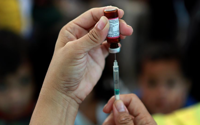
· Chickenpox: I recall being seven years old, sitting in a tub of coconut water with itchy blisters all over my body. My eight-year-old son will likely be spared this former ‘rite of passage’ thanks to the chickenpox (varicella) vaccine. Where it is widely available, chickenpox has become a rare occurrence—including for the unvaccinated via herd immunity.
· Internet: From having 200 users solely provided by Mimos’ Jaring through dial-up modems in 1992 (the sound of which triggers a wave of teenage nostalgia), Malaysia can now boast having Internet usage in over 84% of her population provided by a myriad of companies, competing to deliver higher speeds at lower prices.
· Mobile phone technology: When I was in boarding school a Nokia 3310 was THE device to own because of the Snake game. In 10 rapid years, mobile phones have evolved into an all-in-one gaming computer, wallet, camera, map, and gateway to everything and everyone anywhere (digitally connected) in the world.
(There are of course many more that we could list, and that could be a fun dinner topic to reflect on with our children and parents.)
Now, although the book is about how the world is getting better, it ends with a list of five things worthy of worry and preparedness. Top on this list was a global pandemic, something like the flu that is highly contagious and can spread by air.
Hans died at the age of 68 from pancreatic cancer in 2017, before Covid-19 unleashed. While we live through Covid-19, the 10 rules of factfulness and a ‘possibilist’ attitude is ever crucial. The fact is Covid-19 is a terrible pandemic—but despite its scale and infectiousness, the death toll at 4.8 million pales in comparison to the Spanish flu which killed 40-50 million people. This is thanks to the progress humanity has achieved in many aspects such as medicine, science, technology, and global cooperation. The facts tell us not to lament the toll of Covid-19, but to celebrate how many lives were spared—and to keep trying our best to save more. Indeed, using facts is a good way to harness hope and translate it into tangible progress. We need to know that if things feel terrible today, they were likely much worse many centuries ago.
And this means we can dare hope that our future can also be better. This hope is key for us not only to survive, but to rebuild and thrive in our post-pandemic lives.
In memory of Mohd Hanafiah (Napi) Abdullah (June 16, 1962 –Oct 29, 2007), one of the most factful people I knew, pioneering Mimos programmer, founder of ‘Axiomatic Solutions’, whose motto was “Nothing is difficult, only more complex.”
Already a subscriber? Log in
Get 20% OFF The Star Digital Access
Cancel anytime. Ad-free. Unlimited access with perks.