In 2022, there was the family from US who visited a mall in Kuala Lumpur and were astounded.
In a video they produced, they said: “For all of my people in America who think I’m in some third-world country, does this look third-world to you?”
Unfortunately, some notable people in international politics still have inaccurate perceptions of Malaysia’s development and quality of life.
I was intrigued by how perceptions of Malaysia vary globally.
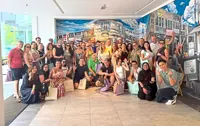
This realisation deepened after meeting a group of women from China pursuing their PhDs at Universiti Sains Malaysia (USM).
These women, in their 30s and 40s, were balancing family life, their academic pursuits including working as lecturers in China, all while undertaking research as part of their terminal degrees.
Some of them were researching mass media practices and I consented to be their research subject.
After hours of being questioned about role and views in my career, it was my turn to satisfy my journalistic curiosity.
Out of the many questions at the top of my head was: What do your friends and family in China think of Malaysia?
Boy, was I surprised by their answers.
They shared that among their colleagues, there was limited awareness of Malaysia’s modernity, with some of them imagining a largely rural and underdeveloped country.
Their surprise upon arriving in Penang served as a reminder of how mutual understanding can flourish through academic and cultural exchanges – enriching both Malaysians and our international peers.
Their first encounter with USM was eye-opening for them: a sprawling campus of over 400ha filled with faculty buildings and surrounded by majestic trees, some over a century old.
For context, even George Town’s Unesco World Heritage Site spans a smaller area at 260ha.
These postgrad students had started their work five years ago, connecting with their USM supervisors online during the Covid-19 pandemic years before coming to Penang in 2022.
In the two years since, they have been so absorbed in their research that they mainly confined themselves to the campus and had never even visted our World Heritage site.
So I invited them to The Star Penang’s office, which is a colonial building built in 1906 in the heart of the heritage enclave. Across the street from the office is the Goddess of Mercy Temple built in 1728.
About 150m behind the office, at the corner of Queen Street and Market Street, is a little stall selling Indian samosa since before I was born.
This stall earned its Michelin Selected recognition last year.
They explored those two places and bought some samosa too.
More importantly, they were bowled over by our level of heritage conservation, all the way down to our everyday culture.
They even enjoyed a spot of retail therapy in our flashy malls.
Some of them confessed to harbouring thoughts of remaining in Penang to build their scholarly careers after earning their PhD, though most likely they will have to return to their universities in China to contribute their academic skills.
USM reveals that there are now 2,302 PhD candidates from China doing research there.
I chatted with a few professors and was told that our China counterparts were exceptionally focused and disciplined, even competitive.
To those who hold misconceptions about Malaysia, perhaps it’s time to take a page from these PhD candidates – come, explore and see Malaysia for what it truly is.
Already a subscriber? Log in
Get 20% OFF The Star Digital Access
Cancel anytime. Ad-free. Unlimited access with perks.