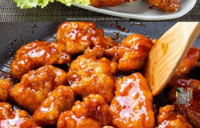
Paradox of cheaper chicken from Nov 1


Subsidies and price controls on chicken were discontinued from Nov 1. — Filepic

THE word “oxymoron” is not an insult to anybody’s intelligence.

It simply refers to words that seem to be contradictory initially like “deafening silence”, “cleverly stupid” or “deceitfully honest”.

Other oxymorons are not so immediately evident and can only be perceived after reflecting on the context of the subject matter, such as “cultural tourism”, “clean coal” and “righteous war”.

In the context of Malaysia, one phrase seems to be leaning towards becoming oxymoronic: “floated price”.

Governments control the prices of things to prevent them from becoming too costly for the general population.

Governments also float prices when producers can no longer sustain themselves under controlled prices.

Typically, once an item’s price is floated, the price should go up.

But when our chicken price was floated, the birds became cheaper in many states.

A good friend started an Ipoh “kai see hor fun” stall in Penang and within a few days, he was turning a profit.

It refers to Ipoh’s signature hawker food of flat rice noodles (koay teow) in a chicken broth with shredded chicken, shrimps and a spoonful of oil derived from frying a huge amount of prawn heads and shells.

There is Penang char koay teow all over Malaysia, so my friend figured why not have Ipoh “kai see hor fun” in Penang?

He started his business around a week before the chicken price was floated and chewed his nails in suspense to see how the floated price would affect his so far profitable business.

He was cooking over 50kg of chickens a day.

Last weekend, he whooped for joy because his supplier suddenly reduced the price from RM9.60/kg to RM8.40/kg.

That is a drop of RM1.20 and multiplied by 50kg of chickens, it is a cost reduction of RM60 a day; it doesn’t sound like a lot, but if the RM8.40/kg price holds for a month, he will have at least an extra RM1,800 to bring home.

Curious, I made many calls to understand what made the price of chicken fall.

No one wants to be quoted. No one wants to officially offer a public explanation.

They could not, anyway, because the process from the eggs hatching to dressed birds arrayed for sale is a long one with many players, from breeders to growers to collectors to slaughterhouses to aggregate distributors to wholesale agents to retailers.

In between are logistics operators and side vendors such as those who collect chicken innards to sell as fish feed and feathers to turn into fertiliser.

It is not fair to point a finger at any one of these industry players, except to concede that two economic concepts were allowed to freely exert themselves on the price of chicken as soon as the government let go.

The first is called economies of scale; the more you can make or get and then sell, the lower the cost of goods and the greater the profit.

If you were selling 10,000 units of something a day at RM1 each, and then you sell at 80sen per unit instead and end up selling 20,000 units a day, you earn even more.

The second is termed “the invisible hand”.

Every business needs to focus on self-preservation so that it exists to fight another day.

The invisible hand theory asserts that in a free market economy, all these self-interested players will settle into relationships of mutual interdependence and eventually will produce socially viable results, such as the lowered price of chicken.

Both the economies of scale concept and the invisible hand theory are derived from a book titled Wealth of Nations written by Scottish economist Adam Smith (1723-1790).

It is a difficult book to read, since it was published in 1776 in archaic English with as many as 60 words per sentence.

But you can get distilled and modernised renditions of Smith’s thoughts, and one other point from him might be relevant to the price of our chicken; Smith objected to nearly all forms of government interference in the economy.

He argued that it caused high prices and inefficiencies.

Smith advocated for governments to focus on matters like education, healthcare and so on.

Looking at how chicken prices fell after the government let the players sort it out themselves, I wonder if some of the things published 247 years ago might still be valid.

Get 20% OFF The Star Digital Access

Monthly Plan

RM 13.90/month

RM 11.12/month

Billed as RM 11.12 for the 1st month, RM 13.90 thereafter.

Best Value

Annual Plan

RM 12.33/month

RM 9.87/month

Billed as RM 118.40 for the 1st year, RM 148 thereafter.

Follow us on our official WhatsApp channel for breaking news alerts and key updates!
chicken , floating prices

Next In Columnists

Federal funds and fiscal capacity
Chinese wind blowing in Johor
The incredible star power rising from the East
Make Penang AI plan a bridge for majority
Giants fall, England survive – World Cup quarter-finals take shape
Who shapes global AI rules: Asean-China cooperation role
Why the Johor election is good for Malaysian democracy
Confessions of a durian season sinner
Looming threat to social security
More predictable than the World Cup

Others Also Read