There is so much more to learn and discover in Sabah and Sarawak beyond the flora and fauna.
A FRIEND sent me a text recently that has filled me with regret.
“I am off to Mulu for the long Malaysia Day weekend,” her short text read.
I must admit that I felt slightly ashamed and embarrassed that I have not visited one of the only two “natural” Unesco World Heritage Sites that Malaysia has.
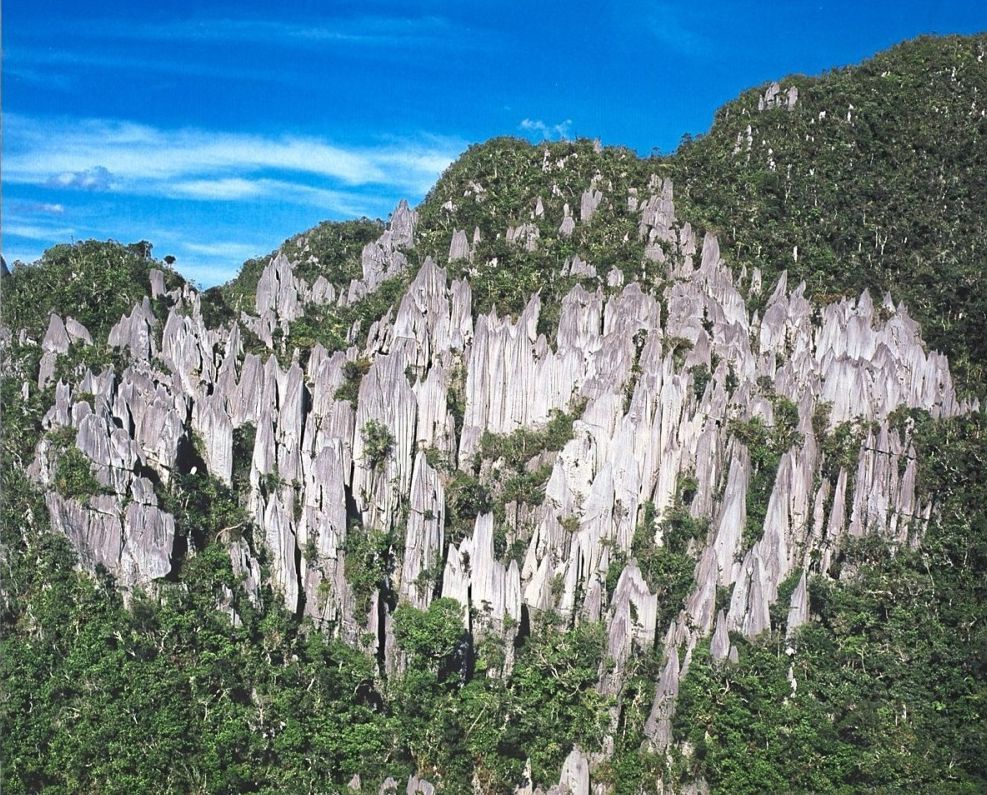
Arguably the most biodiverse location in the country, the Gunung Mulu National Park has an amazingly rich flora and fauna, including many threatened species, dominated by the 2,377m sandstone pinnacle of Gunung Mulu.
At least 295km of explored caves provide a spectacular sight and are home to millions of cave swiftlets and bats. The Sarawak Chamber, 600m by 415m and 80m high, is the largest known cave chamber in the world.
Mulu has been on my bucket list for some time now, and even though I have been to Kuching a number of times, I have yet to make the journey to this priceless national heritage.
And with Malaysia Day around the corner, this got me thinking. How well do we know our country?
Our politicians will trot out the familiar soundbites that we are bound to hear, including the catchphrases “unity”, “diversity” and “tolerance”.
For a lot of us though, next Tuesday is just another of the country’s famously numerous public holidays, this time with the chance to make up a long weekend.
That is a shame because Sept 16 is an important date in our country’s history. Malaysia Day is an annual lesson for us to remember that we have our “cousins” across the sea who are very much a part of this nation.
In fact, an argument can be made that Sept 16 actually has a greater significance compared to National Day on Aug 31.
On this side of the pond, have we have become too Peninsular-centric to the extent we forget about the two huge states across the sea?
We are fixated with the Malay, Chinese, Indian script. But there are actually more than 60 ethnicities living in this country, and a large number of them are in Sabah and Sarawak.
Sadly, foreigners are more familiar with Borneo’s attractions than a lot of us. There are people who have never been to East Malaysia. They don’t know what they are missing.
Both states have unparalleled flora and fauna and are rich in cultural heritage. The attractions, such as Sipadan and the Mulu Caves, are world famous.
Borneo is also home to the rhinoceros hornbill, the orang utan and the proboscis monkey. It’s sad that many of our own people are unaware of these special attractions whereas these are top draws for foreign tourists.
It’s been 62 years since the country’s leaders signed the Malaysia Agreement 1963, and back then, Sabah and Sarawak were equal partners to the former Federation of Malaya, but this standing has since been eroded. MA63 has become a cause of disagreement and one that is continuously raised by East Malaysians.
Ironically, Sabah and Sarawak will continue to have a decisive say in national politics by virtue of the sheer number of federal parliamentary seats that they can bring to the table.
While their votes are acknowledged by peninsula-based parties and are actively courted, our leaders tend to overlook (or maybe dismiss?) legitimate concerns from our fellow Sabahans and Sarawakians.
There are two recent cases which come to mind.
There is a perceived lack of action against wrongdoers in the Sabah mining licence scandal which has destabilised the political landscape and could impact the upcoming state election.
The explosive video recordings of Sabah’s elected representatives allegedly discussing bribes forced the Malaysian Anti-Corruption Commission (MACC) to commence investigations. But since the videos were exposed in November last year, and despite some high-profile names mentioned, no charges have been proffered, and the graft probe appears to have come to an end.
In Sarawak, the biggest bone of contention would be the continuation of PETRONAS’ hold on the state’s oil resources. The state government is demanding that PETRONAS surrender its role as regulator to its wholly owned Petroleum Sarawak Bhd (Petros).
But this has far-reaching ramifications for PETRONAS and could significantly impact its contributions to our national coffers.
Tomorrow, the Prime Minister and his two deputies and the tourism minister will be in attendance, as the country gears up for Visit Malaysia 2026 with a grand launch of the Malaysian Cultural Festival.
Next year is expected to be bumper year as we brace for record tourism arrivals.
Hopefully, emphasis is also given to Sabah and Sarawak which have unique cultures, and where the jewel of the country’s natural flora and fauna lie.
As for me, my personal resolution for VM26 is to either make the trip to Gunung Mulu National Park or the other natural World Heritage Site – Sabah’s Kinabalu Park.
Already a subscriber? Log in
Get 20% OFF The Star Digital Access
Cancel anytime. Ad-free. Unlimited access with perks.