AS the borders start to open and restrictions are lifted, South-East Asian countries are scrambling to attract high value tourists who are willing to stay for extended periods and spend more.
Malaysia, blessed with thousands of hectares of ancient rainforest, lakes and beaches, spectacular natural formations and unparalleled biodiversity, is uniquely poised to capitalise on one of the fastest growing tourism trends – ecotourism.
Ecotourism can be defined as “responsible travel to natural areas that conserve the environment, sustains the well-being of the local people and involves interpretation and education”.
It is directed towards exotic, often threatened, natural environments, intended to support conservation efforts and observe wildlife.
Nature-loving tourists who are willing to pay more to get up close with the many spectacular natural wonders that Malaysia has to offer are spoilt for choice.
From the world’s oldest rainforest, Taman Negara to the Royal Belum State Park, from the Mulu Caves in Sarawak to Pulau Perhentian in Terengganu, there is a variety of ecotourism locations that offer complete packages which include accommodation, meals, guided tours and transportation.
A new destination to join the ranks of the above could soon be on the map.
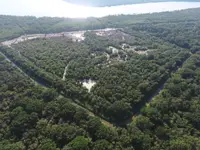
The proposal to develop the Kuala Selangor Nature Park into an international tourism destination has received the green light from the Selangor government.
The proposed development of the park into an ecotourism destination comprises an 84ha area, roughly 28% of the 292ha nature park.
But questions are being asked as to the impact the planned development will have on this forest reserve as well as the area’s ecology.
The park, a combination of both rainforest and mangrove wetlands, serves as an important habitat for some 156 species of birds, some of them migratory from as far as Russia. It is also home to endangered flora and fauna, including the silver leaf monkey.
And its location at the Selangor River estuary means that the firefly sanctuary, located a few kilometres away, would be left vulnerable if unfettered development is allowed in the area.
Forest clearing and increased salinity in areas where fireflies reproduce will disrupt its habitat and decrease its survival rate.
“For now, the Kuala Selangor Nature Park is still in the process of being gazetted as a permanent reserve, which is in the planning stage by the state Survey and Mapping Department,” said Selangor tourism, environment, green technology and Orang Asli affairs committee chairman Hee Loy Sian.
Hee was grilled over the status of the park at this week’s Selangor state assembly sitting.
According to him, the forest reserve will not be affected and the proposal focuses only on the existing development area.
Details over the development were revealed at the state assembly.
The private investment will involve about RM100mil to build 300 chalets for four-star accommodation.
The permit is for land use only and the state will not allow the forest reserve to be degazetted.
Hee said the designation of protected zones should be taken into account as well as the Environmental Impact Assessment to ensure the mangrove ecosystem was preserved.
“This will include the buffer zones to prevent and minimise tree damage during development.
“We will also establish a condition for developers to design a method for managing the protection of coastal trees at the planning and design stage, as well as during pre- and post-construction,” he added.
It is hoped that the Selangor government ensures that any development in the Kuala Selangor Nature Park is strictly controlled. Making it an ecotourism destination is to be encouraged but because of its environmentally sensitive location, the park must be constantly monitored.
The state government cannot afford another environment-related fiasco.
It came under fire last year after it degazetted some 537ha of the Kuala Langat North Forest Reserve (KLNFR) out of a total of 992ha for a mixed development project.
Due to the outcry, Selangor Mentri Besar Datuk Seri Amirudin Shari had announced in September 2021 that the state would reverse the degazettement order on the KLNFR.
A good example of sustainable ecotourism would be Taman Negara in Rompin, Pahang.
The three-to-five-star accommodation in this important bio-diversity location does not encroach or disturb the wildlife. Experienced park rangers are also on hand to monitor and advise tourists.
Taman Negara is high on the list of places to visit for eco-travellers due to its sustainable management.
Its incredible flora and fauna and opportunity to get close to nature has put the park on the world map.
If Selangor manages its Kuala Selangor Nature Park and ensures that the proposed development is restricted and within a buffer zone, there is no reason why the state will not be able to reap the benefits of ecotourism in the future.
Already a subscriber? Log in
Get 20% OFF The Star Digital Access
Cancel anytime. Ad-free. Unlimited access with perks.