
We see the headlines – all 12 local authorities achieving five stars in the state’s Star-Rating System (SPB-PBT).
We hear of quality management awards and “smart city” accolades.
But as a journalist who spends more time on cracked pavements than in air-conditioned banquet halls, I have to ask: What do these stars actually measure?
Because from where the residents of Petaling Jaya are standing, specifically those living in the shadow of the Astaka field in Section 52, the view does not look like a five-star performance.

It looks like a crumbling mess.
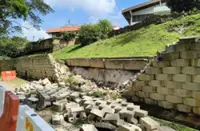
In February 2026, a 30m- long reinforced concrete wall at the walking path, located behind old bungalows facing a small steep slope in Lorong Utara, collapsed.
This wasn’t a “freak accident”. It was a failure of the most basic municipal duty: ensuring infrastructure is safe before the first brick is laid.
The city council’s investigations eventually revealed that no proper land study was conducted prior to the wall’s construction.
Experts pointed to water pressure build-up as the likely culprit, an oversight that should have been caught at the outset.
Yet the wall was built, the earth shifted and, eventually, the structure gave way.
Back in July 2024, StarMetro reported on a tilted retaining wall in the same vicinity that raised alarm bells among the community.
The warning signs were evident even then — cracks in the concrete and a visible tilt in the structure.
The community’s safety is being put at risk by these infrastructural failures.
When a retaining wall collapses, it is not just a matter of property damage; it is a direct threat to the safety of pedestrians, motorists and children playing nearby.
The disconnect here is staggering.
On one hand, municipal and city councils are showered with official awards for “investment-friendliness” and “quality management”.
On the other, you have a city council that fails to perform a basic soil permeability test or to monitor the structural integrity of public assets.
The five-star rating system is supposed to evaluate performance. But what are the criteria?
A local council can have the most efficient e-billing system and the fastest permit processing times in the country, but if its physical infrastructure is questionable, those achievements ring hollow.
Awards should be a reflection of the reality on the ground.
Residents do not care about the number of trophies in the local council’s office when they worry about walking past a tilted wall.
They want accountability, not a press release about a new “smart city” initiative.
It is time we stop measuring success by certificates and start measuring it by the stability of our soil and the safety of our streets.
Until then, those five stars are nothing more than glitter on a crumbling wall.
Already a subscriber? Log in
Get 20% OFF The Star Digital Access
Cancel anytime. Ad-free. Unlimited access with perks.