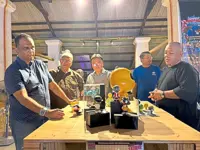
NEGOTIATIONS during the Trans-Pacific Partnership Agree-ment (TPPA) were difficult. At the height of the deliberations more than a decade ago over what was touted as the world’s largest free trade agreement then – it involved 12 countries, including Malaysia – Datuk Seri Mustapa Mohamed was not only busy with his responsibilities as the International Trade and Industry minister but had also joined several ministerial meetings abroad for talks.

There was even a half-day session held at the ministry exclusively for the media, at which several negotiators briefed us on what the TPPA was all about. There were too many details for us to grasp within a few hours but we appreciated the effort Miti made to help us gain a better understanding of how massive the deal was, and what was at stake.
A lot of water has crossed under the bridge since then. The TPPA has now been rebranded as the Comprehensive and Progressive Agreement for Trans-Pacific Partnership (CPTPP), minus the United States, the prime mover of the TPPA back then. And in size, the CPTPP has been overtaken by the Regional Comprehensive Economic Partnership, the world’s biggest free trade agreement, which involves 15 countries, including Malaysia.
It is gratifying to see that Miti, now renamed the Investment, Trade and Industry Ministry, is still willing to brief the media, albeit on a smaller scale, in the run up to Malaysia’s Asean chairmanship in 2025.
Just last week the ministry’s communications team, led by Suria Zainal, held a briefing for editors of major media houses at the Star Media Group’s headquarters in Petaling Jaya. It was part of a series of briefings held by the team to create awareness about the chairmanship. The last time Malaysia chaired Asean was in 2015.
While the Miti team’s briefing session was short since the communications team members are not officials who would be involved in the many meetings set to take place under Malaysia’s chairmanship, many of us appreciated the fact that they engaged with us. We were briefly told about the target audience and strategic thrusts in making Malaysia’s Asean chairmanship the nation’s effort.
Sadly, the leading ministry for Asean chairmanship, Wisma Putra – that is, the Foreign Ministry – has had almost no media engagement. Sure, we have Foreign Minister Datuk Seri Mohamad Hasan talking about the Asean chairmanship from time to time but that is during impromptu media sessions or via his Facebook account, not formal media briefings on Malaysia’s preparations for next year.
“While the minister’s press team has established a strong relationship with the media, there remains a noticeable gap between the media and Foreign Ministry at large,” said a media boss.
“In contrast, Miti has demonstrated far more effective media engagement, both in formal and informal settings. In this post- normal era when shaping perspectives is crucial, Wisma Putra has a valuable opportunity now to strengthen its proximity with the media and foster deeper, more frequent discourse.”
As it is, helping people understand what Asean is, what it stands for, and getting information about what will happen next year to the people is tough for us. Without active engagement with the media, just how far can Wisma Putra get its message across about how important Asean can be to the ordinary person, that it is not merely about flying the flags of Asean members, or hanging welcome banners, or releasing images of people huddled in conference halls somewhere.
It is already October. Time is of the essence if we are to show that Malaysia is really serious about its Asean chairmanship, especially after Laos passed the baton.
Prime Minister Datuk Seri Anwar Ibrahim, who in February chaired a meeting to launch the Asean-Malaysia 2025 chairmanship, has said three main clusters were established: the political and security cluster under the Foreign Ministry; the economic cluster under Miti; and the sociocultural cluster under the Tourism, Arts and Culture Ministry.
On Friday, when he accepted the baton of the chairmanship from Laos in Vientiane, Anwar said that the theme of inclusivity and sustainability was chosen by Malaysia as it reflects her aspirations for shared progress that ensures no one is left behind.
Over the years, from my own experience of covering Foreign Ministry issues, I must say it can be a struggle, especially when it comes to the opportunity to sit down with officials. Sure, there were friendly ones who understood the role of the media and took pains to explain certain issues for a better understanding. But it was hardly in an official setting.
Some, even at the ministerial level, would take anything written about Wisma Putra as personal criticisms.
Not all officials think like that, of course. “You want to increase the ministry’s profile and yet you are not keen to engage the media. Whatever the media says, negative or positive, if it makes us better, we should take it in our stride,” said one officer recently.
The media is not the enemy. What has been missing in recent years is the engagement between Wisma Putra and the media. Engagement does not mean only sending out press releases or reacting to incidents or situations in other countries. Engagement also means sitting down with the media, networking with us, getting to know who is who in the media, and allowing us the vice versa with ministry officials.
And that is not just for officials, this is also for the minister and his deputy.
Several times, there have been informal suggestions from the media for Wisma Putra to have a spokesman. The Asean chairmanship is a good time to have one.
With things moving fast via social media, there is no way information on what’s happening behind closed doors at Asean meetings can be kept confidential for long.
From experience, the media’s access will be limited to the leaders and ministers during Asean meetings due to security reasons. Having an appointed spokesman who can give a daily briefing on the latest updates, especially during the many meetings set to take place next year, would be a good start.
Don’t forget, it is not just the local media that will be covering events, foreign journalists will also be interested.
This is a time when the ministry should seize all opportunities to promote Malaysia. This goes beyond the usual ministry’s key performance indicator efforts, this is about leadership and performance at an international level.
It is also a chance to connect with other parts of the world and make them understand the Asean chairmanship is all about, as well as to bring attention to the launch of the Asean Community Vision 2045 and what it means for the region.
This is the time for Wisma Putra to take charge and show the way.
Already a subscriber? Log in
Get 20% OFF The Star Digital Access
Cancel anytime. Ad-free. Unlimited access with perks.