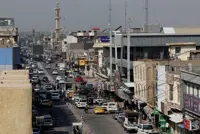
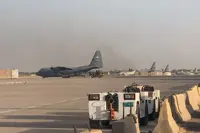
In March, Foreign Minister Datuk Seri Zambry Abdul Kadir said that the Malaysian government was considering reopening some of its embassies that had been closed due to war in the host nations, and that his ministry would conduct a viability survey.
The missions were previously in Iraq, Libya and Syria. It is understood the matter was raised with the Cabinet.

Malaysia closed its embassy in Tripoli in 2014 due to internal strife in Libya; the mission in Damascus was shut in 2012 when civil war began in Syria; and the embassy in Baghdad was shuttered following the US-led invasion of Iraq in 2003.
Following a survey that collected information from relevant desks within the ministry, Wisma Putra is proposing to reopen the mission in Baghdad for a start.
This raises many questions: Why is this government keen on reopening missions? Who is advising it to do so? What are the considerations in arriving at this decision?
This writer has highlighted the allocation-related problems faced by the Foreign Ministry in several columns. Over the years, it has had to stretch an inadequate budget to keep functioning despite the big role it plays on the global platform.
For example in 2016, there was a budget revision and measures were introduced to optimise public expenditure in view of the economic climate then. Wisma Putra sent out a circular announcing a slew of tightening measures, including a 30% reduction in overtime claims and a 20% cut in utility bills. These measures – and the ringgit’s depreciation then – took a toll on the running of Malaysian missions. And it demoralised our diplomats too.
No matter how many times previous ministry managements have tried to get a higher allocation over the years, the Treasury still classifies Wisma Putra as a cost centre. Changing that mindset remains an uphill battle.
And now this plan to reopen missions.
It is not difficult to calculate that reopening a mission will cost a lot of money, including the cost of staff to run the embassy. Most importantly, the ministry must ensure the safety of Malaysians posted abroad, which means reinforced buildings where they will work and live, hiring armed guards, and providing safety vests and satellite phones in countries with a high security risk.
One would think that missions would be supplied with something as basic as a satellite phone as a matter of course but that is not the case, it seems.
The recent unrest in Sudan that required an urgent operation to get 30 Malaysians out of Khartoum had moments of anxiety when contact was lost for several hours as our diplomats and their Malaysian charges were on the move. It would have been easier to keep communication lines open with a satellite phone but the mission didn’t have one – because the budget didn’t have an allocation for it.
Granted Iraq is much more stable now according to various reports but the question remains: Why does Malaysia need to reopen a mission there now?
This plan by the government also begs another question: What is Malaysia’s foreign policy? What is its priority and focus? Is Malaysia biting off more than it can chew with this latest decision?
Now is not the time for diplomatic niceties. There has been talk of restructuring and reducing the number of missions through a rationalisation exercise. It has been a slow process as it involves several agencies, including the Public Services Department which decides on government staffing.
The world too has evolved and the issues have changed. Yes, we must remain passionate about Palestine’s problems, but more and more, climate change and scarcity of energy resources issues are at the forefront.
“Foreign policy does not change, only the issues change. I would say climate change has also become foreign policy,” said one diplomat.
“Although the lead agency is the Natural Resources, Environment and Climate Change Ministry, the issue is being discussed on international platforms and has become political.
“It has become political because environmental issues are inherently linked and directly related to the way countries do business, thus impacting a nation’s economy.
“Anything that involves a need to tamper with or review a ‘business model’ can and will become political.
“We have to look at this not from the perspective of one ministry but as the importance of government synergy and the need to bring on board others who can effectively play a role,” he said.
Also, Malaysia already has many missions – more than 100 at the last count. Despite proposals to close embassies in several countries that yield negligible trade and investment opportunities, and have hardly any need to provide a Malaysian point of contact, that decision has yet to be made.
Do we still need that many missions abroad? Just look at Singapore. The republic does not even have a mission in Rome; instead, it has a roving ambassador and an honorary consul general. It is not quantity but quality.
At at the end of the day, what can Malaysia achieve in the short- and long-term with our missions?
“We can’t simply open or reopen one just because we want to be there. We need to regroup and restrategise and spend money in countries that can benefit us, especially in trade and investment,” said another diplomat.
Meanwhile, the post of Malaysian high commissioner to India, the fifth largest economy in the world, has been vacant for more than a year.
“We don’t have enough seniors to fill important posts like the one in New Delhi. We are already stretching ourselves thin,” said an official.
The direction of Malaysia’s foreign policy cannot be based on lofty ideas without even understanding the operations of the Foreign Ministry, its work, and the problems and barriers it faces.
Why are we talking about reopening an embassy when even basic safety equipment like a satellite phone cannot be provided to our existing missions abroad. This is a case of getting our priorities wrong.
Already a subscriber? Log in
Get 20% OFF The Star Digital Access
Cancel anytime. Ad-free. Unlimited access with perks.