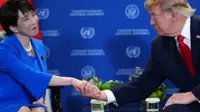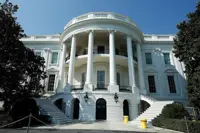
NO invitation was extended to Malaysia to join US President Donald Trump’s Board of Peace (BOP) and the Malaysian government has rightly expressed caution over extending any support for it.
By all indications, the BOP is designed to be the new arbitrator of international law, subverting the role of the United Nations and the UN Security Council. More so, it is aimed at bringing the US back into geopolitical relevance in an increasingly multipolar world.
About 60 countries have been invited to join the BOP, including five Asean members – Cambodia, Indonesia, Singapore, Thailand and Vietnam. Cambodia, Indonesia and Vietnam have accepted, and Singapore and Thailand are reportedly still considering the offer.
Malaysia’s exclusion is no surprise. It has been consistent in condemning Israel’s genocidal war in Gaza and in criticising the Americans’ unfettered military and moral support for it.
Last Friday, Prime Minister Datuk Seri Anwar Ibrahim said there has been no firm guarantee of a complete cessation of violent attacks against Palestinians by Israel nor any signs of the full restoration of humanitarian aid to Gaza.
“This has not happened, so it is difficult for us to offer initial support,” he said.
Saudi Arabia and several other Muslim-majority countries – including Azerbaijan, Kazakhstan, Pakistan, Qatar and Turkiye – have agreed to join the board.
However, Canada and most of the US’ Western allies in Europe have rejected membership, including France, Norway, Sweden, the United Kingdom, the European Commission and even Ukraine.
China flatly ruled out joining, expressing concerns that the BOP could stymie the existing UN-centred international order.
Russia, which was also invited, is still consulting with “strategic partners” and studying the board’s plan in the Middle East, although President Vladimir Putin had mentioned earlier that his country was prepared to contribute US$1bil (RM3.9bil) to the board from frozen Russian assets.
The elephant in the membership room is of course Israel’s Prime Minister Benjamin Netanyahu. His inclusion baffles reason, especially with the omission of Palestine from the body.
How can the person responsible for the genocide of Palestinians, the near total destruction of Gaza, and who has been accused by the International Criminal Court of being a war criminal be included in a “Board of Peace”?
And how can only one party of a war be allowed to participate in a purported neutral body meant to resolve the conflict?
Netanyahu has violated the ceasefire almost every day – more than 460 Palestinians have been killed by Israeli fire since the ceasefire was agreed on Oct 10, 2025, according to news agencies.
Gazans are being forced to live in unimaginable conditions, without food and shelter in a harsh winter, with aid restricted although it is part of the ceasefire agreement.
Israel now controls more than 50% of Gaza and instead of withdrawing, has moved deeper into the area; in addition to construction of the E1 Corridor which would divide the West Bank in two, it has expedited house demolitions and Israeli settler attacks on Palestinians.
The BOP was initially a part of Trump’s 20-point plan for a ceasefire in Gaza and to oversee the reconstruction and administration of the Palestinian territory. Its set-up followed the appointment of a 15-member Palestinian “technocratic committee” tasked with managing the day-to-day governance of post-war Gaza.
Former Palestinian Authority deputy minister Ali Shaath, a Gazan, heads the panel, which comes under the oversight of the BOP’s “executive board”.
And who are the members of this executive board? It is an almost all-American set up with one British politician infamous for pushing a war against Iraq based on blatant lies: US Secretary of State Marco Rubio; US Special Envoy to the Middle East, Steve Witkoff; Trump’s son-in-law Jared Kushner; billionaire Apollo Global Management CEO Marc Rowan; World Bank head Ajaypal Singh Banga; security adviser Robert Gabriel Jr; and disgraced former UK prime minister Sir Tony Blair.
The justification for the BOP was based on the UN Security Council’s adoption of a resolution that welcomed the creation of a “transitional administration” with timelines for a Gaza-specific mandate and regular reporting to the council.
The BOP’s charter, however, makes no direct mention of Gaza. Instead, it proposes a broad mandate for “a new international organisation that seeks to promote stability, restore dependable and lawful governance and secure enduring peace in areas affected or threatened by conflict”.
In a press briefing at the White House last Tuesday, Trump said the BOP is “going to be amazing”.
“I wish the United Nations could do more. I wish we didn’t need a Board of Peace, but the UN, and you know, with all the wars I settled, UN never helped me on one war,” he said, suggesting that the board could do a better job than the international body.
Two days later at the World Economic Forum in Davos, Switzerland, Trump claimed that the board isn’t about the US but the world.
“I think we can spread it out to other things as we succeed in Gaza,” he said, reiterating his view that the BOP could replace some UN roles and perhaps even make it irrelevant.
Let’s take a closer look at what the BOP really is: Based on the draft charter, the architecture is built around the chairmanship of Trump. Authority is concentrated in the chairman, who wields veto powers and has overall command of the body. The charter names Trump as “chairman for life”, even beyond his presidential term.
As for its membership model, it is akin to an exclusive club with hefty admission fees. To secure permanent membership, countries must cough up US$1bil. Regular membership is limited to three years, with renewal left to Trump’s discretion.
Based on such a framework, the claim that this is supposedly a neutral multilateral mechanism looks and sounds hollow. It appears to be more of a club of influence structured around countries with financial strength or those which want to be allied with the US for various reasons.
Media consultant M. Veera Pandiyan likes this quote by Albert Einstein: ‘Peace cannot be kept by force; it can only be achieved by understanding.’
The views expressed here are entirely the writer’s own.
Already a subscriber? Log in
Get 20% OFF The Star Digital Access
Cancel anytime. Ad-free. Unlimited access with perks.