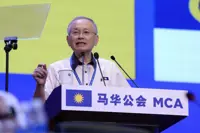
PETALING JAYA: The Education Ministry has been urged to clarify its plan to make Year One entry compulsory for six-year-olds in 2029, following differing statements by its director-general and deputy minister on the proposal's implementation status.
MCA Education Consultative Committee chairman Datuk Dr Mah Hang Soon said the differing explanations had left parents, schools and early childhood education providers confused over the Government's actual position.
Dr Mah, who is also MCA deputy president, said the Education Ministry announced on Nov 24 that compulsory Year One entry at the age of six would be implemented in 2029, with 2027 and 2028 serving as transitional years during which parents could opt for earlier enrolment.
However, a report on Thursday (Nov 26) quoted Deputy Education Minister Wong Kah Woh as saying the proposal remained at a preliminary stage, with the ministry still assessing its readiness before deciding whether to proceed in 2029.
"Education Director-General Datuk Dr Mohamad Azam said preparations would begin in 2026 and continue until full implementation in 2029, stressing that the planned measure ought not to stall.
"Yet, just two days later, Education Deputy Minister Wong Kah Woh was reported as saying that the proposal remains a preliminary plan and that the ministry was still assessing its readiness before deciding whether to proceed with compulsory entry in 2029,” Dr Mah said in a statement on Saturday {Nov 28).
He noted that the assessment covers infrastructure readiness, teacher availability, financial capacity and acceptance among parents and the wider community.
"Which position represents the ministry’s actual policy? If implementation in 2029 has already been decided, why is it now described as a preliminary proposal?
"If the policy remains under assessment, why has the Education Director-General spoken of full implementation?" he asked.
Dr Mah said education policy was not something that could be announced one day and revised the next, particularly when it affected children, parents, teachers, schools and early childhood education providers.
"Education policy is not a press conference slogan or political publicity that can be announced today and revised tomorrow.
"Any major reform affecting children, parents, teachers, schools and education providers needs a clear policy direction, scientific research and thorough preparation," he said.
Dr Mah also questioned whether five-year-olds were developmentally ready to cope with the Year One curriculum, particularly in terms of cognitive maturity.
"Under the proposed arrangement, most children would enter Year One at age five and turn six upon completing the year, compared with the current arrangement of entering at six and turning seven upon completion.
"This one-year difference could affect cognitive development, emotional regulation, social skills, learning readiness and physical maturity.
"Has research been conducted? Have child psychologists, early childhood specialists and education academics been consulted?
"Children from different family backgrounds and developmental stages may have different learning needs.
"Administrative planning alone cannot establish that every five-year-old is ready for the Year One curriculum," he said.
He also raised concerns over the capacity of vernacular schools, particularly urban Chinese primary schools which were already facing overcrowding, insufficient classrooms and limited space.
"Earlier compulsory entry could further increase enrolment.
"The MoE needs to assess enrolment demand across states, districts and school streams, classroom capacity, teacher availability and whether additional facilities or new schools are required.
"Concrete plans for school capacity, teacher deployment and construction need to be made public," he said.
Dr Mah said kindergarten operators, particularly those catering to five- and six-year-olds, could also face declining enrolment and financial pressure after investing in rental, salaries, equipment, licences and daily operations.
"The Education Ministry is urged to engage early childhood education providers and their associations, while providing transitional arrangements for operators to adjust their curricula, staffing and business models.
"Their difficulties cannot simply be left to market forces," he said.
Dr Mah further cautioned that earlier school entry would have longer-term implications for secondary education, with student numbers expected to increase when the affected cohorts progressed to secondary schools six years later.
The ministry, he said, should project future requirements for classrooms, teachers, laboratories, computer rooms, libraries and other facilities.
Dr Mah then called on the ministry to clarify the policy's status, publish research on child development and learning readiness, and provide state-level assessments of enrolment, classroom and teacher requirements across national and vernacular schools.
He also urged wider consultations involving kindergarten operators, parents, teachers, education experts and schools, alongside long-term plans for funding, teacher training, classroom construction and implementation.
"We do not oppose education reform or reviewing school-entry age.
"However, reforms cannot come at the expense of children's developmental needs, education quality or the legitimate interests of education providers.
"Children are not policy guinea pigs, and education is not an administrative project to be rushed.
"Responsible reform is not about sending children to school a year earlier, but ensuring every child receives the best education at the stage most suited to their development," he said.
The proposal to lower the Year One entry age from seven to six was announced by Prime Minister Datuk Seri Anwar Ibrahim in January as part of the National Education Plan 2026-2035.
Under the transition arrangement, parents can opt to enrol their six-year-old children in Year One in 2027 and 2028 before compulsory enrolment at six takes effect in 2029.
As at Sept 30, the Education Ministry had received 73,498 registrations for six-year-olds to enter Year One in 2027, alongside 418,151 registrations from seven-year-olds under the existing system.