KUALA LUMPUR: MCA believes it has an opening among younger voters, with recent state election results indicating that those below 30 were more receptive to the party than older age groups, says Datuk Seri Dr Wee Ka Siong.
The MCA president said the party's performance showed that younger voters, especially first-time voters and those below 30, were more receptive to MCA than older age groups.
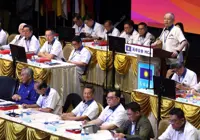
"Looking at the results of the three state elections, support among younger voters was significantly higher than among those in their 60s and 70s," he told reporters after the fourth general assembly of the 30th term of MCA central delegates on Sunday (Nov 22).
Dr Wee said this could be due to the way younger Malaysians received information, with many relying on social media and new media rather than newspapers.
"Their views and perceptions may be very different from those of the older generation," he said.
He said MCA must strengthen its outreach to younger voters through digital platforms, adding that candidates who wished to contest must be able to engage voters through social media.
"If someone wants to contest but does not even have a TikTok account, I can tell you that person may not be ready to be a candidate because he or she cannot effectively reach young voters," he said.
Dr Wee said MCA had required its candidates in the Johor state election to appear on podcasts and maintain daily online visibility, with similar approaches adopted in Melaka and Negri Sembilan.
He said the party could not rely solely on traditional Chinese-language media or Chinese social media platforms.
"Many Chinese still use Facebook, while younger people tend to use Instagram. But TikTok has become a very important platform among the young," he said.
Dr Wee said MCA Youth and Wanita MCA must actively identify and groom potential candidates, including younger leaders, for future elections.
However, he said the party would continue to maintain a mix of senior, middle-aged and younger candidates.
On seat allocations, Dr Wee said MCA would adopt a practical approach based on each constituency's prospects rather than focus solely on the number of seats it was allowed to contest.
He said seats could broadly be divided into three categories – winnable seats, contestable seats and those better left to coalition partners.
Winnable seats were those where MCA had a strong chance of victory, while contestable seats were constituencies where the party may have secured only about 30% of the vote previously but could improve its chances as political circumstances changed, he said.
Dr Wee said MCA might also have to consider allowing a partner party to contest in certain Chinese-majority areas if that party had a stronger chance of winning.
"It does not matter whether MCA contests 40, 50 or 60 seats. What matters is how many seats we can win," he said.
He added that candidates must be familiar with the constituency, accepted by the local grassroots and residents, and able to speak up on local issues.
"Candidates cannot simply appear as parachute candidates. They must spend time on the ground and build support," he said.