KOTA KINABALU: The Sabah government has been urged to address four areas to ensure the smooth implementation of the recently passed Native Court Enactment 2026.
The Momogun National Congress (MNC) made the call after the Enactment passed at the State Legislative Assembly sitting in July.
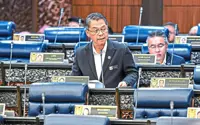
MNC president Tan Sri Wences Angang (pic) said introducing a three-tier structure—comprising the Native District Court, Native High Court, and Native Court of Appeal—marks a significant step toward placing native customary law on a firmer footing within the national legal framework.
However, he noted that the credibility of this new framework, along with dedicated posts for senior judicial officers, prosecutors, and registrars, will ultimately be judged by its execution.
“The MNC therefore urges the state government to give priority to four matters.
“First, the criteria and process for judicial appointments should be made public so that merit is demonstrable rather than merely declared, keeping appointments insulated from political patronage,” Angang said in a statement on Thursday (Nov 19).
Second, while preserving the roles of district chiefs and native chiefs is welcome, regulations under the Enactment must clearly define where customary authority ends and judicial authority begins to avoid the very overlap the reform seeks to resolve.
Third, Angang pointed out that the customary laws of the Dusunic, Murutic, and Paitanic communities are not uniform, meaning the training of judicial officers and any future documentation of customary law must reflect this diversity.
“It must be carried out in genuine consultation with the communities that hold that knowledge,” he advised.
Fourth, he said new court buildings and staffing must reach the rural districts where customary disputes most commonly arise, be funded beyond the initial allocation, and follow a published implementation timeline.
Angang said the MNC has consistently advocated for a Native Court free from political influence and staffed by permanent, professionally qualified officers.
Welcoming the Enactment’s commitment to merit-based appointments and a clearer separation of administrative, customary, and judicial functions, he added that the MNC—alongside the 77 associations signatory to the Momogun Declaration 2024—is ready to assist the state government with community consultations and public awareness.
“A strong and independent Native Court is not merely a judicial institution. It is a safeguard of the identity, customs, and dignity of Sabah’s indigenous peoples, and its success is a responsibility shared by government and community alike,” he said.