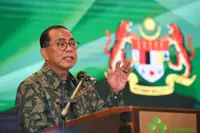
PETALING JAYA: The proposed extension of the National Service Training Programme (PLKN) from 45 days to between 90 days and six months has drawn mixed reactions, with some expressing concern over its impact on students pursuing further education.
Melaka Action Group for Parents in Education (Magpie) chairman Mak Chee Kin questioned whether a longer programme would necessarily produce better results, saying its quality, relevance and values were more important than its duration.
Mak said the government must consider the impact on school-leavers preparing to enter Form Six, matriculation, foundation, diploma and other pre-university programmes.
“A six-month commitment could mean missing enrolment deadlines, delaying studies or waiting for another academic intake.
“We urge the government to establish clear arrangements for deferments, exemptions or flexible scheduling.
“National service should complement youth development and not become an obstacle to education.
“We want to prepare our young people for the future, not delay their future,” he said.
Meanwhile, Parent-Teacher Association chairman Mohamad Zaki Samsudin suggested that the government work with local universities to introduce a credit transfer mechanism.
He said national service training could count towards a university course or module.
Former National Service Training Department head Datuk Abdul Hadi Awang Kechil supported the proposed extension, saying the training modules and duration should comply with the National Service Training Act 2003, as was the case under the earlier national service programme.
Addressing concerns about disruptions to those pursuing further studies, he said the Act provided for deferments, exemptions and postponements.
“As such, there should be no issues arising from this,” Abdul Hadi said.
Meanwhile, mother of two Afiqah Zahidi said a three-month training period would be ideal, while 180 days might be too long.
The 37-year-old also hoped the programme would place greater emphasis on character-building and self-discipline.
“I believe a 90-day period would be suitable for developing leadership and moral values, as well as fostering greater awareness of social responsibilities,” she said.
Former national service trainee Rafiqha Mustaffa said a longer training period would provide participants with a better learning experience.
“From my experience, the current 45-day period may not be sufficient for participants to benefit fully from the programme.
“A longer period would help expose trainees to new skills and valuable experiences,” said the 34-year-old, who underwent training in Manjung, Perak, in 2010.
Another former trainee, Alex Chan, who served in Gambang, Pahang, in 2014, said two months would be ideal, providing sufficient exposure while allowing participants to continue their studies afterwards.
“I had adequate time to complete my studies following my service. Anything longer could be challenging,” said the 30-year-old.
Chan also said the training had opened his eyes to the different cultures and communities across Malaysia.
Fellow former trainee Leong Chew Ping, 30, said the programme was an excellent initiative to foster patriotism among youths.
“A training period of 60 days or less would allow nationalism to be instilled among participants while allowing them the opportunity to pursue further studies,” said Leong, who served in Sipitang, Sabah, in 2014.