E-COMMERCE platforms operating in or outside the country may be required to issue self-billed invoices for goods sold or services provided by other parties through their platforms.
This is among proposed provisions under the Measures for the Collection, Administration and Enforcement of Tax Bill 2026, tabled by Deputy Finance Minister Liew Chin Tong.
The Bill aims to strengthen and modernise Malaysia’s tax administration and enforcement system.
The Bill amends several provisions under existing laws such as the Income Tax Act 1967, Real Property Gains Tax Act 1976, Stamp Act 1949, Labuan Business Activity Tax Act 1990, Petroleum (Income Tax) Act 1967, Customs Act 1967 and Excise Act 1976.
If passed, the amendments will come into effect on Jan 1, 2027.
The Bill also proposes changes in the way tax notices are delivered, with the Inland Revenue Board (LHDN) being able to send them through electronic medium or electronic transmission.
A new subsection will be added to Section 119B of the Income Tax Act 1967, empowering the director-general to impose a penalty, where no prosecution is instituted, for failure to comply with rules on the automatic exchange of information and submission of country-by-country reports.
Clause 47, which amends Section 103(1) of the Customs Act 1967, seeks to strengthen control over goods brought into or taken out of the country.
“Every person arriving in Malaysia or intending to leave Malaysia shall declare to a proper officer of customs any goods in his possession, either on his person or in any baggage or in any vehicle, in the manner determined by the (Finance) Minister,” reads the proposed provision.
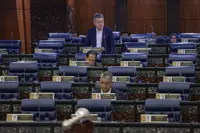
Liew said the Bill will be tabled for second and third readings in the current meeting of the Dewan Rakyat.