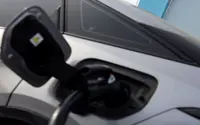
THE development of electric vehicle (EV) charging facilities is largely driven by private sector investment through charge point operators (CPOs), the House heard.
Deputy Investment, Trade and Industry Minister Sim Tze Tzin said private investors took commercial viability into account, including consumer demand, installation costs and readiness of power supply at a particular location.
“The government remains committed to expanding EV charging infrastructure throughout the country, including ones in rural areas and small towns, to ensure that charging facilities are more widely accessible to the public.
“This initiative is undertaken in line with the National Automotive Policy 2020 and New Industrial Master Plan 2030,” he said.
Sim said as of Sept 30, a total of 7,341 public EV charging units had been installed nationwide, comprising 4,992 alternating current chargers and 2,349 direct current fast chargers.
“The government continues to give due attention to the distribution and accessibility of this infrastructure to ensure that EV charging facilities are not concentrated solely in major urban areas but are also extended to small towns and rural areas based on local needs,” he said.
Sim said EV users in rural areas and small towns with suitable parking facilities and power supply at their homes could install private EV chargers to meet their daily charging needs.
“These facilities enable part of their charging requirements to be met at home, reducing dependence on public charging facilities.”
He said the ministry is working with state and local governments, premises owners, utilities and industry players to roll out 30,000 EV chargers by 2030.
“This target will be achieved by encouraging private sector investment through CPOs, as well as through cooperation with state governments, local authorities and industry players,” he said.
To further expand access to EV charging facilities, the government continues to encourage CPOs to explore investment opportunities in rural areas and small towns.
This includes establishing charging networks at strategic locations such as toll plazas, federal roads, commercial areas, small towns and tourist destinations, while promoting the installation of AC chargers at business premises, shopping centres and public facilities.