
PETALING JAYA: For cash-strapped consumers, getting loans is easy and fast.
The amount they apply for can range from as little as RM100 to over RM100,000 on e-commerce platforms.
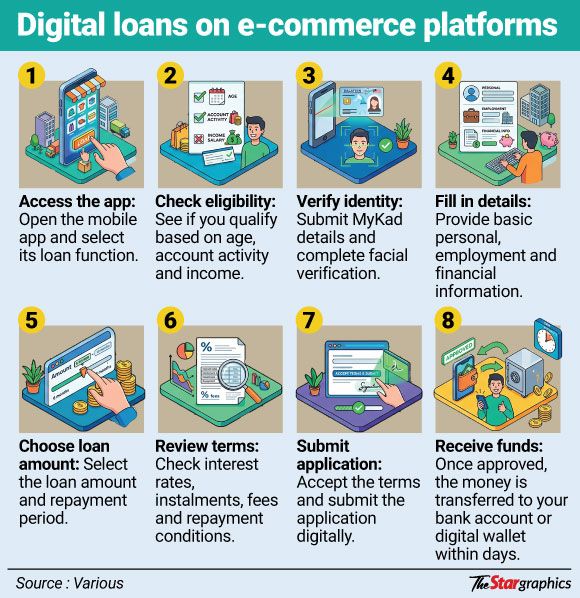
These digital loans offered by such money lending platforms come in handy for those facing money problems but financial planners are cautioning that these facilities should only be used to address temporary difficulties and not become a regular means of financing one’s lifestyle.
Certified financial planner Jarvic Lau said borrowing could help consumers manage temporary cash-flow shortages but would not sustainably resolve recurring income shortfalls.
“Instead, consumers should consider how much money they have left after paying for essential expenses and debt repayments,” he said when contacted.
Lau said the practical test would be whether a person’s normal income could cover essential living costs and debt repayment without further borrowing.
He warned that seemingly manageable repayments could accumulate across multiple platforms, leaving borrowers with insufficient money for daily necessities.
“Three apps requiring RM150 each represent one RM450 household commitment,” he said, advising consumers to always keep track of their outstanding debts, monthly repayments and due dates.
He also urged borrowers to compare the actual amount received against the total repayment, particularly when fees were deducted before loan disbursement.
“You must ask, ‘how much reaches my account, and how much will leave my account altogether?’,” he said.
Those struggling with repayments should stop taking additional loans for discretionary spending and approach providers early to discuss repayment arrangements, he said.
He also suggested that they seek financial counselling from the Credit Counselling and Debt Management Agency.
Lau proposed that affordability assessments take into consideration the borrowers’ incomes, essential expenses and existing commitments across different lending platforms.
Lenders should also reassess borrowers who repeatedly apply for loans, request higher credit limits or show signs of repayment difficulties.
“In the end, consumers should take responsibility for their decisions. And the loan providers should take responsibility that the credit they offer is reasonably repayable,” he added.
Licensed financial planner Danny Wong said digital loans were particularly attractive to younger consumers because applications were convenient and quick, as they could be completed within minutes.
However, he cautioned that multiple instalment commitments could become a financial burden, even when individual repayments appeared affordable.
“Breaking a RM5,000 loan into 12 months is affordable. But having multiple instalments at once can quickly become a financial burden,” said Wong, chief executive officer of Areca Capital.
He warned that people could be tempted into unnecessary purchases when they did not have to pay the full amount immediately.
Some consumers did not regard instalment payments as debt, while others assumed interest-free arrangements carried no additional costs, he said.
“They must remember that small fees and delayed payments could become significant when accumulated across multiple facilities and platforms.”
Wong urged consumers to choose lenders that have conducted proper credit and affordability assessments.
“If an app approves you without asking what you earn and owe, walk away,” he said.
He called for stronger government safeguards, including checks on borrowers’ incomes and existing debts, limits on excessive borrowing and clearer disclosure of interest rates and hidden charges.
However, Wong stressed that digital lending should not be prohibited outright, as it could promote financial inclusion when offered responsibly.
“The main goal should not be to stop people from borrowing, but to prevent them from falling into a debt trap,” he said.