KUCHING: Sarawak will build two large-scale waste-to-energy (WTE) incinerators as an alternative to environmentally unfriendly landfills.
State Deputy Energy and Environmental Sustainability Minister Datuk Dr Hazland Abang Hipni said the incinerators would be similar in size and capacity to Singapore’s sixth and largest waste-to-energy facility, the TuasOne plant.
TuasOne can incinerate up to 3,600 tonnes of municipal solid waste and generate 120MW of electricity daily.
The cost of its construction in 2016 was S$750mil (RM2.38bil).
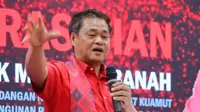
Speaking to reporters after closing Institut Koperasi Malaysia’s green economy forum here on Thursday (Nov 5), Dr Hazland said the incinerators – one to be built in Kuching and the other in Miri under a Public-Private-Partnership (PPP) framework – will have a combined generating capacity of 1.3GW.
"That is half of what Bakun (hydroelectric dam) generates," he said, indicating the project's scale.
The electricity could generate about RM2bil and be a new source of income for the state, he added.
Dr Hazland initially declined to disclose where in the "north of Sarawak" the incinerator would be sited but later hinted it would be "on the largest landfill in the north", indicating the Sibuti sanitary landfill 55km from Miri city.
In the south, he said it would be built at the Mambong Integrated Waste Management Complex, 27km from here.
The Mambong complex has one small incinerator for clinical waste and Dr Hazland said it would be expanded.
The northern plant will process municipal waste from Miri, Bintulu, Sibu and Limbang while the southern plant will process waste from the Kuching, Samarahan, Serian, Sri Aman and Betong divisions.
Dr Hazland said construction would begin next year with expected completion in 2030.
He noted that the incinerators are "the real solution" to the landfill problem the state has been grappling with for years.
"We have to get rid of the landfills," he said.
The majority of Sarawak’s 46 documented landfill and waste-disposal sites are open dumpsites.
The state is also facing serious challenges involving landfill capacity, environmental pollution, waste management and the shortage of suitable land for new disposal facilities to meet the rising volume of household and commercial waste.
The landfills are also a fire hazard.
Dr Hazland said the two incinerators will have the technology to separate the waste – what is safe to be burned and what is not – and there would not be any manual separation.