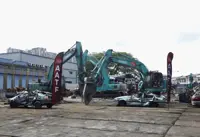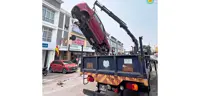
PETALING JAYA: Local authorities will be allowed to remove and dispose of abandoned vehicles on public roads without going through the full court process if left unclaimed after notice period under revised guidelines, says Nga Kor Ming (pic).

“An additional legal route under Section 65 of the Road Transport Act 1987 (Act 333) allows broken-down or abandoned vehicles on roads to be removed and, if unclaimed after notice, disposed of without going through the full court process.
“This complements the existing powers under the Street, Drainage and Building Act 1974 (Act 133),” he said.
Nga said a review of the existing guidelines, in force since 2020, found the process too lengthy, particularly when authorities struggled to trace owners, prepare investigation papers for court forfeiture, and complete disposal before vehicle inspection certificates expired.
Other revisions include clearer definitions of an “abandoned vehicle” and “public place”, aligned with Act 333, Section 48 of Act 133 and recent court decisions, to provide a firmer legal basis for enforcement.
Qualified local authority officers may also be accredited by the Road Transport Department (JPJ) as vehicle inspectors under Section 126 of Act 333, allowing them to verify chassis numbers on site instead of sending every vehicle to Puspakom.

Puspakom and other authorised inspection centres will remain available. The validity of inspection certificates required for transferring ownership to the mayor or local authority president will also be extended to prevent them from expiring while cases are being processed.
He said the revised Guidelines on the Management of Abandoned Vehicles in Local Authority Operational Areas were approved by the Cabinet on Oct 30.
Jointly developed by the Housing and Local Government Ministry and the Transport Ministry, the guidelines will be tabled at the 88th National Council for Local Government meeting on Nov 26 for state governments’ agreement before implementation.
Vehicle owners are also encouraged to voluntarily dispose of unwanted cars through JPJ’s online deregistration system (e-Dereg), with priority given to environmentally sound disposal at facilities licensed by the Department of Environment.
“By resolving abandoned vehicles faster and more consistently, while upholding the rule of law and protecting owners’ rights, we want our neighbourhoods to be cleaner, safer and more liveable,” said Nga.
On penalties, he said the revised guidelines would not introduce any new offences, fines or charges.
Under Section 46 of Act 133, anyone found guilty of leaving an obstruction, including an old or derelict vehicle, in a public place can be fined up to RM500 for a first offence and RM1,000 for subsequent offences.
Local authorities may also remove and detain such vehicles until their owners pay the removal and detention costs.
However, Nga said the guidelines would not grant local authorities blanket enforcement powers over private strata developments.
He said developments with a Joint Management Body (JMB) or Management Corporation (MC) fall under the Strata Management Act 2013 (Act 757), which empowers these bodies to manage common property, including shared parking areas and access ways.
“Local authorities currently have no legal power to take enforcement action within private strata areas, except on a formal request from, or in cooperation with, the JMB or MC concerned,” he said.
Between January 2022 and August 2025, Kuala Lumpur City Hall (DBKL) received 8,286 complaints involving derelict or abandoned vehicles, conducted 4,094 towing operations and disposed of, or was in the process of disposing of, 3,836 vehicles.
The Kajang Municipal Council (MPKj) recorded 12,290 abandoned vehicles since 2021, of which 2,605 had been towed, while the Ampang Jaya Municipal Council (MPAJ) recorded 3,826.
In 2025 alone, MPAJ towed 1,139 abandoned vehicles and disposed of 281.
Outside the Klang Valley, Alor Setar City Council issued 203 notices involving abandoned vehicles between 2020 and 2025, including 114 in 2025 compared with eight in 2024.
DBKL has set a target of disposing of 1,200 abandoned vehicles in 2026.
Abandoned vehicles pose public health and safety risks, including serving as potential Aedes mosquito breeding grounds when stagnant water collects in their tyres and interiors.
They can also obstruct parking bays and emergency access, provide hiding places for criminal activity and contribute to environmental pollution through leaking engine oil, coolant and batteries.