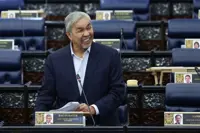
THE National Disaster Management Agency (Nadma) should introduce household emergency preparedness guidelines to help the public remain self-sufficient for between three days and a week during a crisis, says Datuk Mas Ermieyati Samsudin.
The Public Accounts Committee (PAC) chairman made the proposal following moves by several developed countries to urge their citizens to stock up on essential supplies in preparation for potential crises amid growing geopolitical uncertainties and climate change.
Mas Ermieyati (PN-Masjid Tanah) said such measures should be implemented as soon as possible, rather than waiting until essential supplies were disrupted during an emergency.
“If developed countries are already taking such measures, what preparations has Malaysia made?
“What is more worrying is that the United States, the United Kingdom, European countries and Japan are now intensifying efforts to encourage their citizens to prepare for emergencies,” she said while debating Budget 2027 at the committee stage.
She said these countries had urged their citizens to stock up on basic necessities sufficient to last between 72 hours and a week.
She cited the ongoing Russia-Ukraine conflict, tensions in the Middle East and other geopolitical developments as reasons Malaysian households should be prepared for emergencies.
“We are not asking the government to predict when war will break out. We are asking the government to ensure the country is prepared if a crisis happens tomorrow,” she said.
Mas Ermieyati urged Nadma and the National Security Council to develop a comprehensive national preparedness plan covering geopolitical conflicts, food and energy supply disruptions, as well as cyberattacks.
Separately, she questioned whether the RM260mil allocation announced for Nadma and the RM200mil for the National Disaster Relief Trust Fund would be sufficient to respond to large-scale disasters affecting several states simultaneously.
“Do not wait until supplies are cut off and people become victims before taking action.
“Public safety is not a political issue. It is the government’s responsibility.
“It is better to prepare before a crisis than regret it afterwards,” she said.
She also sought clarification on the availability of rescue assets, evacuation centres, early warning systems and emergency response training at district and community levels.