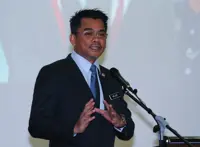
KUCHING: A Sarawak minister has cautioned students not to be overdependent on artificial intelligence even as AI tools are integrated into the school syllabus.
State Education, Innovation and Talent Development Minister Datuk Seri Roland Sagah says core human capabilities are still required.
He also warned teachers that AI should never be viewed as a replacement for educators.
While AI can personalise instruction, support teachers and help students produce better work, the underlying knowledge or skills required must still come from teachers.
"Digitalisation should not simply be about providing more devices or utilising more digital applications in our classrooms.
"It must focus on improving how we teach and how our students learn," he said when opening the fourth international conference on educational research and innovation here on Wednesday (Oct 28).
Sagah said students must learn to think critically, communicate clearly, solve complex problems and make responsible and ethical decisions.
"As AI-generated content becomes more widespread, these human values and critical thinking skills become even more essential.
"This is very important to Sarawak, as our success in moving towards becoming a high-income developed state by 2030 relies heavily on building a highly skilled, adaptable and innovative workforce," he said.
Sagah said the reason why Sarawak places strong emphasis on Science, Technology, Engineering and Mathematics (STEM) education, innovation and digital skills is to ensure young Sarawakians are prepared for future jobs.
"Designing the new AI learning environment is not only to equip students for today's job.
"It's also for the unexpected opportunities of tomorrow's technology-driven economy," he added.
Sagah said this was why Sarawak has implemented hands-on learning initiatives across the state as they provide early exposure to applied technology and encourage curiosity.
He said educators need continuous professional development so they can integrate emerging technologies with confidence, sound pedagogy and ethical awareness.
Sagah told the teachers attending the conference that a classroom does not become innovative simply because it contains digital devices.
"True innovation occurs when technology is used to create better, more engaging learning opportunities.
"As we adopt new tools, we must also safeguard equity and well-being, ensuring academic integrity, privacy and responsible use are maintained across all levels of education," he said.