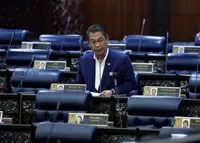
KUALA LUMPUR: No individual will be repatriated if there is clear evidence or risk that they would face persecution, torture or threats to their life in Myanmar, says Datuk Seri Saifuddin Nasution Ismail.
The Home Minister said the government prioritised safety, welfare and human rights in the repatriation process.
“The Myanmar government has provided assurances regarding the safety of individuals being repatriated.
“Although Malaysia is not a signatory to the 1951 Convention Relating to the Status of Refugees or its 1967 Protocol, the Madani government is committed to ensuring that every measure taken upholds the rule of law and international humanitarian standards.
“Close monitoring will be carried out at every stage to ensure that repatriation is conducted safely and responsibly, without any form of human rights violations,” he said in a written parliamentary reply on Wednesday (Oct 21).
He was responding to Jimmy Puah Wee Tse (PH-Tebrau), who asked about the status of the government’s plan to repatriate 5,000 Rohingya, as well as the mechanisms, timeline and assurances in place to ensure the process was carried out in an orderly and humane manner.
The ministry is implementing a phased repatriation programme for up to 5,000 Myanmar refugees held at Immigration detention depots, which is coordinated by the ministry through the Immigration Department, together with relevant ministries and agencies.
In the first phase, 1,476 Myanmar refugees were repatriated on Sept 29 using maritime assets belonging to the Myanmar government.
Saifuddin said the first phase was part of an agreement and cooperation between the Malaysian and Myanmar governments.
“The ministry is committed to proceeding with subsequent phases, subject to the completion of identification, documentation and verification processes for the Myanmar refugees by the Myanmar government, as well as logistical readiness and operational coordination between the two countries,” he said.
He added that the repatriation process was not carried out unilaterally, but through direct negotiations and coordination with the Myanmar government.
The process involves several stages, including identification, verification of identity and status, security screening, and verification of the Myanmar refugees by the Myanmar government before documentation and transfers are carried out, he said.