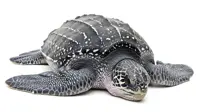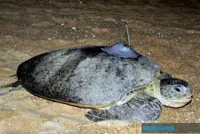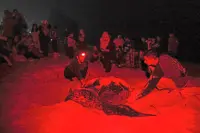
DUNGUN: The Fisheries Department has found that all 44 eggs from the first leatherback turtle nest laid at Pantai Pasir Putih in Marang on Sept 1 were unfertilised.
Director-general Datuk Adnan Hussain said an inspection of the nest on Sept 30, the 30th day of incubation, found no evidence of embryonic development in the eggs.
He said the findings were documented in a technical report prepared by the Fisheries Research Institute in Rantau Abang near here on Oct 3.
ALSO READ: Leatherback turtles return to Terengganu waters
"The examination found no white spots on the eggshells, which are typically associated with the early stages of embryonic development.
"An examination using a light source also revealed no signs of developing blood vessels or the outline of an embryo," he told reporters after inspecting leatherback turtle eggs being incubated at the Turtle Conservation and Information Centre (TCIC) hatchery in Rantau Abang on Thursday (Oct 15) night.
Five leatherback turtle landings have been recorded along the Terengganu coast since Sept 1, with a total of 313 eggs laid.
Adnan said inspections also found that the eggs had turned blackish and yellowish, while the presence of micro-organisms and maggots indicated decomposition.
He said the failure of the eggs to be fertilised posed an additional challenge to conservation efforts.
ALSO READ: Ecowatch: A leatherback returns – but is it a species comeback?
"This development poses a challenge to efforts to conserve the ‘King of Turtles’ and is believed to be a concern not only in Malaysia but also in other countries," he said.
Adnan said leatherback turtle landings along the Terengganu coast were recorded in 2010 and 2017, and the species returned this year after a nine-year gap in observed landings.
However, he said the landings in 2010 and 2017 did not produce any hatchlings, with the last successful hatching in Rantau Abang recorded in 2000.
"Of the 1,914 leatherback turtle eggs recorded in 2000, only 115, or about 6%, hatched," he said.
Adnan said green turtles, which frequently come ashore along the east coast, had a much higher hatching rate of between 70% and 75%.
"As such, we exercise extreme caution when handling leatherback turtle eggs due to their low hatching rate," he said. – Bernama