
BENEATH the roar of electric guitars, one of Sabah’s fading traditional sounds found itself at home on a rock stage.
At Rocktimatum Fest 2026 in Sandakan on Oct 3, Ranau-based Tuni Sundatang stood out in a line-up comprising veteran rockers, metal acts and younger musicians.
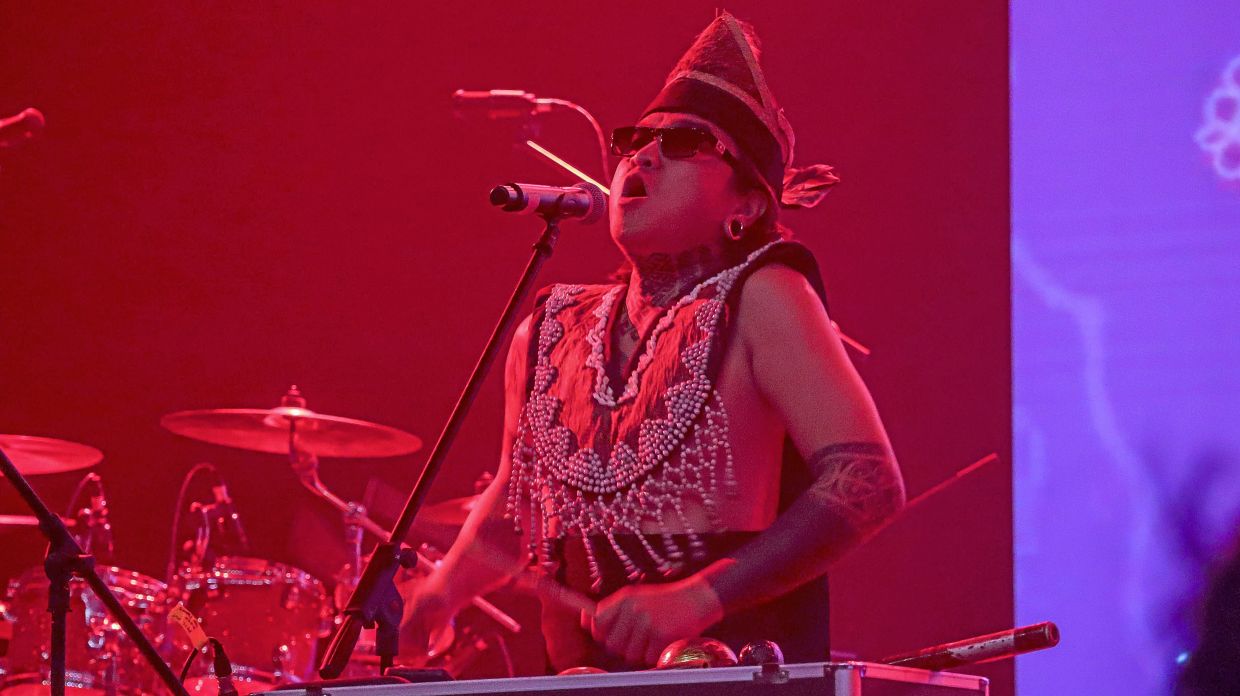
The folk-rock group brought with it the sundatang, kulintangan, tuntug, sompoton, suling, bungkau and gong – instruments deeply rooted in Sabah’s indigenous musical heritage – and placed them alongside electric guitar, bass and drums.
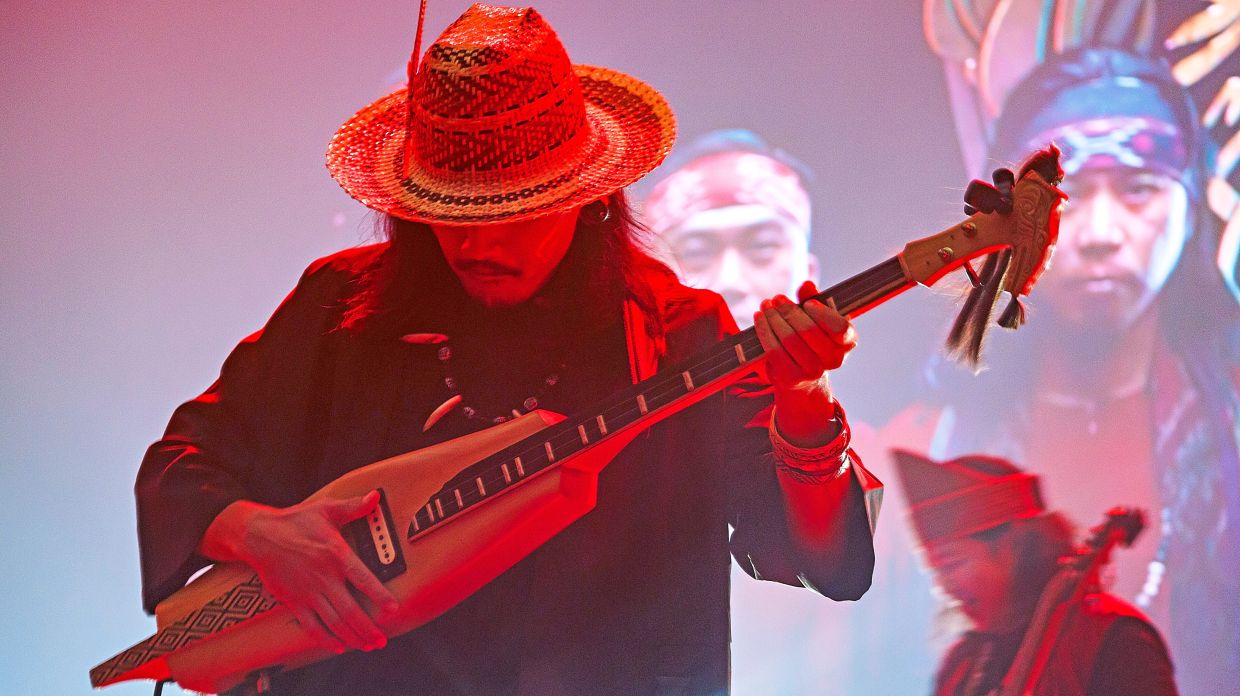
The sundatang, sometimes described as Sabah’s traditional guitar, is a long-necked, two-stringed lute associated particularly with indigenous communities in the state.
The sompoton is a mouth organ made from bamboo pipes fitted into a gourd, while the kulintangan comprises a row of small tuned gongs played with beaters.
For Tuni Sundatang leader, founder and sundatang maker Gindung McFeddy Simon, putting those sounds on a rock stage was not about creating a novelty.
It was about ensuring they continue to be heard.
“We combine traditional music with modern music. This is actually not new for us because we have always combined rock with traditional music,” he said.
Gindung said the Tuni Sundatang journey began with research in late 2017, when they travelled around Sabah in search of traditional instruments and people who still knew how to make and play them.
Between 2018 and 2020, they began making some of the instruments themselves before Tuni Sundatang was formally established as a band in 2021.
“The sundatang is already in the category of instruments that are disappearing,” the 37-year-old said.
“Even the kulintangan is being used less, while the sompoton is still played but the number of makers is decreasing. So we are trying to reintroduce those that are close to disappearing.
“The traditional instruments we bring will also increase in the future,” he said.
Instead of restricting the instruments to traditional performances, the group began experimenting with rock, metal, samba, ballads and other contemporary sounds.
“In 2021, we formed the band to really introduce these instruments and show what they can do,” Gindung said.
The formula has taken the Ranau group well beyond Sabah.
In 2024, Tuni Sundatang performed at the Rainforest World Music Festival in Sarawak before appearing at the Taiwan World Music Festival.
The group has also performed in Thailand and Japan, and appeared on BBC World Service.
Its international recognition grew further when Tuni Sundatang was named among the Best of Asia winners in the Asian Folk category at the 2025 InterContinental Music Awards in Los Angeles for its track Highlanders.
Yet for Gindung, one of the more meaningful measures of progress is not an award or overseas appearance.
It is seeing other musicians pick up the instruments.
“Many are growing up now, from being schoolchildren to being working people,” he said.
“There are teachers, and there are those still studying at university. They form bands and they come looking for instruments from us. So for me, these musical instruments are developing and the interest is increasing.”
Gindung said demand for the instruments has grown alongside programmes teaching people how to make and play them. He also gives lessons both face-to-face and online.
That mission found a different audience at Rocktimatum.
Organised by Sandakan-based Don Legacy Resources, the festival received about RM400,000 in support from the Communications Ministry through MyCreative Ventures under its creative content funding for the music industry.
Seven bands from Sabah and Peninsular Malaysia performed at Dewan Tiong Hua, bringing together different generations and branches of rock music.
Among the main attractions was Search Kiddin, featuring Kid and Din, the celebrated guitarist brothers from legendary Malaysian rock band Search.
Concert director Muhammad Firdaus Shaharom said Rocktimatum was designed to do more than bring established names back to the east coast.
Firdaus said the larger goal was to create opportunities throughout the local music ecosystem.
“Our hope is that with a concert of this scale, we can further develop the arts industry and help people such as musicians, lyricists and composers,” he said.
“And we should not forget those working the PA system and the lighting operators and the many others connected to the industry.”
He said the company has also worked with Sandakan’s creative arts and musicians’ community to provide platforms for buskers, performers and bands wanting to record their own material.
Previous efforts included NoiseFest in 2023 and studio work with local bands, some of whose songs later entered radio charts.
Firdaus said there is no shortage of young musical talent in Sandakan, particularly among those drawn to hardcore, punk rock and metal.
What is often missing is exposure.
“They have the potential to play music. The problem is that they do not always get enough exposure to the public,” he said.
That gap between generations was something Rocktimatum sought to bridge.
While many older east coast fans grew up with conventional rock, Firdaus said younger musicians are increasingly drawn to harder and more varied sounds.
“When we combine different genres on one stage, we can bring together rock fans from different levels,” he said.
“It does not matter whether they are young or already legends – what we call the otai.”
Tuni Sundatang offered perhaps the clearest example of how wide that definition of rock can become.
Gindung said that despite the band having already performed on major stages in Malaysia and abroad, Rocktimatum was possibly its first concert built specifically around rock.
For a group trying to ensure traditional instruments remain relevant, that was precisely the sort of stage where they wanted to be.
Gindung hopes similar events can eventually be held across more districts in Sabah.
“Programmes like this should be organised more often in Sabah. If possible, not only in Sandakan but moving from one district to another. We will always be ready to support events like this,” he said.
For a festival built around the revival of rock, Rocktimatum ultimately made room for another kind of revival too.
Between the amplifiers, electric guitars and familiar riffs, instruments that once risked falling silent were finding new players, new audiences and a new sound.
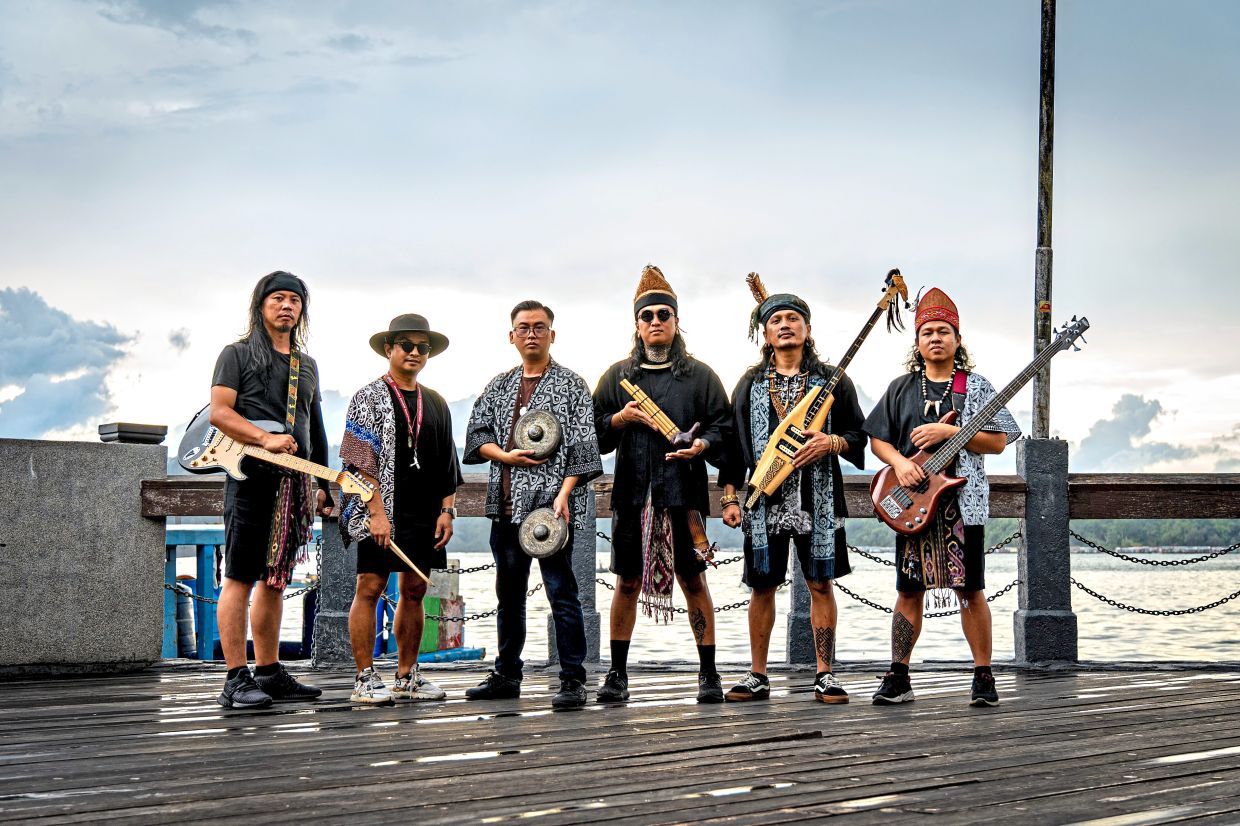

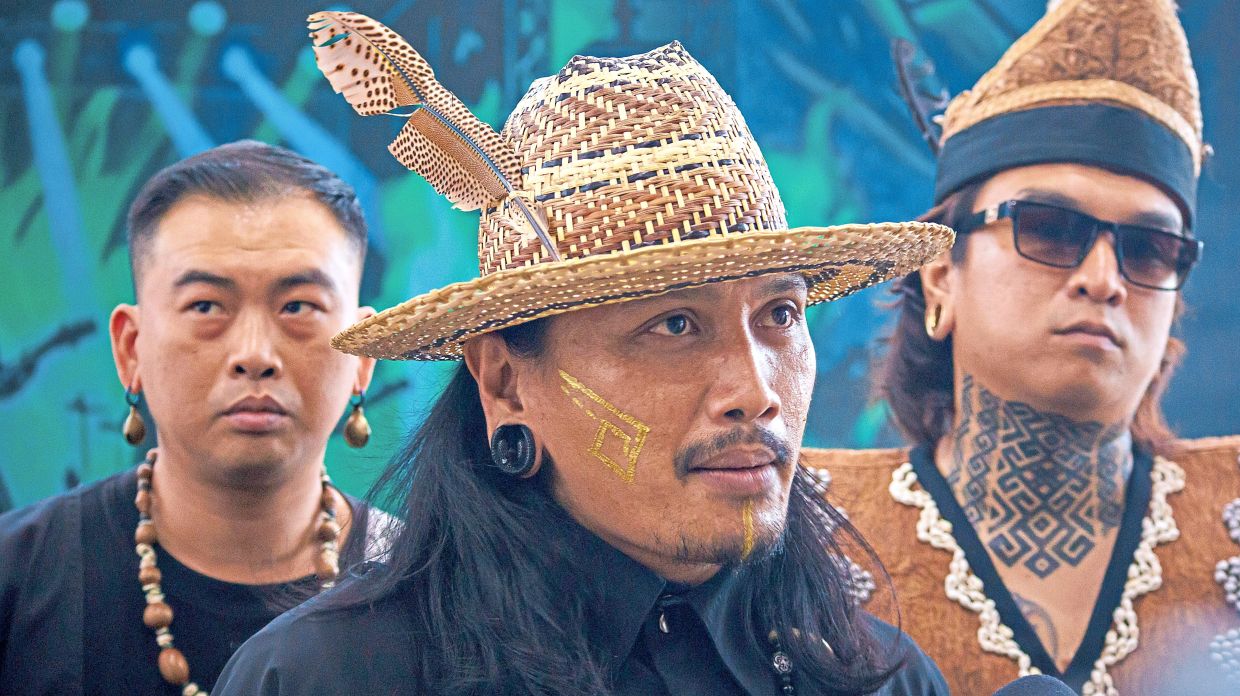
Members of Tuni Sundatang, the Ranau-based folk-rock group known for blending traditional Sabah instruments with contemporary music.
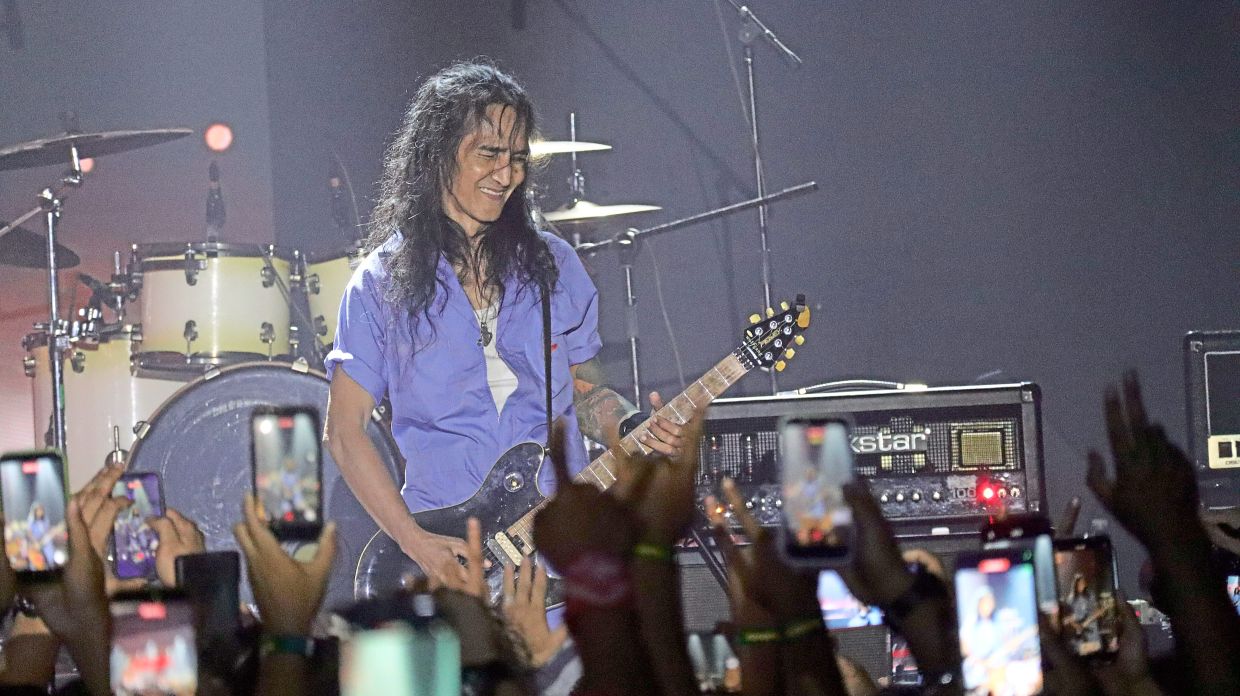
Search guitarist Kid performing at Rocktimatum Fest 2026 in Sandakan as fans capture the moment on their phones.
Rocktimatum Fest 2026 brought together generations of rock fans in Sandakan, while giving local and visiting bands a stage to showcase diverse sounds and styles.
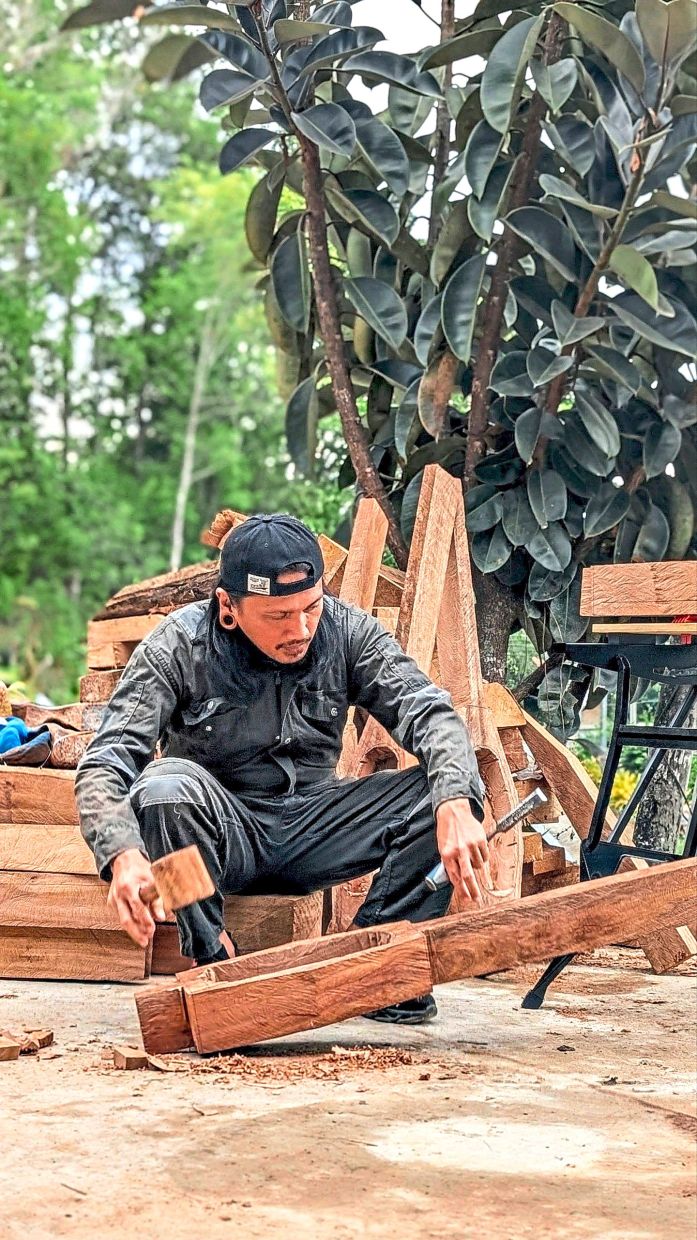
Tuni Sundatang leader and founder Gindung, whose work centres on bringing traditional Sabah instruments into contemporary music.
Gindung with a partly completed sundatang as he works to preserve the traditional Sabah instrument.
Gindung playing the sundatang during the group’s performance at Rocktimatum Fest 2026 in Sandakan.
Adrian Johnny of Tuni Sundatang performing with traditional gongs (tuntug) during Rocktimatum Fest 2026 in Sandakan.