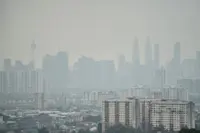
PETALING JAYA: Sarawak continues to log the highest number of unhealthy air spots in the country, with 11 areas recording high Air Pollutant Index (API) levels.
According to the Air Pollutant Index Management System, Sibu and Sri Aman recorded the highest readings at 175, followed by Mukah (169) and Sarikei (162) as of 6pm yesterday.
Others were Serian IPD and Kuching with 160, Samarahan (157), Bintulu (156), Samalaju (153), ILP Miri (121) and Miri (106).
Meanwhile, Tanah Merah in Kelantan was among four areas in the northern peninsula with good API readings at 50, followed by Balik Pulau (48), Kangar (44) and Langkawi (42).
A total of 54 areas nationwide recorded moderate readings.
An API reading of 0 to 50 indicates good air quality, 51 to 100 moderate, 101 to 200 unhealthy, 201 to 300 very unhealthy and above 300 hazardous.
The latest readings come amid continued cloud seeding efforts to mitigate the haze and encourage rainfall in affected areas.
A two-day cloud seeding operation was carried out in Selangor, Kuala Lumpur and Putrajaya with the operation on Sept 20 producing rainfall of up to 80.2mm at Klang Gates dam.
The operation was coordinated by the National Disaster Management Agency (Nadma) alongside MetMalaysia, the Civil Aviation Authority of Malaysia and the Royal Malaysian Air Force.
A four-day cloud seeding operation is also being carried out in Johor, Melaka and Negri Sembilan to replenish dam levels and safeguard water supplies.
Nadma said the operation, conducted with MetMalaysia and the Natural Resources and Environmental Sustainability Ministry, would support efforts to mitigate potential haze episodes.
It said the success of the operation would depend on suitable cloud formations and atmospheric conditions, while MetMalaysia has forecast thunderstorms in parts of the three states.
The Asean Specialised Meteorological Centre said the southern Asean region remained largely dry with moderate to dense transboundary smoke haze observed over northern Borneo.
Showers over parts of Peninsular Malaysia, northern and central Sumatra and Borneo could provide some relief.
However, it warned that prolonged dry conditions in fire-prone areas continued to pose a risk of severe transboundary haze.