



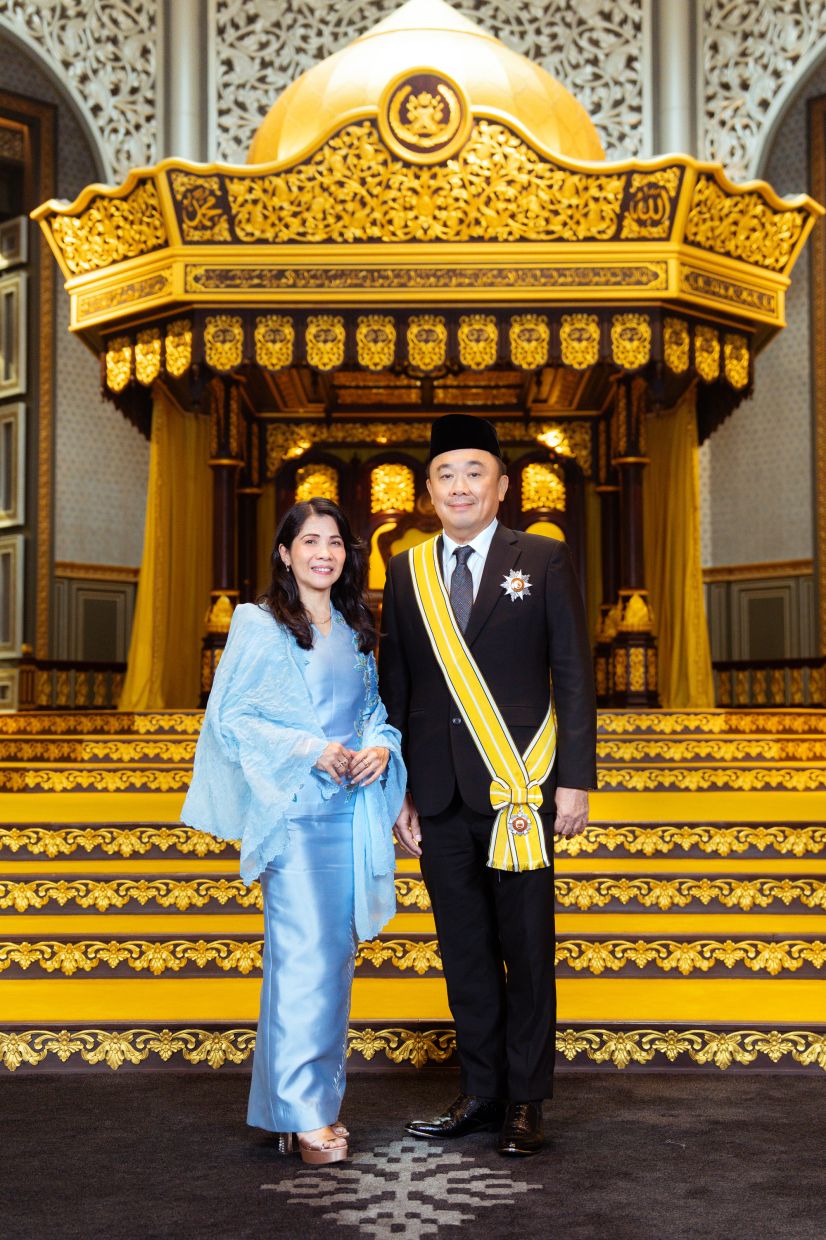
The conferment of the Darjah Kebesaran Dato’ Paduka Mahkota Terengganu (D.P.M.T.) on PTT Synergy Group Bhd deputy chairman Datuk Terry Teo Swee Leng marks another milestone in a career spanning close to four decades in construction and more than two decades in property development.
That experience is reflected in the capabilities PTT has built today, combining execution strength, automation and capital discipline to support the group’s continued growth.
Through its construction arm, Pembinaan Tetap Teguh Sdn Bhd, PTT brings more than 25 years of experience in earthworks, infrastructure and industrial construction, supported by established technical expertise, machinery and project management capabilities.
The group also operates Malaysia’s largest fleet of heavy machinery and equipment, enabling it to mobilise resources for earthworks and infrastructure projects at scale.
Importantly, this capability is not confined to PTT’s own developments.
PTT has undertaken earthworks and infrastructure packages for established developers and businesses, including the Sime Darby Property group and Mydin. These third-party projects provide external validation of the same execution capabilities that the group deploys across its own industrial developments.
This dual role allows construction to contribute as a business in its own right while giving PTT greater control over the delivery, quality and timeline of the facilities it develops.
Beyond construction, PTT integrates technology directly into the facilities it delivers.
Under PTT Space, the group is building an integrated smart warehouse and logistics ecosystem combining industrial infrastructure with technologies such as Automated Storage and Retrieval Systems (ASRS), Automated Guided Vehicles (AGV), Autonomous Mobile Robots (AMR) and warehouse management and control systems (WMS).
By considering automation from the planning stage, facilities can be designed around how an occupier will actually operate rather than having technology added after construction.
For occupiers, the benefits are practical: better space utilisation, higher storage density, greater operational efficiency and visibility, improved picking accuracy and lower total operating costs.
PTT Space also provides different adoption models, from Built-to-Suit facilities and turnkey automation to Solution-as-a-Service (SaaS) arrangements, reducing the need for customers to fund the entire automation system upfront.
This extends PTT’s role beyond delivering the physical building. Where customers adopt the SaaS model, PTT can generate recurring subscription or outcome-based income, alongside recurring income from its robotics and automation solutions.
PTT’s capital recycling strategy complements this model. Once an industrial asset is developed and stabilised, it can be monetised and the capital redeployed into new opportunities.
PTT Logistics Hub 1 at Elmina Business Park demonstrated this approach through its sale-and-leaseback with CapitaLand Malaysia Trust, allowing the group to unlock capital from a completed asset while retaining longer-term participation through its warehouse and logistics activities.
The result is a model designed to keep capital productive while creating opportunities for recurring income through its warehouse, automation and robotics solutions.
PTT’s direction also aligns with Malaysia’s broader push towards higher-value, technology-driven and more sustainable industries under initiatives such as the New Industrial Master Plan 2030 (NIMP 2030) and the National Semiconductor Strategy (NSS).
As manufacturing and supply chains become more sophisticated, companies increasingly require more than production capacity alone. They also need purpose-built industrial and logistics infrastructure capable of supporting automation, efficiency and increasingly complex operating requirements.
PTT’s positioning fits within that supporting ecosystem: purpose-built facilities, integrated automation, efficient use of space and infrastructure designed around the operating requirements of modern manufacturers and logistics operators.
Its sustainability approach complements this through energy-efficient design, responsible resource management and appropriate safety and compliance standards, while automation can also reduce reliance on manual handling and improve productivity.
For Teo, whose career has been closely associated with construction and development, the D.P.M.T. conferment marks an important personal milestone at a time when the capabilities built over that journey are also shaping PTT’s next phase.
Today, those capabilities come together through a broader industrial platform spanning construction, industrial infrastructure, automation and recurring income streams. As Malaysia moves towards a more sophisticated, technology-driven industrial economy, PTT is positioning this platform to support the facilities and supply-chain infrastructure that businesses increasingly require.
In that sense, the next chapter is about more than building smarter warehouses. It is about applying decades of execution experience to help create a more productive, technology-enabled and future-ready industrial ecosystem for Malaysia.
