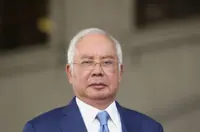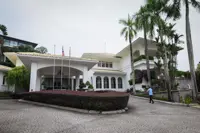
PETALING JAYA: The house arrest granted to Datuk Seri Najib Razak does not mean he is free, as there are prison rules at work and explicit approvals governing his detention, says a former Bar Council chairman.
Nizam Bashir said house arrest was still a form of imprisonment.
“While immediate family members residing in the home are allowed, external visitors, political allies or media are restricted and generally require explicit prior approval from the Prisons Department or supervising authorities,” he said when contacted.
“Where house arrests are concerned, a designated private residence is treated as an extension of a correctional facility,” he said, commenting on Najib’s conditional pardon for his SRC International Sdn Bhd conviction.
His Majesty Sultan Ibrahim, King of Malaysia, granted Najib a conditional pardon allowing him to serve the rest of his SRC International sentence under house arrest until Aug 23, 2028, provided he pays the RM50mil fine.
In announcing the pardon yesterday, the Prime Minister’s Department’s Legal Affairs Division said any breach of its undisclosed conditions will see the pardon revoked and Najib returned to prison.
Explaining further, Nizam said the Home Minister would declare the house as a place of detention under Section 3 of the Prison Act 1995, adding that visitor access was strictly regulated.
He said hosting majlis or political meetings was prohibited, as house arrest was “a form of penal sentence rather than freedom”.
Nizam said the law on electronic monitoring devices was in flux after the Prison (Amendment) Bill 2026 was deferred, so it seemed “more sensible” to follow the pardon’s express terms.
Najib was convicted in July 2020 on seven charges of abuse of power, criminal breach of trust and money laundering involving RM42mil of SRC International funds.
The High Court jailed him for 12 years and fined him RM210mil.
He began serving the term at Kajang Prison on Aug 23, 2022, after losing his final appeal, and sought a royal pardon in September 2022.
The Federal Territories Pardons Board, chaired by the previous King, Al-Sultan Abdullah Ri’ayatuddin Al-Mustafa Billah Shah, halved his jail term to six years and cut the fine to RM50mil on Jan 29, 2024.
This means he will be released on Aug 23, 2028, or a year later if he fails to pay the fine.
Sultan Abdullah also issued an addendum order dated the same day allowing Najib to serve the rest of his sentence under house arrest.
Najib filed a judicial review in April 2024 to compel the government to carry out the order.
The High Court ruled last December that the addendum was invalid, as the Pardons Board had not deliberated on it and there was no legal provision for house arrest.
Najib withdrew his appeal and submitted a fresh petition, which ended with yesterday’s conditional pardon.
Lawyer Andrew Khoo said house arrest was not yet recognised under Malaysian law, while proposed legislation on it had been deferred.
“So the additional clemency that has now been granted has no corresponding law overseeing it at the moment.
“To this extent it may contribute to the undermining of the rule of law and the administration of justice in Malaysia,” he said.
Khoo said the clemency could well set a precedent.
“Some may argue that this would be a violation of the equality and non-discrimination provisions of Article 8 of the Federal Constitution,” he added.